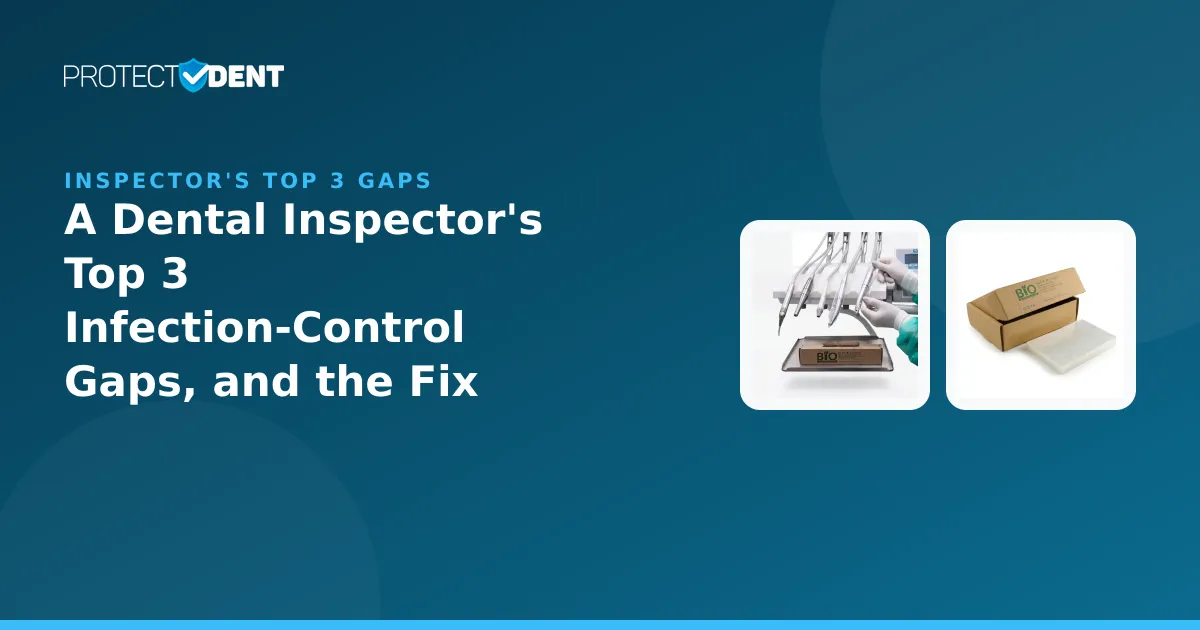
A Dental Inspector's Top 3 Infection-Control Gaps, and the Fix
A dental board inspector names the three gaps she sees most. Here is each one, the OSHA text behind it, and a fix for Monday.
Practical notes on dental infection control, barrier protection and imaging equipment, written for the people who use them every day.
A dental board inspector names the three gaps she sees most. Here is each one, the OSHA text behind it, and a fix for Monday.
ESPR sets no rules for dental barrier sleeves yet. Here is what it covers, what it doesn't, and what to ask a supplier who claims otherwise.
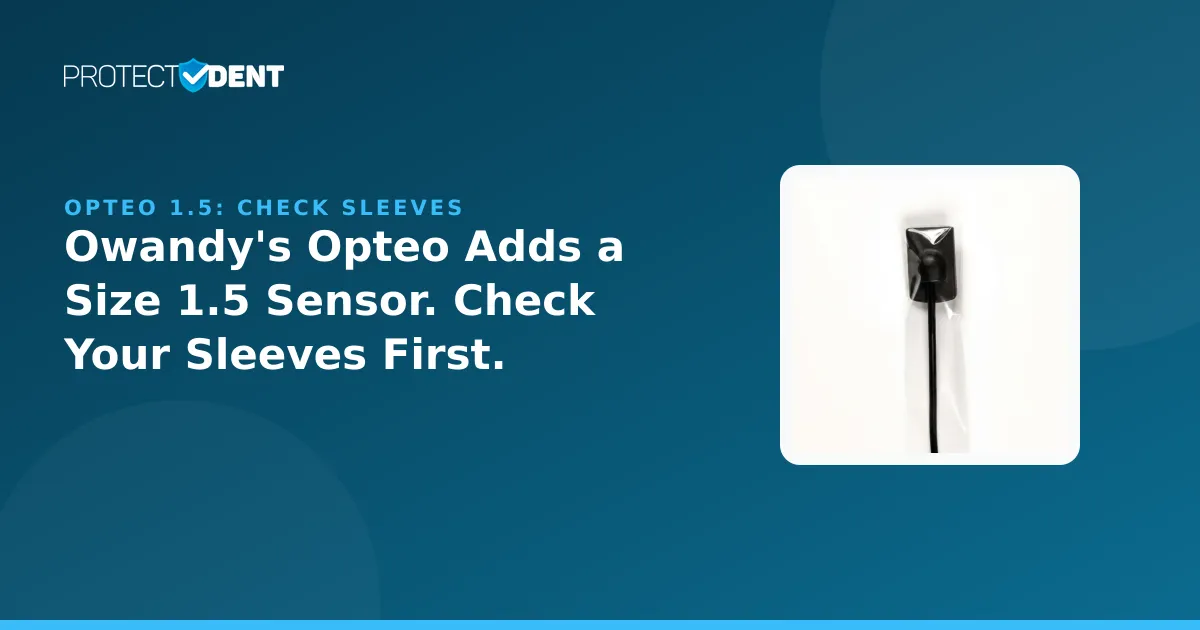
Owandy's third-generation Opteo adds a size 1.5 to sizes 1 and 2. What to check about barrier sleeves before the first patient.
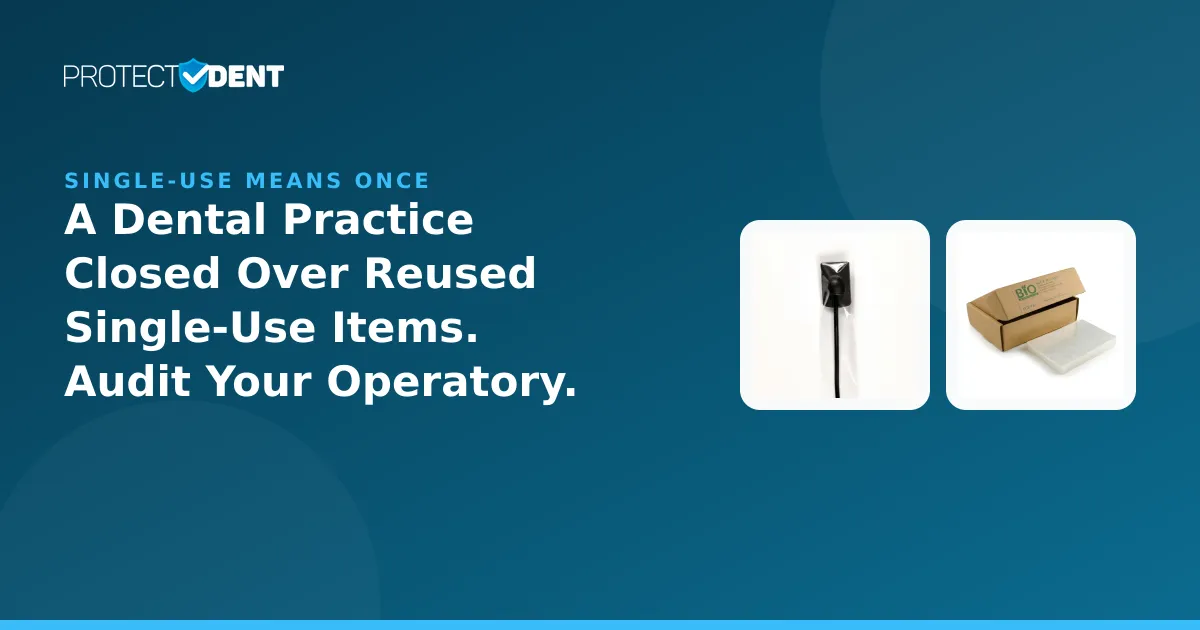
A US practice was suspended in 2026 after reported reuse of single-use items. Here is a one-hour operatory audit that separates single-use, reprocessed and wiped.
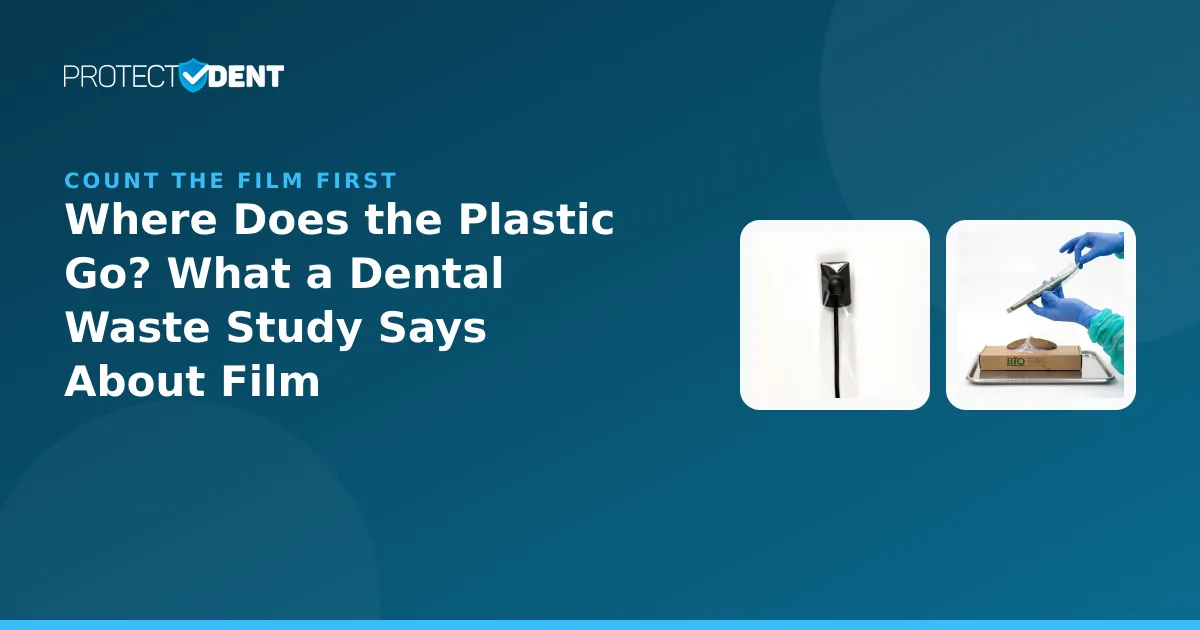
A measured audit, a case study and a recycling-code rule: why you should count your barrier film per chair before you change anything.
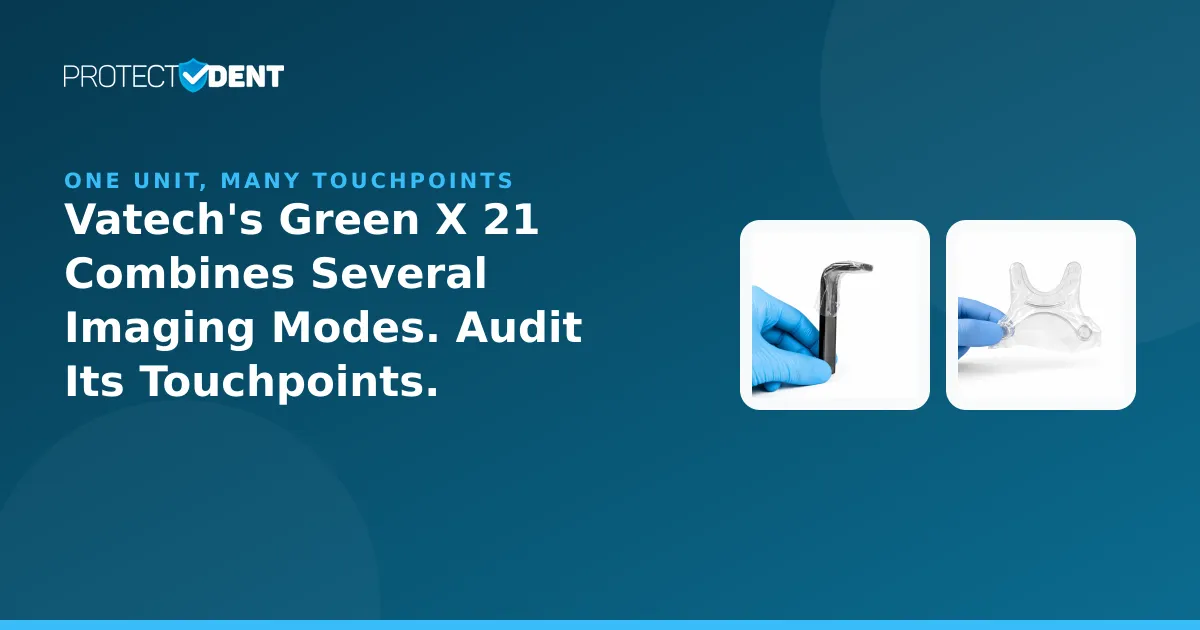
One combined X-ray unit means several workflows share the same surfaces. Here is how to audit them without guessing what the manufacturer has not said.
A new ISO standard specifies the polymers used in dental instruments — handpieces, scalers, curing lights. It says nothing about the barrier sleeve placed over them.
From 1 June 2026, trainee dental nurses have 12 months to enrol in training, not two years. Here's what that changes for onboarding and day-one infection control training.
The EU's e-waste law excludes devices 'expected to be infective' from its scope — but only single-use ones. Reusable sensors, cameras and scalers stay inside ordinary e-waste rule…
Current radiographic-asepsis guidance treats the cord, not just the sensor head, as part of what a barrier sleeve has to cover. Here is what that means for your sleeve and your te…
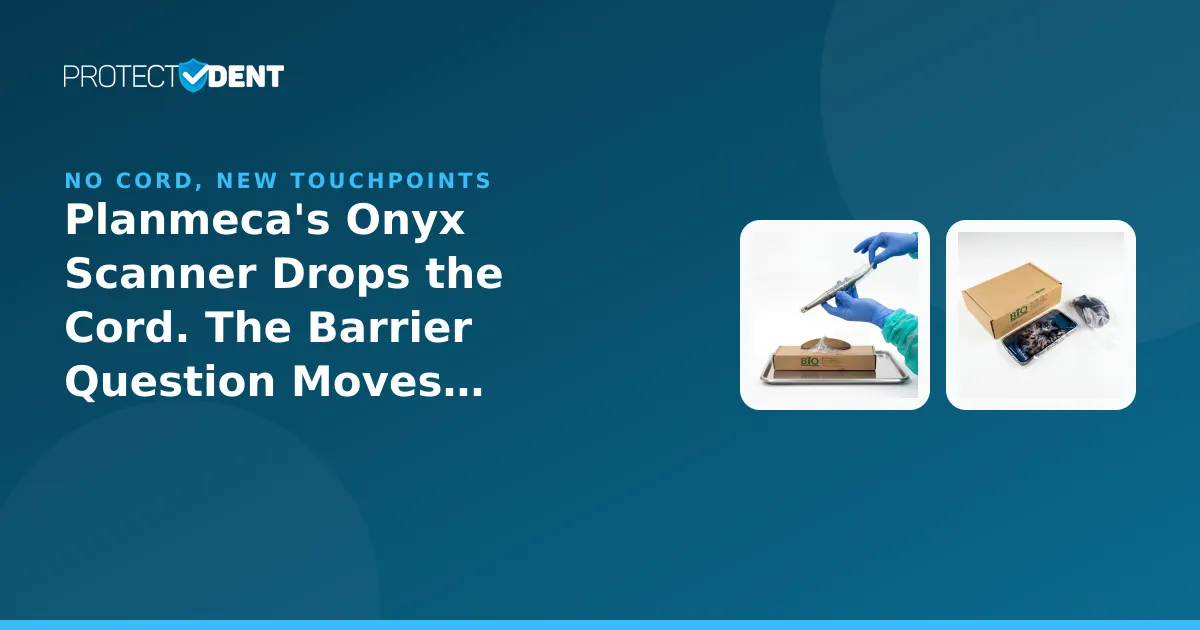
Planmeca's Onyx scanner runs wired or wireless and moves between rooms on the clinic network — which relocates barrier touchpoints to the battery seal and the shared workstation,…
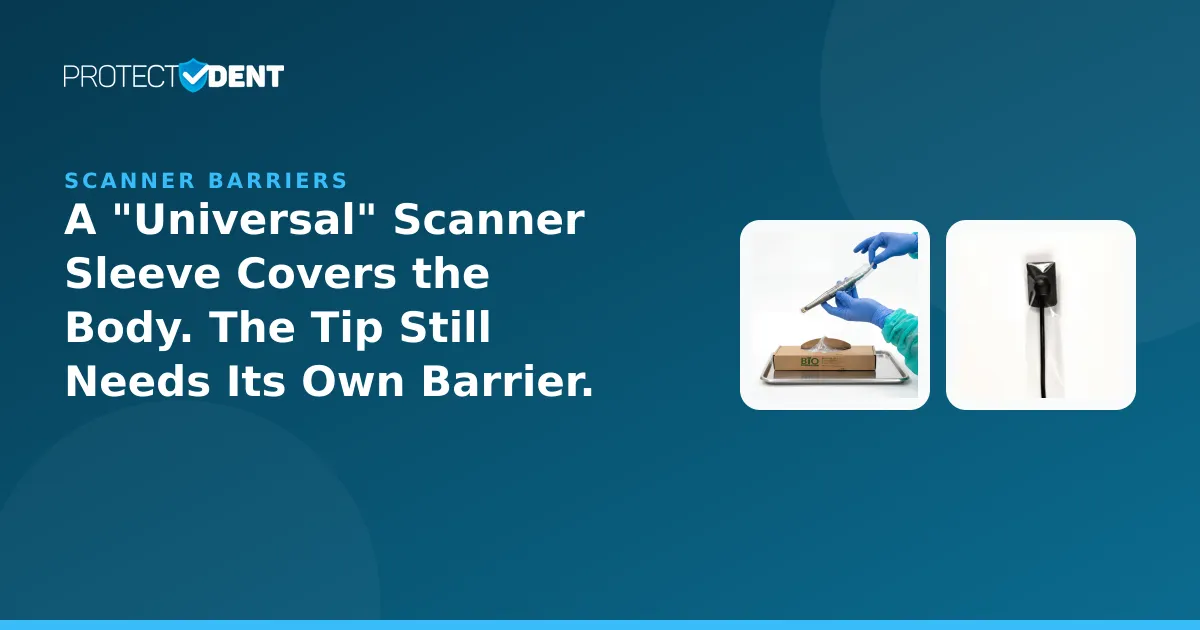
A disposable sleeve marketed as fitting almost any intraoral scanner covers the housing, not the tip. The part touching mucosa still follows the device maker's own rules.