ISO Specified the Polymers in Dental Instruments. Barrier Sleeves Aren't Covered.
A new standard for what's inside your instruments, not what covers them
In mid-2025, ISO published ISO 21850-2:2025, "Dentistry — Materials for dental instruments — Part 2: Polymers." The European adoption, EN ISO 21850-2:2025, followed on 14 August 2025, prepared under CEN/TC 55 (Dentistry) and referencing Regulation (EU) 2017/745 (the MDR) as related legislation.
The standard does one specific job: it "specifies polymers commonly used in manufacturing dental instruments." That's it. It isn't a performance spec for infection control, and it isn't a packaging rule. It's a materials-selection reference for the companies that build the instruments on your tray.
What it actually covers
Per the standard's scope:
- Polymers used for an entire instrument, or for just one part of it
- Both single-use and reusable instruments
- Instruments connected to a power-driven system (handpieces, scalers) and those that aren't
What it explicitly leaves out
- Oral appliances and devices that sit in the mouth long-term — splints, mouthpieces, crowns, bridges, implants
- Instruments used long-term in the patient's mouth generally
- Devices and instruments not made of polymers at all
It sits alongside ISO 21850-1:2020, the older, still-current companion standard that covers stainless steel for the same category of instrument. Together, the two parts give instrument manufacturers a reference for the two material families — metal and polymer — most dental instruments are built from.
Why this doesn't touch your barrier sleeve
Here's the distinction worth making to your team: ISO 21850-2 is about the instrument itself — the handpiece housing, the scaler body, the parts the manufacturer molds or machines. It is not about anything placed over that instrument afterward.
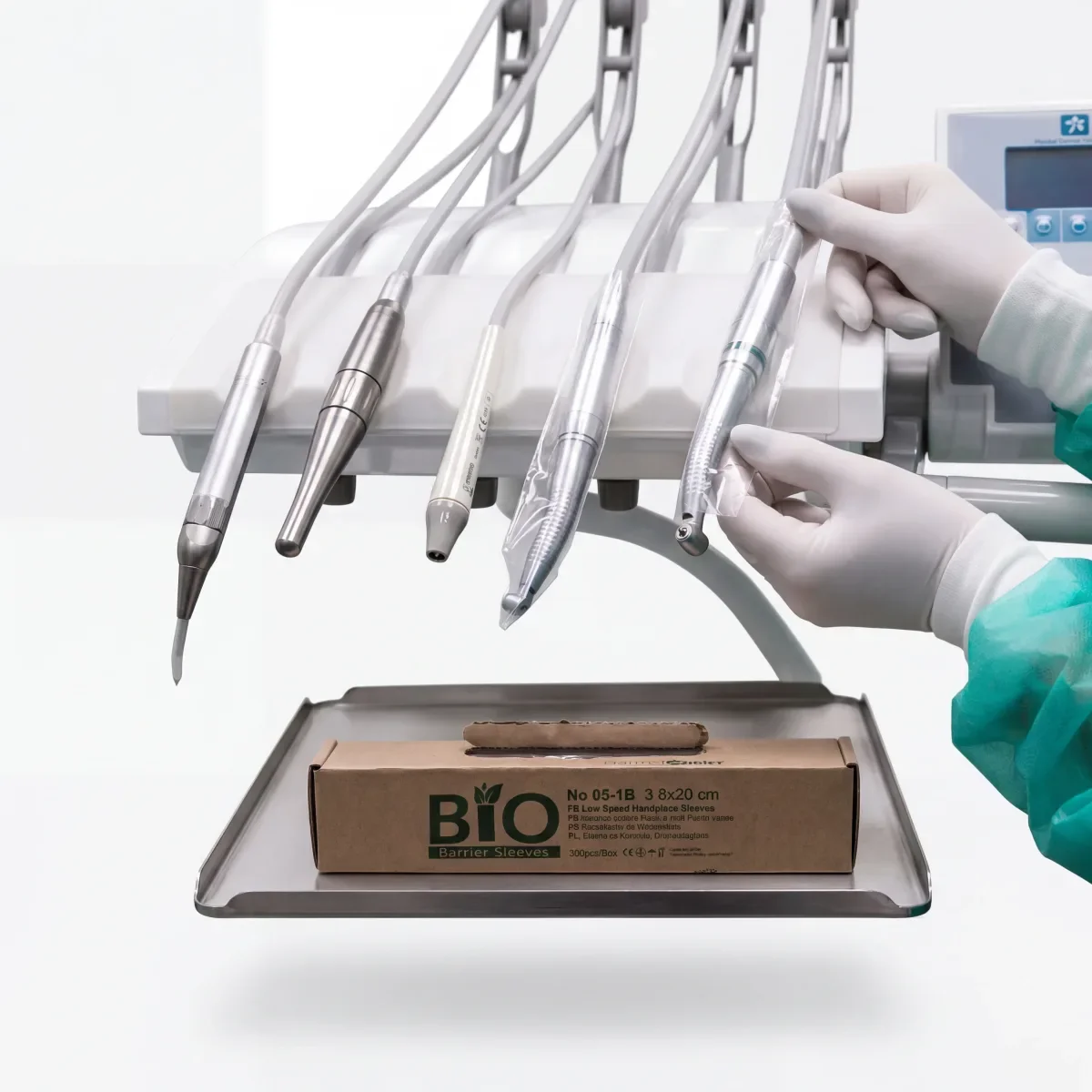
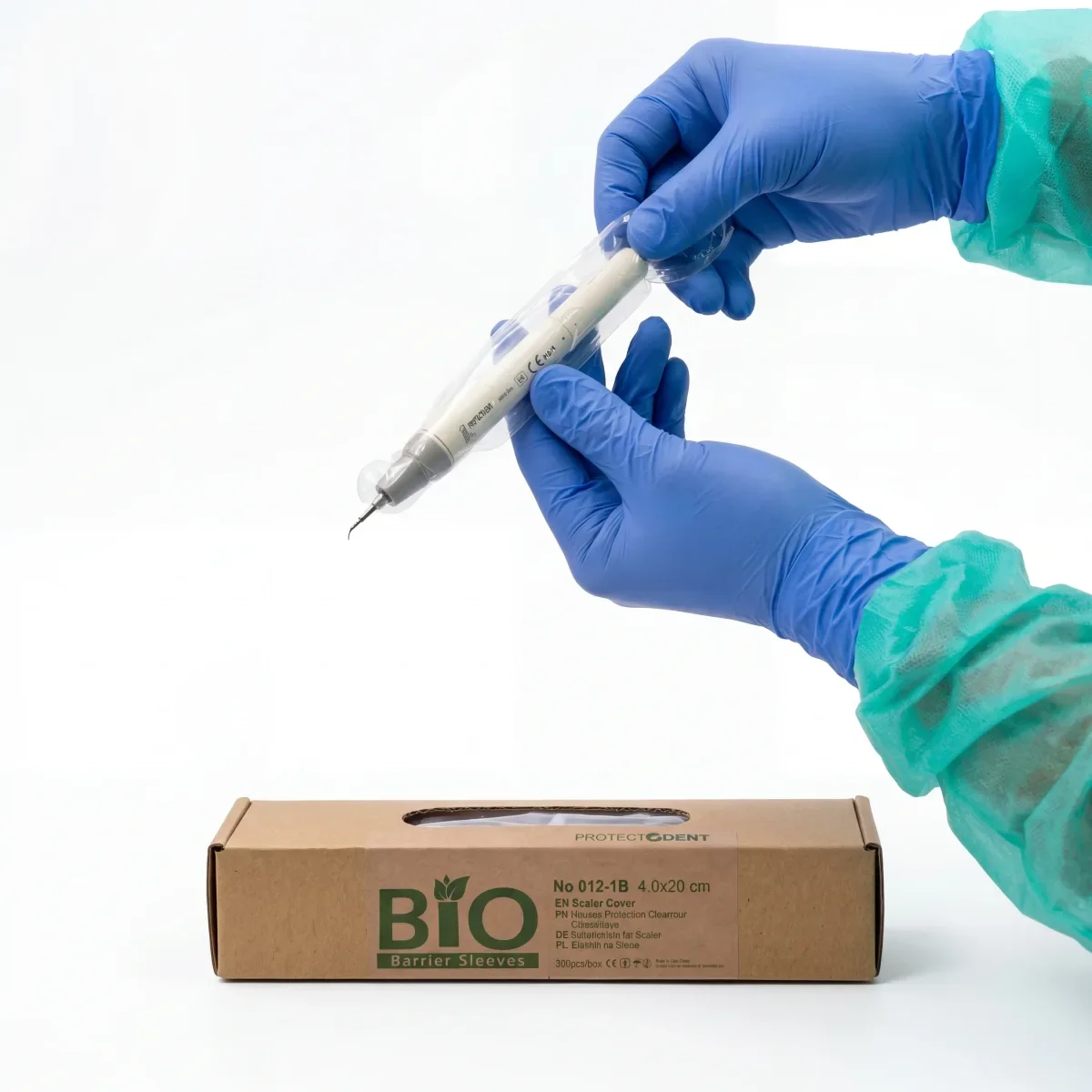
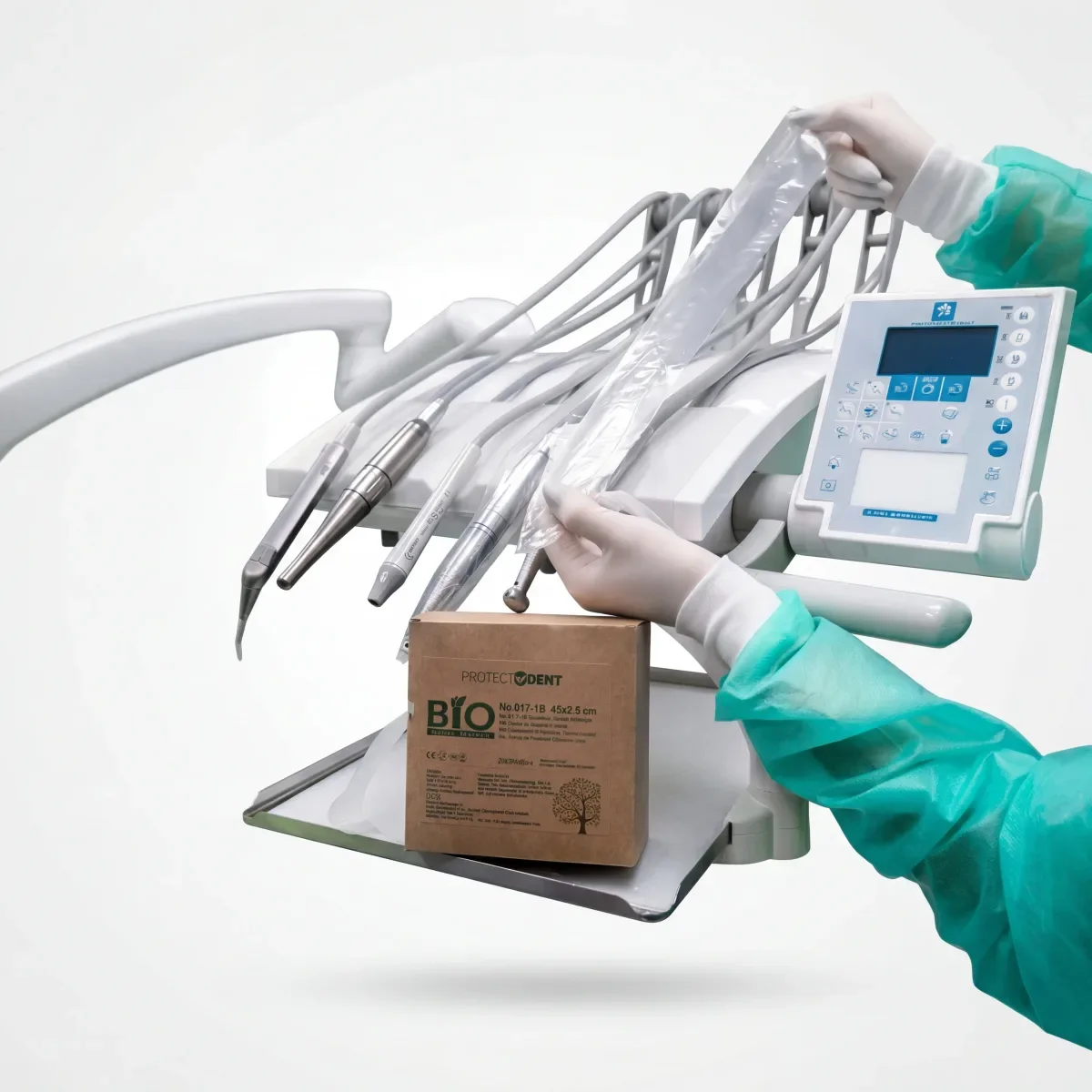
A barrier sleeve isn't a dental instrument in the sense this standard means. It's a disposable cover a nurse pulls on before the patient sits down and pulls off at turnaround. The sleeve's job — keeping aerosol and splatter off a surface that's slow or impossible to autoclave — is a different question from what polymer the manufacturer chose for the instrument's own casing.
That distinction matters practically. If a sleeve supplier's marketing invokes ISO 21850-2 as a quality claim, it's citing the wrong document — this standard was never written with sleeves, covers, or any single-use barrier product in mind. The scope language is explicit about instruments and their own construction, not about anything draped over them.
What to check Monday morning
- When you're buying a new handpiece, scaler, or similar powered instrument, it's reasonable to ask the manufacturer which materials standard — ISO 21850-1 for steel components, ISO 21850-2 for polymer ones — their product lines reference. Not every manufacturer will cite either by number, but the question tells you whether their technical documentation is current.
- Keep that conversation separate from your barrier sleeve order. The sleeve's fit, leak resistance and compatibility with the specific instrument model are the relevant questions there — not a materials standard written for the instrument's own housing.
- If a supplier's barrier-product literature cites ISO 21850-2, ask what it's claiming. The standard's own scope excludes devices not covered by its polymer-selection remit, and a disposable cover sitting outside the instrument isn't what the document is written to address.
None of this changes your sterilization or barrier protocol. It's a reminder that "the instrument" and "what protects the instrument" are specified — if they're specified at all — by two completely different kinds of document.
Frequently asked questions
Does ISO 21850-2:2025 apply to barrier sleeves or sheaths?
No. Its scope covers polymers used to manufacture the dental instrument itself — the handpiece or scaler body, for example — not disposable covers placed over the instrument.
What's the difference between ISO 21850-1 and ISO 21850-2?
ISO 21850-1:2020 specifies stainless steel for dental instruments; ISO 21850-2:2025 does the same job for polymers. Both apply to single-use and reusable instruments, powered or not, and both exclude long-term intraoral devices like crowns, bridges and implants.
Is ISO 21850-2:2025 linked to the EU Medical Device Regulation?
The European adoption, EN ISO 21850-2:2025, lists Regulation (EU) 2017/745 as related legislation, though the standard itself doesn't state that it gives presumption of conformity with any specific MDR requirement.
Should I ask my instrument supplier about this standard?
It's a reasonable question when buying new handpieces, scalers or similar powered instruments — it tells you whether the manufacturer's technical documentation references current materials standards. It has no bearing on your barrier sleeve purchasing decisions.
Sources
- EN ISO 21850-2:2025 — Dentistry — Materials for dental instruments — Part 2: Polymers — Genorma, 2026-11-01
- NS-EN ISO 21850-2:2025 — Standard Norge, 2026-11-01
- EVS-EN ISO 21850-2:2025 — Estonian Centre for Standardisation and Accreditation, 2026-11-01
- ISO 21850-1:2020 — Standards Council of Canada, 2026-11-01