The EU Wants Manufacturers to Justify Every 'Single-Use' Label
Why this matters now
On 16 December 2025, the European Commission published a proposal to simplify the EU's Medical Device Regulation (MDR) and In Vitro Diagnostic Regulation (IVDR). Buried in a long list of administrative changes is a rewrite of Article 17 — the rule that decides whether a device can be labelled "single-use" at all.
Right now, whether a single-use device can legally be reprocessed and reused depends on national law, and the Commission's own review found the rules applied inconsistently across member states. The new proposal would replace that patchwork with one EU-wide default: a manufacturer can only claim "single-use" if it can show, in its technical documentation, why the device cannot be safely reprocessed. Everything else would need to come with reprocessing instructions.
Nothing changes in your practice this week. This is a legislative proposal, not adopted law, and even once it clears Parliament and Council it would not apply for years. But it is worth understanding now, because it touches almost every disposable item on your supply shelf.
What actually changed
The Commission's proposal, COM(2025) 1023 final, rewrites Article 17 of Regulation (EU) 2017/745 as follows:
- A device may only be designated single-use where the manufacturer can demonstrate — based on its design, materials, and chemical, physical and biological properties — that it cannot be reprocessed and still meet safety and performance requirements. That justification has to sit in the technical documentation required under Annex II.
- If a device is not single-use, the manufacturer must include instructions for the appropriate reprocessing process in its instructions for use (Annex I, Section 23.4).
- A device that is genuinely single-use, or that cannot be reprocessed, can still be given a second life through "full refurbishing" — but whoever carries out that refurbishing then takes on the legal role of manufacturer for the refurbished device.
- The Commission may issue common specifications setting out general reprocessing or refurbishing requirements.
Two things temper the urgency. First, this is a proposal: it now goes through the European Parliament and the Council under the ordinary legislative procedure, and the Commission's own overview of the reform points people to the Parliament's Legislative Observatory to track it — there is no fixed date it becomes law. Second, even once adopted, the Commission's own summary of the package states that this particular change "will become applicable five years after entry into force." So the earliest realistic date for any of this to bind manufacturers is well into the next decade.
What this means in the operatory
For a practice, the direct effect today is none. But it is worth knowing what the rule is aimed at, because it will eventually reach your supplier catalogue.
The proposal is squarely about clinical devices and instruments — items like impression trays, endodontic files, matrix systems, prophy angles or saliva ejectors that are currently sold as single-use but could, in principle, be reprocessed. Under the new default, a manufacturer of one of those items would need to actively justify keeping it single-use, or start publishing reprocessing instructions instead.
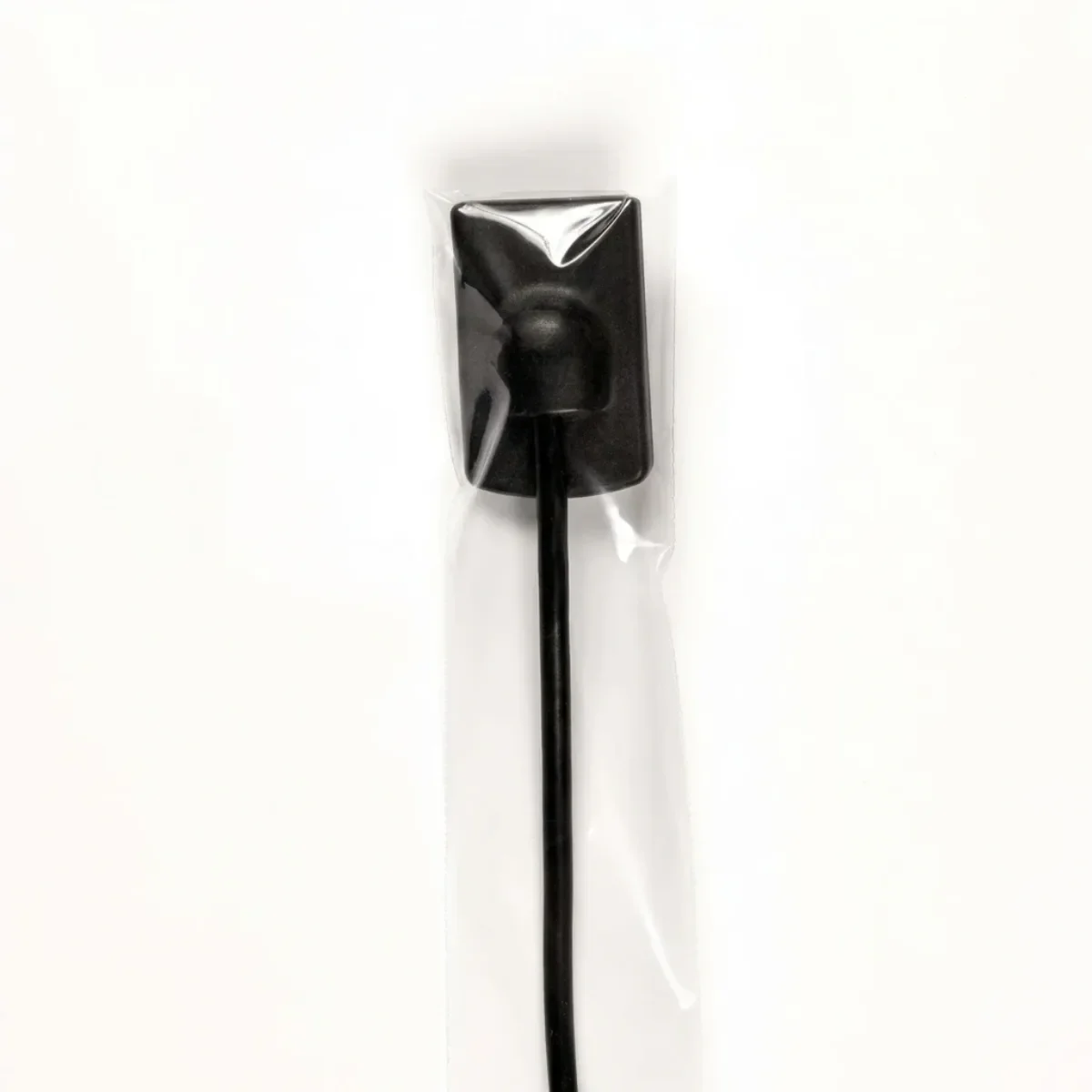
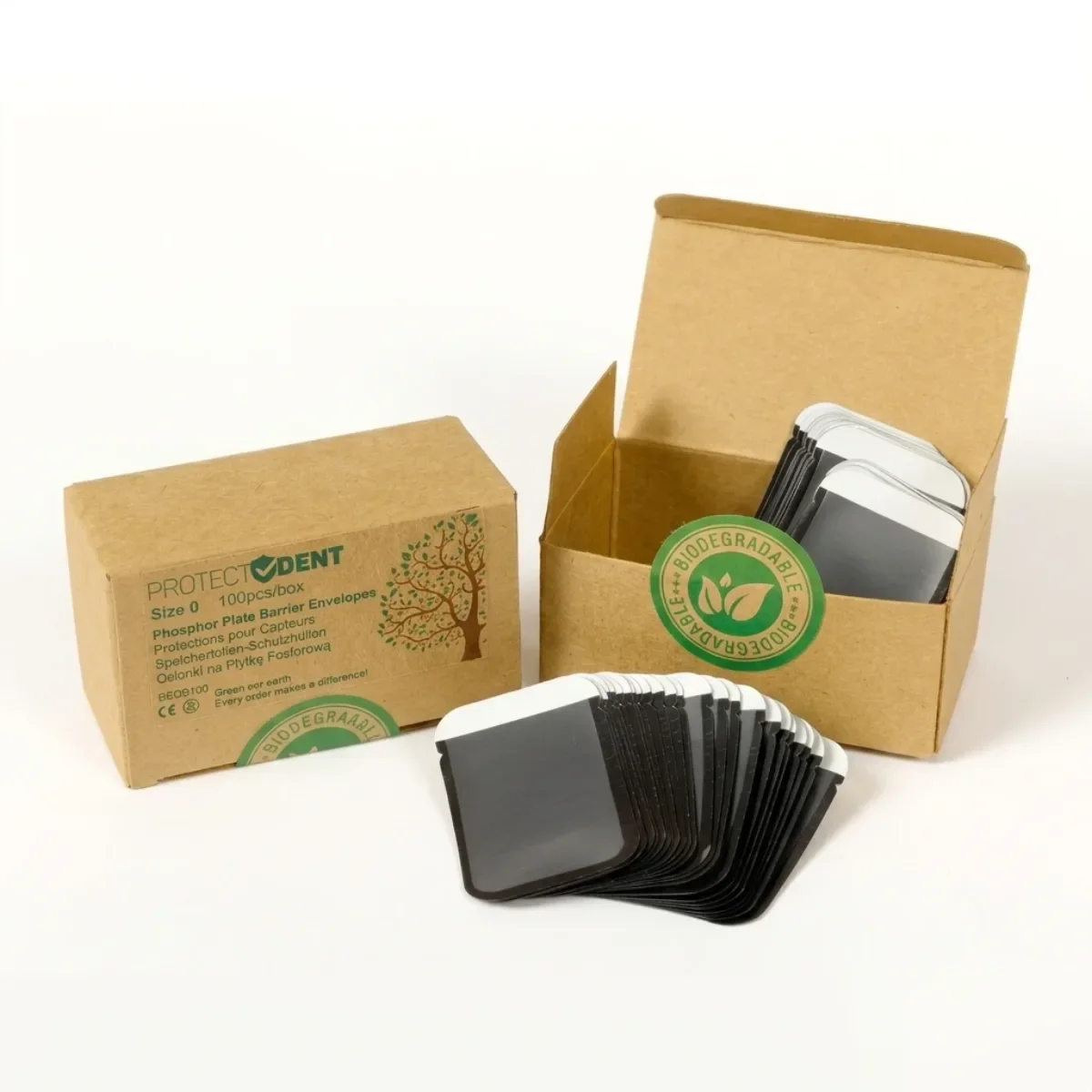
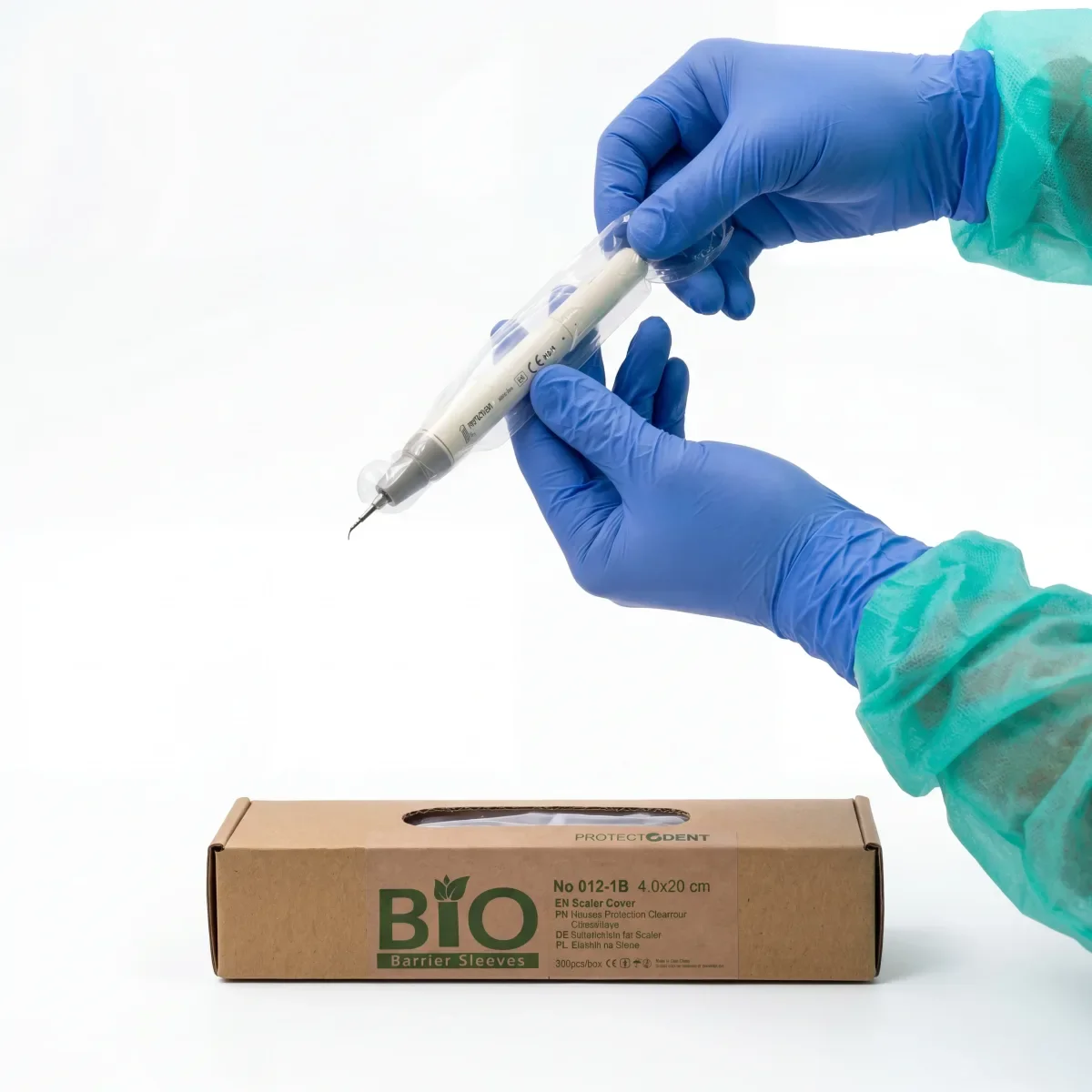
It is a different story for the barrier products on this site. A sensor sleeve, a phosphor plate envelope, or a scaler sleeve is not designed to survive contact with a patient and then be cleaned and reused — it is a thin, disposable film meant to be removed and discarded after one use, by design. That is a straightforward case for a single-use justification under the new Article 17(1), not a grey area, so we don't expect this proposal to change how these products are labelled or supplied.
Where it is worth paying attention is your other disposables — anything in the practice currently marked single-use that isn't a barrier film or wrap. Over the next few years, some of those items may start arriving with different instructions for use, or their manufacturers may publish justification statements as they prepare technical files ahead of any eventual adoption.
What to check
- Track the proposal's status through the European Parliament's Legislative Observatory rather than assuming a date — the Commission itself directs users there, because the timeline depends on the co-legislators, not a fixed schedule.
- When you reorder single-use clinical disposables (not barrier films), keep an eye on supplier instructions for use for any new reprocessing information — some manufacturers may start publishing this ahead of any legal requirement, to be ready early.
- Don't change your current sterilisation or disposal protocol based on this proposal. It changes nothing today, and won't for years even if adopted unamended.
- If a supplier tells you a previously single-use item can now be reprocessed "because of the new EU rules," ask for the specific instructions for use — the proposal requires manufacturer-issued reprocessing instructions, not a general reinterpretation of existing labels.
Sources
- Proposal for a Regulation amending Regulation (EU) 2017/745 and (EU) 2017/746 as regards simplification and reduction of burden (COM(2025) 1023 final) — European Commission, 2026-08-27
- Medical devices: new regulations — overview — European Commission — Public Health, 2026-08-27