Ear Rod or Chin Rest? Not Every Panoramic Touchpoint Needs the Same Barrier
The sensor gets a sleeve. What about everything else the patient's face touches?
Ask a nurse what needs a barrier sleeve before a panoramic or cephalometric exposure, and the sensor is usually the first answer — sometimes the only one. But a panoramic series or a ceph film puts the patient in contact with several more surfaces: the chin rest, the bite block, the head-positioning guides, and, on a cephalostat, the ear rods that sit against the patient's ear canals. Manufacturer service documentation and published infection-control guidance treat these touchpoints differently from each other, and knowing which is which changes what actually needs covering and what just needs a wipe.
Not every touchpoint gets the same treatment
A 2020 infection-control review for dental radiographic procedures, published in Oral Radiology, sorts panoramic and CBCT accessories into two categories. Chin rests, handgrips, head-positioning devices, the remote switch and the control panel are classed as non-critical items, because they only contact intact skin. The guidance for these is to barrier-protect them with plastic wrap changed after each patient, then disinfect with an intermediate-level disinfectant daily and whenever visibly contaminated.
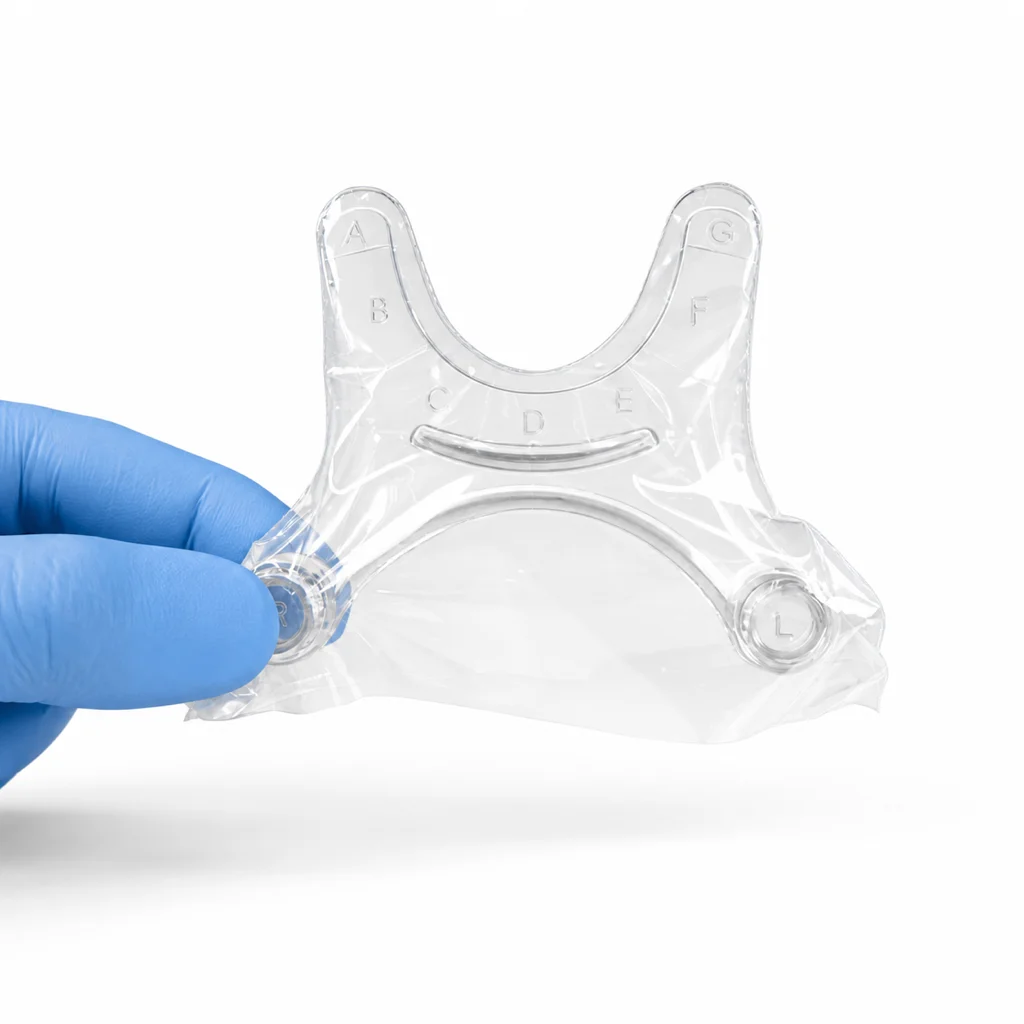
The bite guide is treated differently. It is classed as semi-critical because it contacts mucous membranes, and the review states it "must either be covered with a disposable sheath or sterilized following patient use." The CBCT section of the same review repeats the instruction for CBCT bite guides specifically: barrier-protect them, and use disposable bite guides if barrier protection or sterilization is not practical.
That two-tier split — wrap-and-wipe for skin contact, sheath-or-sterilize for mucosa contact — is easy to lose in a busy operatory, where "cover the sensor" quietly becomes the whole mental checklist.
What a manufacturer's own service manual says about ear rods
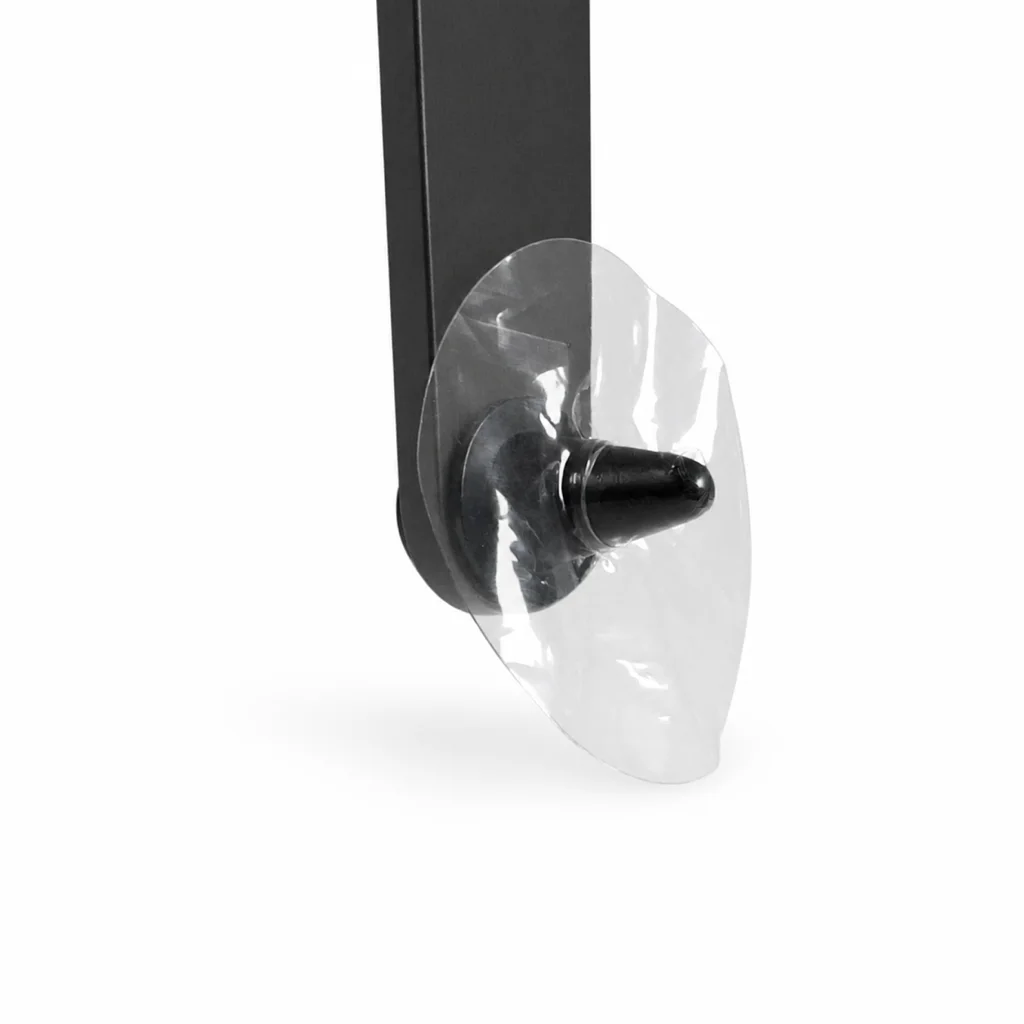
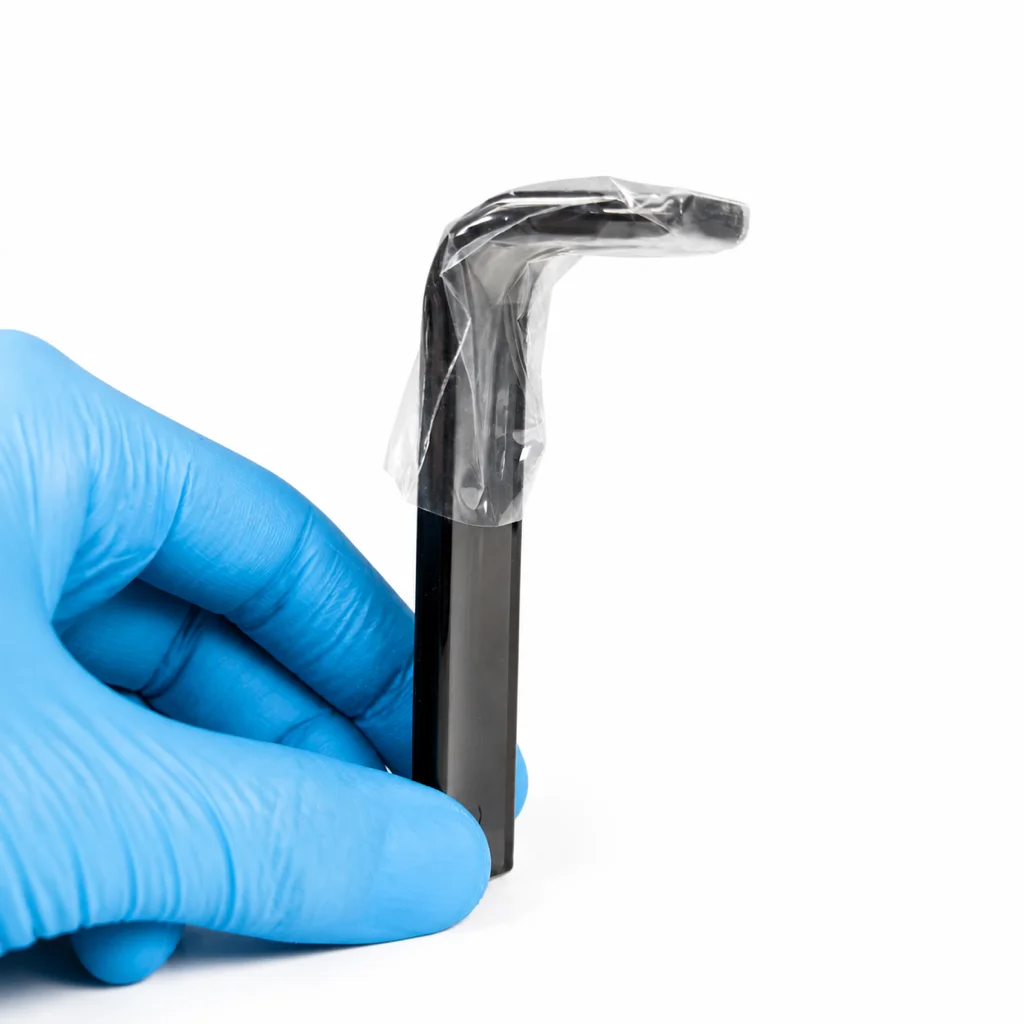
For cephalometric units specifically, Carestream Dental's accessory-cleaning documentation is direct. Ear cones "must" be covered with an FDA-cleared or CE-marked protective sheath before every patient, and after the sheath comes off, the ear cone itself still needs cleaning and disinfection with an intermediate-level, tuberculocidal disinfectant. The same manual gives panoramic bite blocks an identical instruction: a protective sheath before each patient, on top of periodic steam sterilization at 132°C for 4 minutes, or 134°C for 18 minutes depending on local requirements.
Chin rests, by contrast, get a lighter routine in the same documentation — cleaning with an enzymatic detergent solution followed by a low-level hospital disinfectant, stepping up to intermediate-level disinfection only when there is visible blood contamination.
In other words, the manufacturer's own instructions single out ear rods and bite blocks as the items that need a physical barrier every single time, not just a disinfectant wipe at the end of the session.
A Monday-morning checklist
- Ear rods on any cephalostat — a new sheath before every ceph exposure, not just a disinfectant wipe.
- Panoramic and CBCT bite blocks — the same rule applies: a sheath per patient, plus steam sterilization on the regular cleaning cycle.
- Chin rests, head-positioning guides, control panels — these can stay disinfectant-wipe items under the non-critical classification, as long as the wipe genuinely happens between every patient rather than being skipped when the unit "looks clean."
A separately published clinical-practice article on radiographic disinfection and asepsis makes a related point about barriers in general: once a barrier is in place and stays intact, the surface underneath does not need a separate disinfection step, because the barrier is doing that job. That logic only holds if the barrier is actually replaced for the next patient — which is exactly the step that gets missed when it involves an accessory, like an ear rod, that nobody quite thinks of as "imaging equipment" the way a sensor is.
Where this fits in ordering, not just protocol
None of this calls for new equipment or an extra sterilization cycle. It is a sourcing and habit question. If a cephalostat does not have ear rod sheaths sitting in the room, the step gets skipped under time pressure. If the CBCT bite block sheaths are stored in the same box as the panoramic ones and the sizes do not quite match, staff end up reusing the panoramic block bare "just this once" rather than hunting for the right sheath. Stocking a sheath sized correctly for each accessory — cephalostat ear rods kept separate from panoramic bite blocks, kept separate from the larger CBCT bite guide — removes the excuse to skip the step because the right size was not on the shelf.
Sources
- Cleaning and Disinfecting the Accessories — Carestream Dental, 2026-08-15
- Dental radiographic procedures during COVID-19 outbreak and normalization period: recommendations on infection control — Oral Radiology (Springer, via PMC), 2026-08-15
- Best Practices for Disinfection and Asepsis in Radiographic Procedures — Dimensions of Dental Hygiene, 2026-08-15