Short-Staffed Practices Need Barriers That Don't Need a Second Pair of Hands
Why this matters now
Recruiting dental hygienists and assistants is still hard. In a follow-up on pandemic-era staffing, the American Dental Association found that by late 2024, 90% of practices actively recruiting a hygienist and 70% recruiting an assistant still called it "very or extremely challenging" — down from 95% and 87% two years earlier, but still high (ADA News). Dental Economics has separately described staffing shortfalls as the most common factor limiting how many patients a practice can see, a gap that opened during the pandemic and has not closed (Dental Economics).
At the same time, EU public health policy is pushing the opposite direction: more documented infection-control effort, not less. In May 2026 the European Centre for Disease Prevention and Control (ECDC) published new guidance for infection prevention and control programmes and introduced hyFive, a digital tool for real-time, standardised compliance monitoring across healthcare facilities (ECDC). A practice running with fewer, newer staff is now also expected to be able to show what it does between patients. That combination — thinner teams, higher accountability — is what changes on Monday morning: the barrier steps that hold up are the ones that don't depend on an experienced pair of hands to get right.
What actually changed
- Hygienist-recruitment difficulty eased only slightly: 95% of actively-recruiting practices called it very/extremely hard in 2022, versus 90% in 2024 (ADA News).
- Assistant-recruitment difficulty fell more, from 87% to 70% over the same period, but remains the top hiring challenge most practices report.
- First-year dental hygiene programme enrolment rose almost 20% between 2020-21 and 2024-25 — a pipeline that takes years to reach an operatory chair.
- ECDC's May 2026 guidance asks facilities to invest in "sustained... workforce capacity and training" and to move from periodic spot-checks to continuous, data-driven monitoring through tools like hyFive.
What this means in the operatory
Put those two threads together and the practical question is: which infection-control steps can a relief hygienist, a first-week assistant, or a rushed regular team member actually get right without someone checking their work?
A barrier step that depends on judgment — a specific contact time, a dilution ratio, remembering which surfaces still need a manual wipe-down after a sleeve comes off — is the one that slips on a short-staffed day. A step that is simply apply, use, discard doesn't depend on who is doing it or how long they have been trained. That is a practical argument for pushing more of the protocol toward single-use covers at the point of use, rather than leaving multi-step reprocessing to whoever happens to be free.
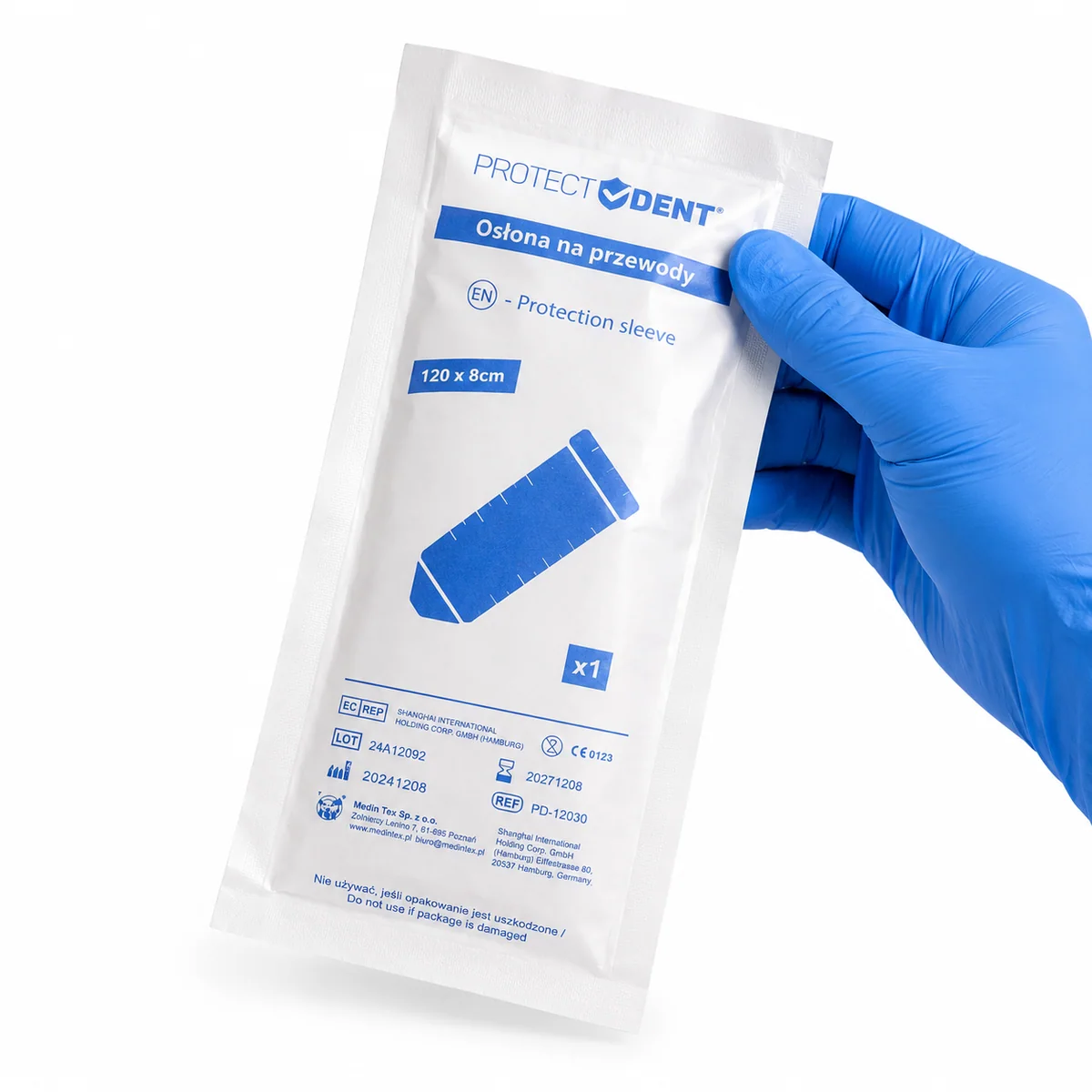
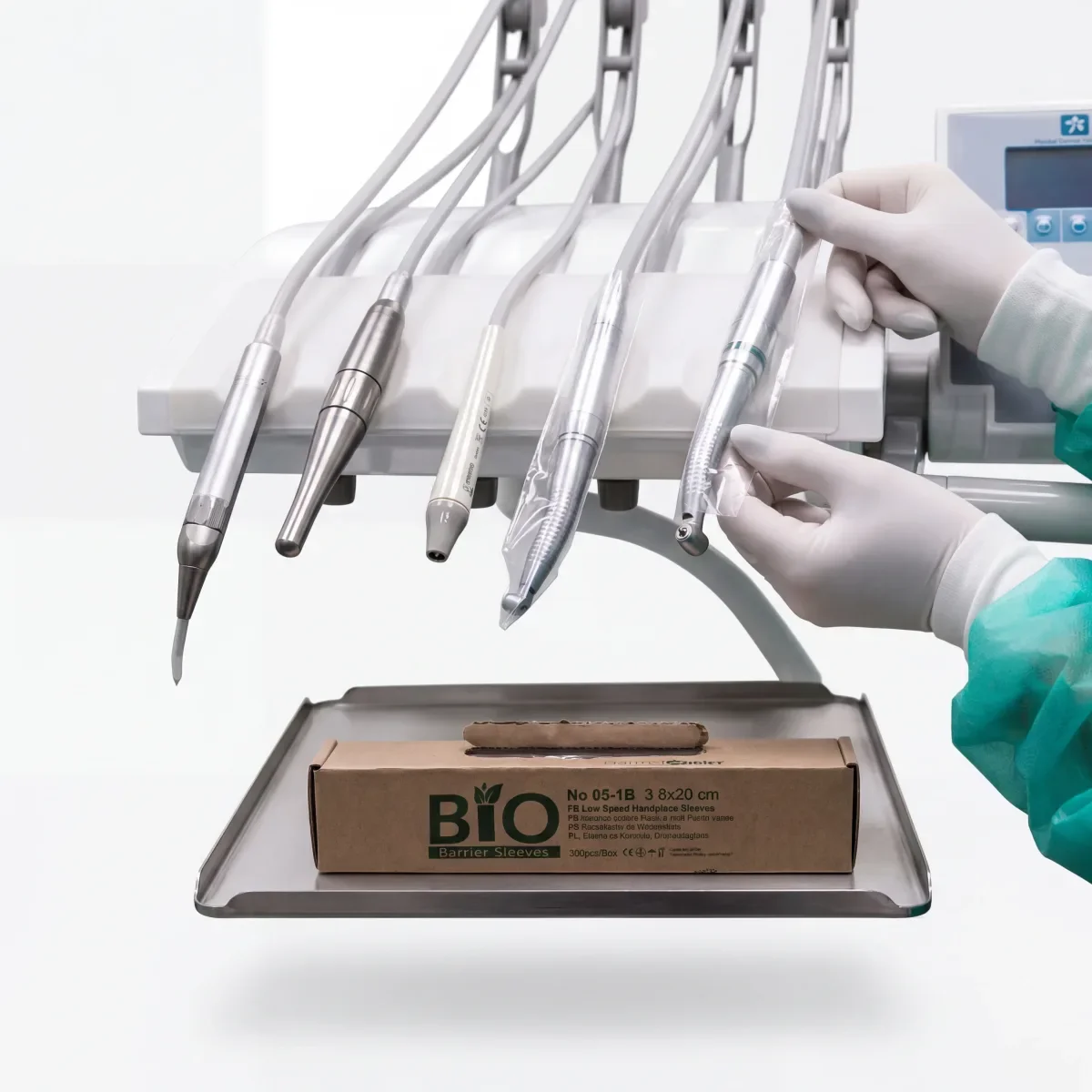
It also matters whether a barrier product needs two people to fit correctly. A sleeve that only goes on cleanly with someone holding the equipment steady while a second person pulls it into place is a liability on the day there is no second person in the room. Some barrier formats are built around that constraint directly — a sterile tubing sleeve applied with a cardboard applicator, for instance, is designed so one person can fit it without touching the sleeve itself.
What to check
- Walk your barrier protocol and separate the steps that need judgment (a contact time, a dilution, a trained eye) from the ones that are apply-and-discard. The judgment steps are the risk on a short-staffed day.
- Check whether your barrier products can be fitted single-handed. If a sleeve needs a second person to hold equipment steady, that's a point of failure when you're down a nurse.
- If you use relief or newly qualified staff, keep barrier stock labelled and positioned at the point of use, not in a central supply room — an extra step a rushed or new hire has to remember is a step they'll sometimes skip.
- If your inspector or notified body references documented IPC monitoring, know what you would show them: not only what you buy, but a record of how and when it gets used.
Frequently asked questions
What does a dental staffing shortage change about barrier protocol?
It shifts the risk toward the barrier steps that depend on judgment — a contact time, a dilution ratio — because those are the ones a rushed or inexperienced team member is most likely to get wrong. Steps that are simply apply, use, discard don't have that failure mode.
What is ECDC's hyFive tool?
hyFive is a digital application ECDC introduced in May 2026 for real-time hand hygiene monitoring and standardised data collection across EU healthcare facilities, part of its wider infection prevention and control guidance.
Is dental hygienist and assistant recruitment actually improving?
Slightly. ADA data shows the share of practices calling hygienist recruitment very/extremely challenging fell from 95% in 2022 to 90% in 2024, and assistant-recruitment difficulty fell from 87% to 70%. Both remain high.
Why does it matter if a barrier product needs two people to fit it?
Because a sleeve that only fits cleanly with someone holding the equipment steady while a second person applies it becomes a point of failure on the day there is no second person in the room.
Sources
- Five years later: Staffing shortages, infection control since the COVID-19 pandemic — American Dental Association (ADA News), 2026-09-23
- The staffing shortage is limiting dentistry's recovery. What's next? — Dental Economics, 2026-09-23
- From guidance to action: ECDC advances Infection Prevention and Control on World Hand Hygiene Day — European Centre for Disease Prevention and Control (ECDC), 2026-09-23