CDC Names Handpieces and Scalers as Spray Risks: What That Means for Barriers
Why this matters now
CDC's current dental infection-control guidance is blunt about two pieces of equipment nearly every operatory runs several times a day: handpieces and ultrasonic scalers. The agency states plainly that these instruments "produce a visible spray that contains droplets, spatter, and aerosols." That single sentence, sitting in CDC's personal protective equipment guidance, is doing more work than it looks like. It's the reason your mask and eyewear rules exist. It says nothing about the equipment itself — the cable, the hose, the handle that also sits in that spray, appointment after appointment, and cannot go in the autoclave.
A separate CDC page on single-use devices adds a second, related point: air and water syringe tips are treated as single-use items, but reusable heat-tolerant tip alternatives exist for practices that want them. Put the two guidance pages together and you get a working line between what protects the clinician and what protects the equipment — a line that's easy to blur when you're moving from scaling to restorative in the same appointment.
What the CDC guidance actually says
- Handpieces and ultrasonic scalers "produce a visible spray that contains droplets, spatter, and aerosols" — CDC's justification for requiring a surgical mask covering nose and mouth, plus protective eyewear with solid side shields or a face shield, during procedures likely to generate splashes or sprays.
- Standard Precautions apply to every patient, regardless of known or suspected infection status — there is no lower-risk patient for whom the mask, eyewear, or barrier routine can be skipped.
- Air and water syringe tips fall under CDC's single-use device guidance: intended for one patient, one procedure, not meant to be reprocessed — unless the practice has switched to a reusable, heat-tolerant tip.
- Work-practice controls listed alongside the PPE guidance include removing protective clothing before leaving the treatment area and avoiding touching your face or other surfaces with contaminated gloves.
None of this is a rule change. It's existing guidance, current on CDC's site, that most teams absorbed years ago as "wear a mask for the scaler." What it doesn't spell out — because it's a PPE page, not an equipment page — is what happens to the handpiece cable, the scaler cord, or the syringe body sitting under that same spray between one patient and the next.
What this means in the operatory
PPE and equipment barriers solve two different problems, and treating them as one checklist item is where gaps open up.
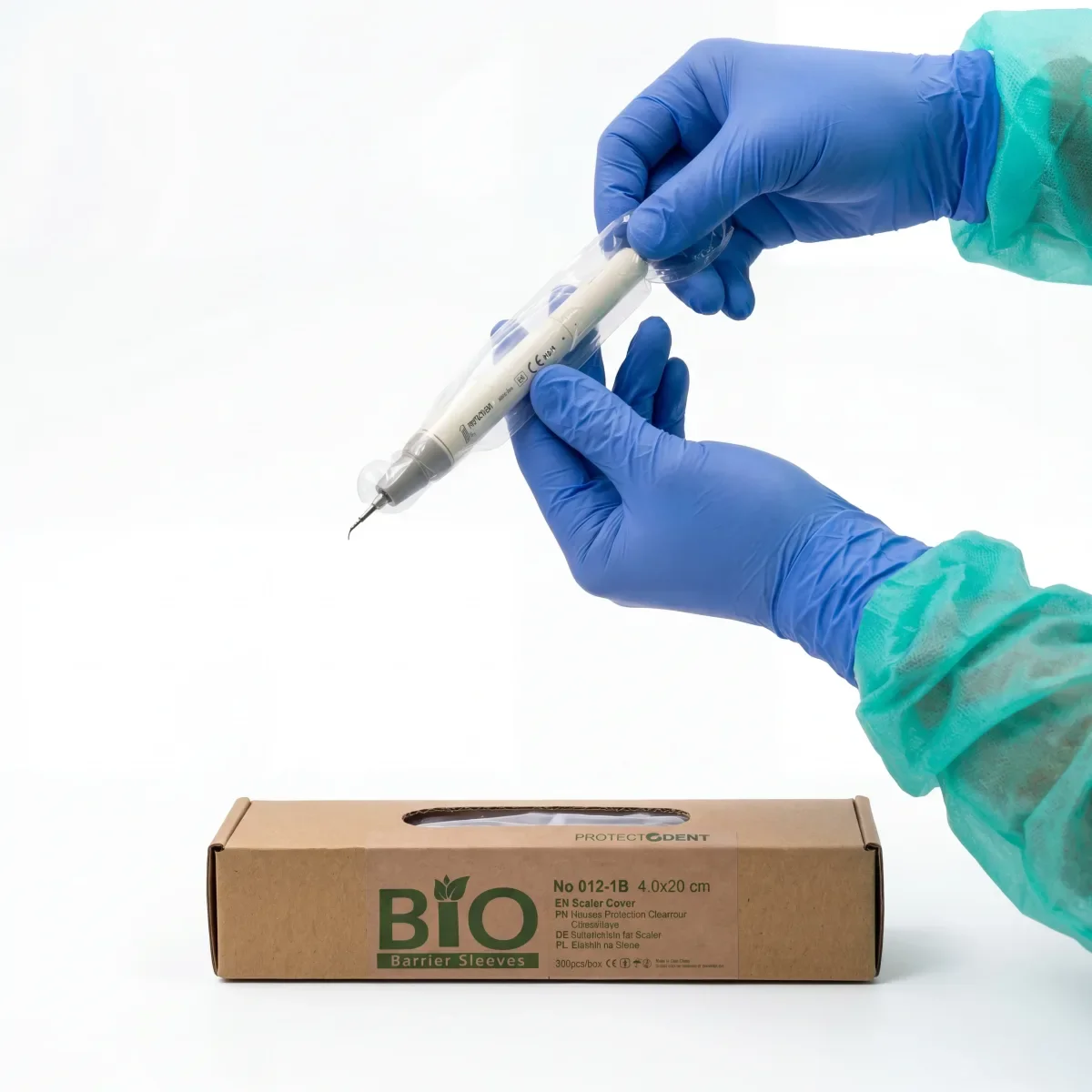
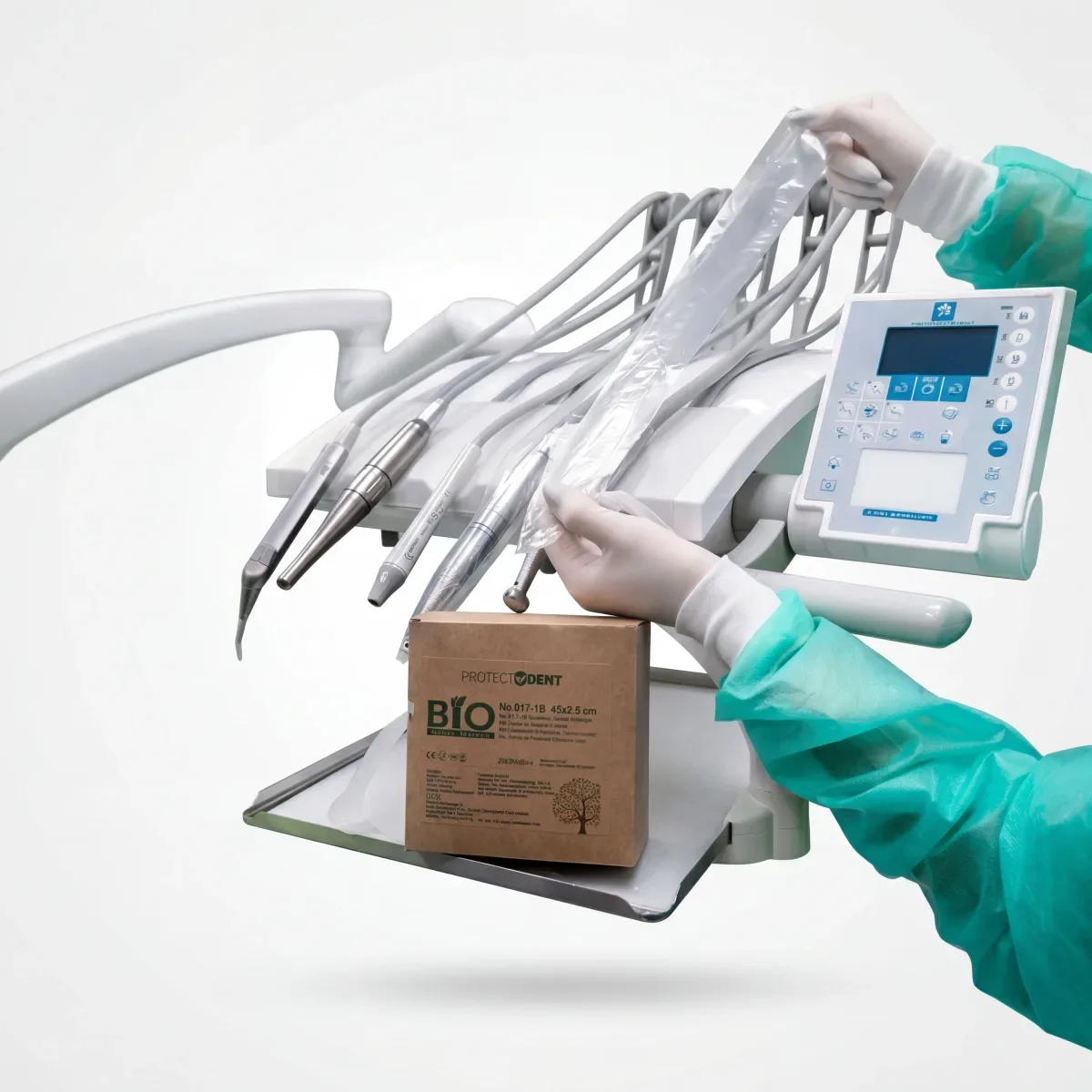
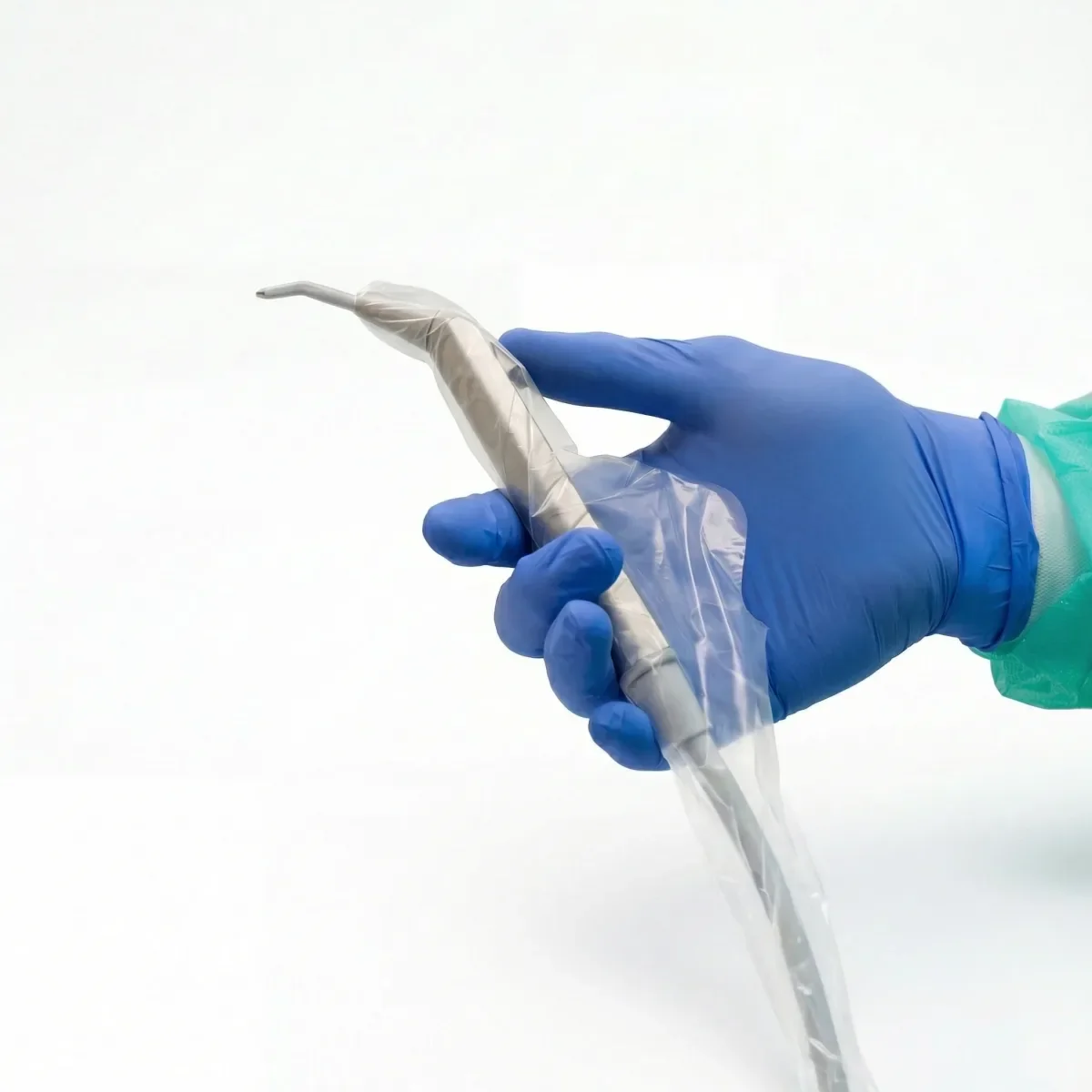
The mask and eyewear protect the clinician's face from the spray as it happens. They get changed or cleaned according to their own rules and have nothing to do with what touches the equipment. The handpiece body, the scaler cord, and the syringe handle are a different problem: they sit in the same spray, they get gripped with the same gloved hand that just touched the patient, and — unlike the working tip — most of that housing cannot be run through a sterilizer between patients. A barrier sleeve on the cable or cord is what closes that gap, and it needs to be pulled and replaced at the same cadence as the mask, not left on for a half day because "it's just the cord."
If your practice still uses disposable air/water syringe tips, the tip itself is a non-issue — it goes in the sharps or clinical waste bin with the patient's other single-use items. The syringe body and hose it's attached to is the part CDC's spray description actually applies to, and that's what still needs a sleeve. If you've switched to a reusable, heat-tolerant tip, the tip goes to sterilization, but the body still doesn't — the same barrier logic holds either way.
What to check
- Confirm your mask and eyewear protocol actually applies every time a handpiece or scaler is running, not only for hygiene appointments.
- Check whether handpiece cords, scaler cords, and air/water syringe bodies are sleeved between every patient, or only wiped down — a wipe is not the same barrier the CDC spray description implies is needed.
- If you've moved to reusable heat-tolerant syringe tips, confirm the sterilization log covers them the same way it covers other semi-critical instruments, and that the syringe body still gets a fresh sleeve.
- Check that whoever restocks the operatory is pulling barrier sleeves at the same interval as masks and gloves — not as a separate, less-frequent supply order.
Standard Precautions apply to every patient regardless of known infection status. There is no version of "low-risk appointment" that skips the barrier on the cord.