Waterline Testing: Why a Handpiece Sleeve Is Not a Water Barrier
A sleeve on the handpiece does nothing for the water that runs through it. That is the first thing to be clear about in a waterline audit, and it is why this topic belongs next to barrier protocols rather than in place of them.
What the CDC sets as the standard
According to the CDC's page on dental unit water quality, water used for routine dental treatment should meet drinking water standards, which it defines as no more than 500 CFU/mL of heterotrophic water bacteria. The CDC also says all dental units should use systems that treat water to that standard, and that independent reservoirs or water-bottle systems alone are not sufficient.
For maintenance and monitoring, the CDC points practices to the manufacturer of the dental unit or of the waterline treatment product. So the starting point is not a generic checklist: it is the instructions for the specific unit in your operatory.
Testing is the only proof
The ADA's waterline page is blunt on this point: the only way to know a cleaning regimen works is to test the water coming out of the unit. It notes that simple, inexpensive in-office kits and mail-in services exist, and that some manufacturers publish a monitoring schedule. It also says some states, naming Washington and California, are moving towards mandatory waterline testing. If you work outside the US, check what your national authority or dental association requires; the ADA page does not speak for your country.
The gap is in the routine, not in the knowledge that water matters
A survey reported by ADA News asked about 700 dentists, hygienists and assistants who manage or supervise waterline maintenance. The results:
- 85% recognised that preventing infection through waterlines is important.
- About one-third were unsure whether their facility complied with CDC guidelines.
- One-quarter were not confident in their own ability to maintain and test the waterlines.
- Nearly half said the practice had no designated infection control coordinator.
- Time constraints, staffing shortages and cost were named as obstacles.
Note that the study was funded by HuFriedyGroup, as ADA News states.
What this means on Monday morning
- Name one person. The ADA advises that once a cleaning process and schedule are set, one individual should be responsible for waterline maintenance. In a short-staffed practice that decision costs nothing and removes the "I thought you did it" problem.
- Find the manufacturer's instructions for each unit and write the cleaning method and test interval into the practice's protocol.
- Test, and keep the result. Use an in-office kit or a mail-in service and file the readings next to your sterilisation records.
- Flush between patients. The ADA page says the CDC recommends connecting devices that enter the mouth, such as handpieces, ultrasonic scalers and air/water syringes, to the waterline and flushing them for at least 20 seconds between patients.
- Do not warm the unit water. The ADA page advises against it, because warming can encourage biofilm growth.
- For surgery, bypass the waterline. The CDC says surgical procedures should use only sterile solutions as coolant or irrigant, delivered through a sterile bulb syringe, sterile tubing that bypasses the waterlines, or sterile single-use devices.
Where barriers fit in
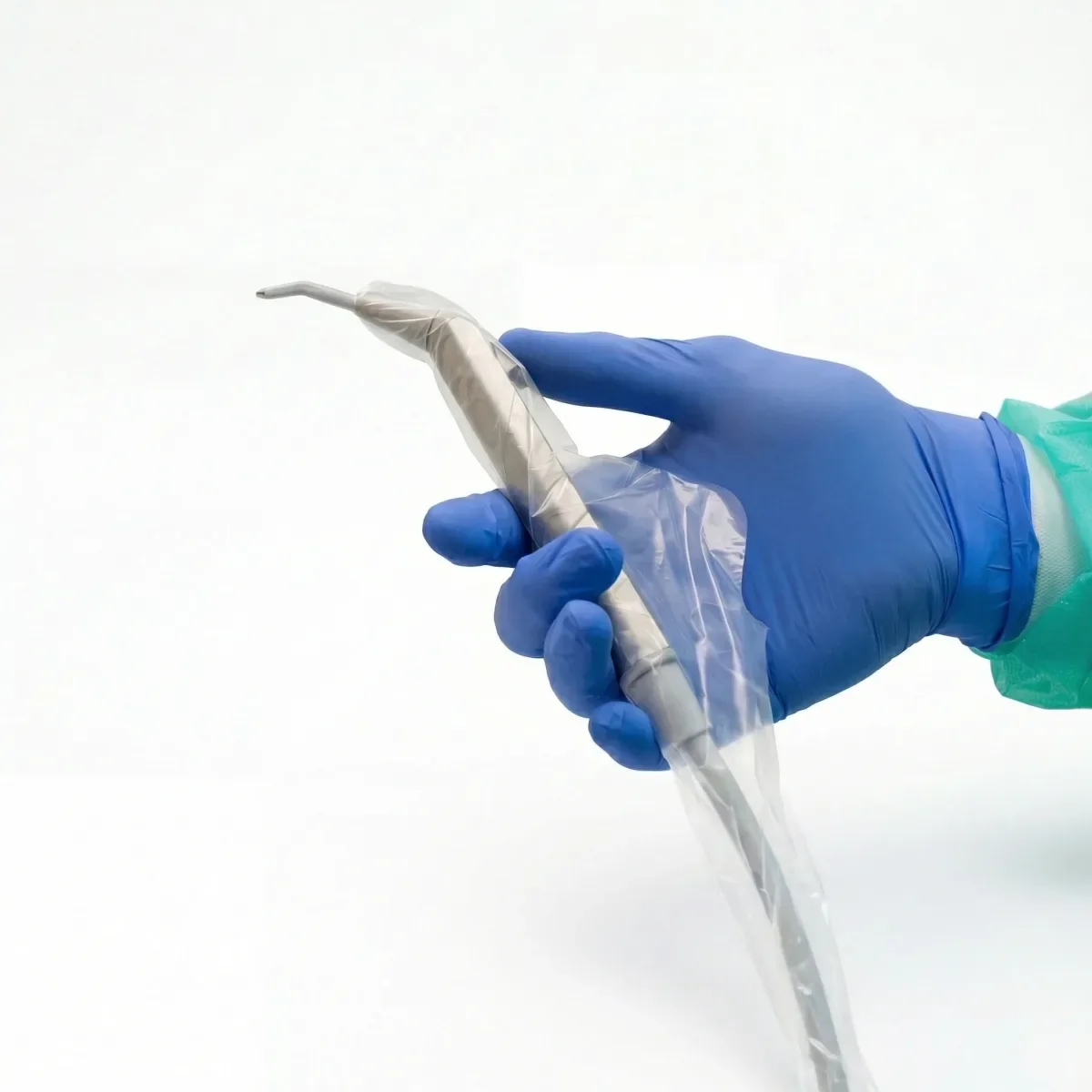
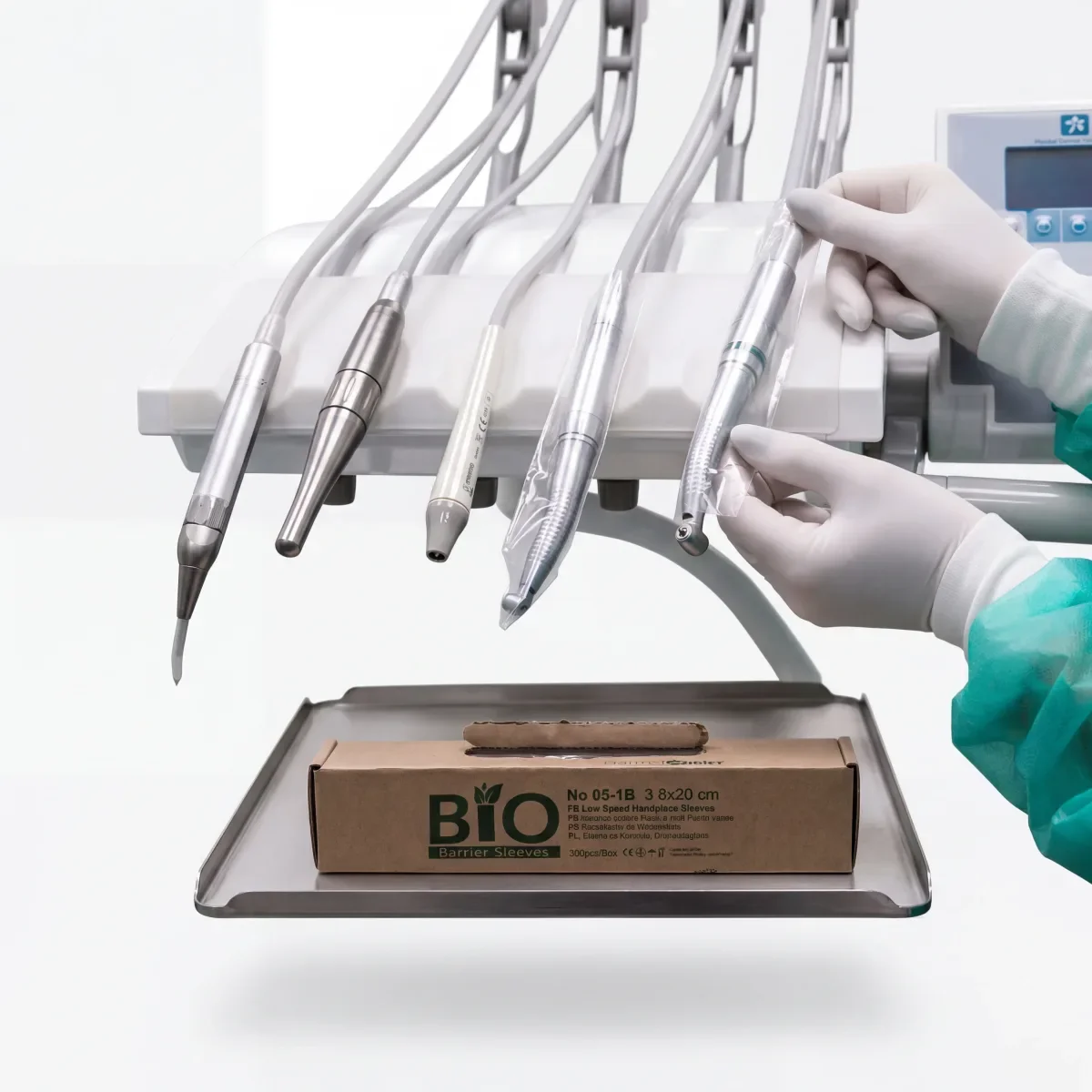
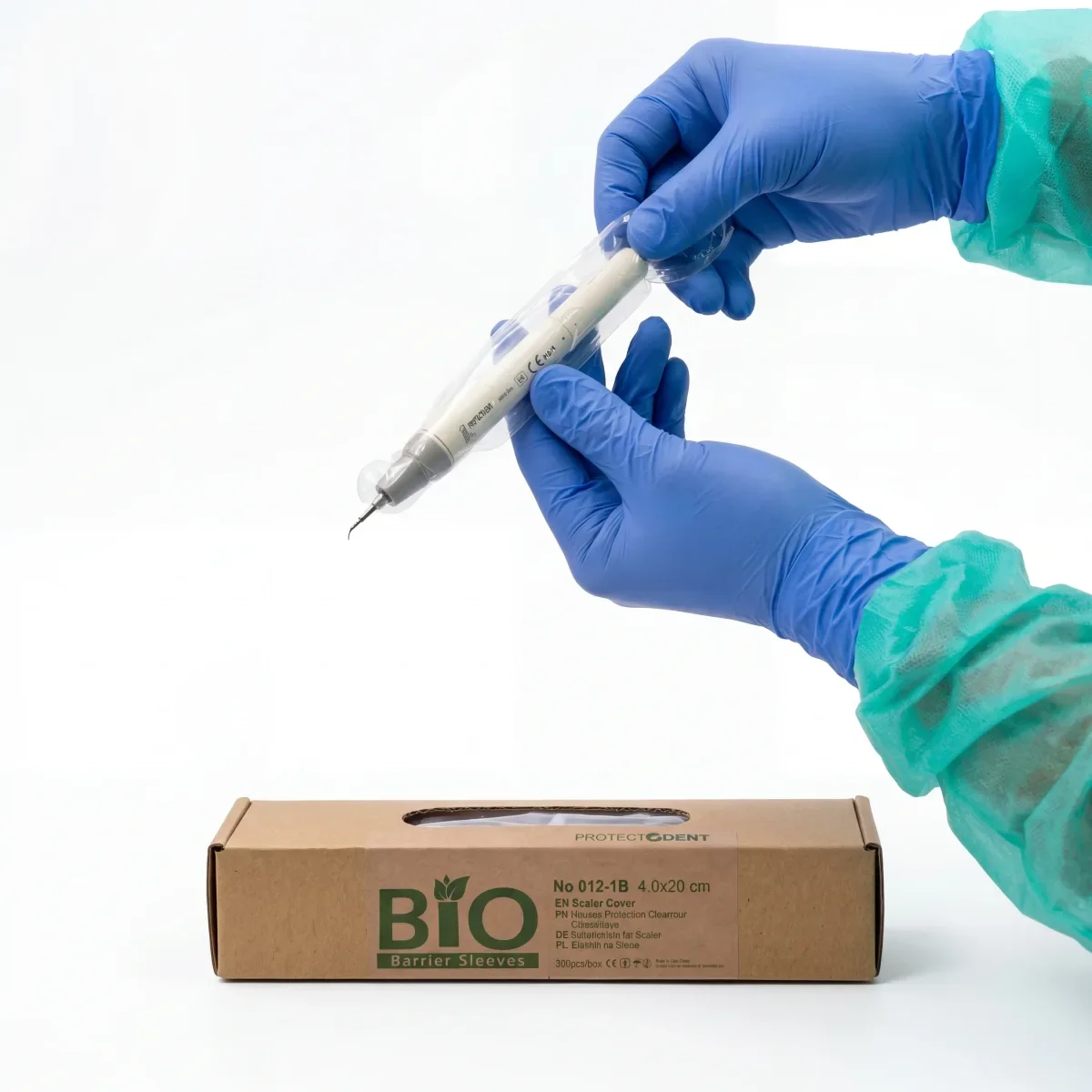
Barriers and waterline care solve different problems. A sleeve protects the outside of a handpiece, scaler or air/water syringe from patient contact and splatter, so you are not relying only on wipes between patients. It does not change the quality of water inside the line, and it should never be presented to staff as a substitute for testing or flushing.
The practical link is the turnover step. When the assistant removes the used sleeves and fits fresh ones, that is the natural moment to also flush the lines for the full 20 seconds. Putting both on the same checklist line makes it less likely that one is skipped on a busy day.
If your audit finds that the flush step is skipped, the fix is usually in the checklist and the room layout, not in new products.
A short audit you can run this week
- Does each unit have its manufacturer's waterline instructions on file?
- Is there a named person, and a date of the last test?
- Was the last result within 500 CFU/mL?
- Is the flush step written into the between-patient checklist?
- Do surgical procedures use a sterile delivery route that bypasses the waterlines?
If any answer is "I don't know", that is where to start.
Frequently asked questions
Does a handpiece sleeve protect against waterline contamination?
No. A sleeve covers the outer surface of the instrument. Water quality depends on how the dental unit's water is treated, tested and flushed.
What is the CDC water quality benchmark?
For routine dental treatment, the CDC says water should meet drinking water standards: no more than 500 CFU/mL of heterotrophic water bacteria.
How long should devices be flushed between patients?
The ADA page says the CDC recommends flushing devices that enter the mouth, such as handpieces, ultrasonic scalers and air/water syringes, for at least 20 seconds between patients.
What water should be used for surgical procedures?
The CDC says to use only sterile solutions as coolant or irrigant, delivered through a sterile bulb syringe, sterile tubing that bypasses the waterlines, or sterile single-use devices.
Sources
- Dental Unit Water Quality — CDC, 2026-11-21
- Dental unit waterlines — American Dental Association, 2026-11-21
- Study highlights importance of waterline infection control — ADA News, 2026-11-21