The Reusable-vs-Disposable Research Doesn't Cover Every Barrier You Use
Why this matters now
In March 2026, the World Health Organization published a global guideline on environmentally friendly oral health care and called on health systems to build "sustainable procurement and supply chains" into everyday practice, not just clinical policy. It landed a few years after FDI World Dental Federation's own consensus statement made a similar point from the industry side, and after peer-reviewed research had already put numbers on where disposable products cost the environment more than reusable ones. None of these documents tells a practice which products to buy. They do make it worth knowing which of your purchasing decisions the research actually covers - and which ones it doesn't.
What the research actually measured
A life-cycle assessment published in the British Dental Journal in 2022 compared the environmental footprint of disposable and reusable personal protective equipment used in dental care. Its headline findings, item for item:
- A disposable gown (71g, manufactured in China) had a 101% higher climate-change impact than a reusable gown (393g, manufactured in Ireland), and used four times more water and three times more fossil fuel across its life cycle.
- A disposable face shield combined with a visor produced roughly five times the CO2-equivalent emissions of a reusable visor, along with four times the water use and three times the fossil-fuel use.
- Among respiratory protection, FFP2-type respirators carried the highest environmental burden across all 16 impact categories the study measured, ahead of standard surgical masks.
FDI's consensus statement, launched in 2022 and still the industry's reference point on this subject, frames the same problem around four actions - Reduce, Recycle, Reuse, Rethink - and names "incineration of waste" and "lack of recyclable packaging" as two of the specific burdens it wants addressed. It also notes that healthcare as a whole accounts for roughly 5% of global greenhouse gas emissions.
What this means in the operatory - and what it doesn't
The research is about items that can genuinely be either disposable or reusable: gowns, eyewear, masks. For that category, the data gives a real basis for a purchasing conversation - a reusable gown or visor, properly laundered and reprocessed between patients, carries a smaller footprint than its disposable equivalent.
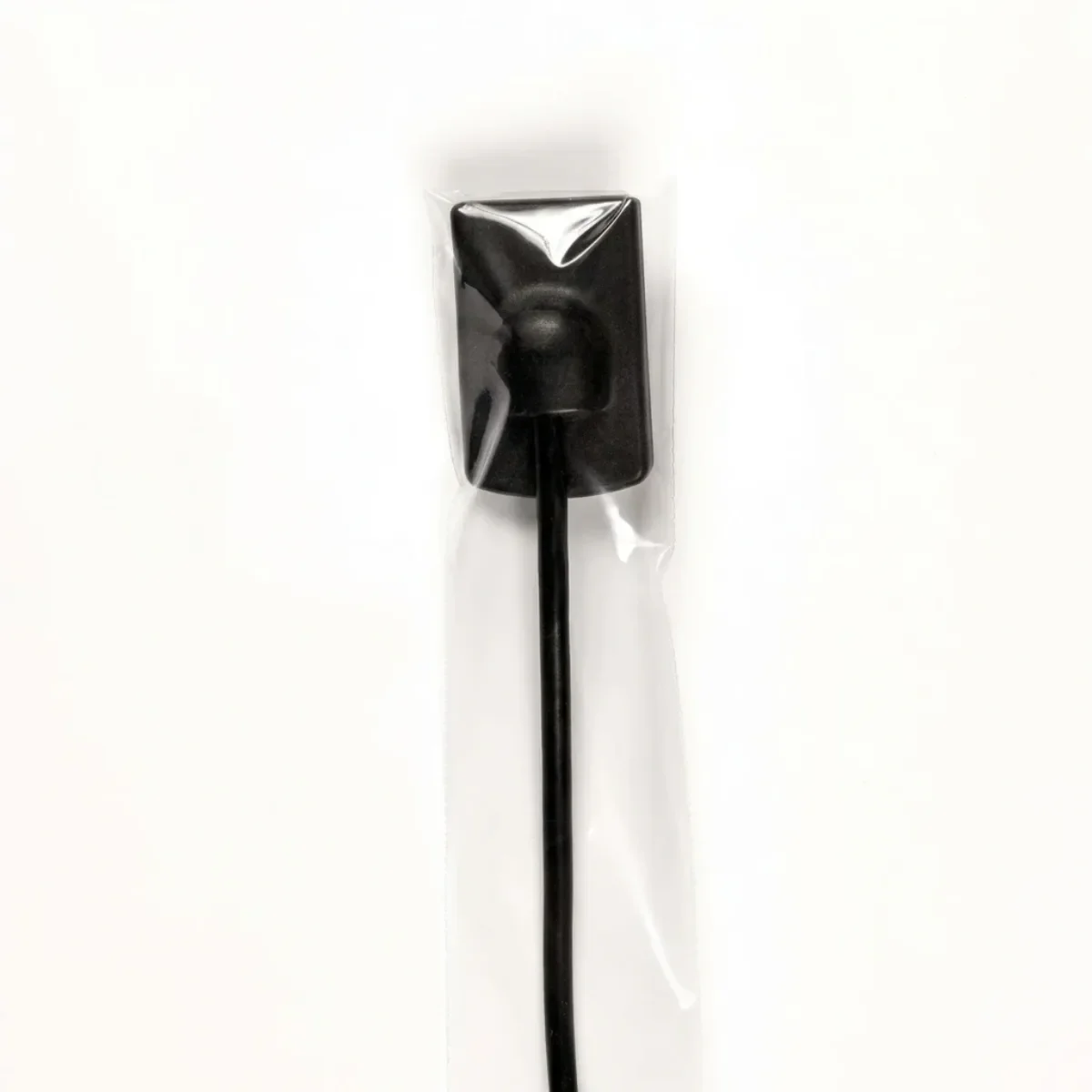
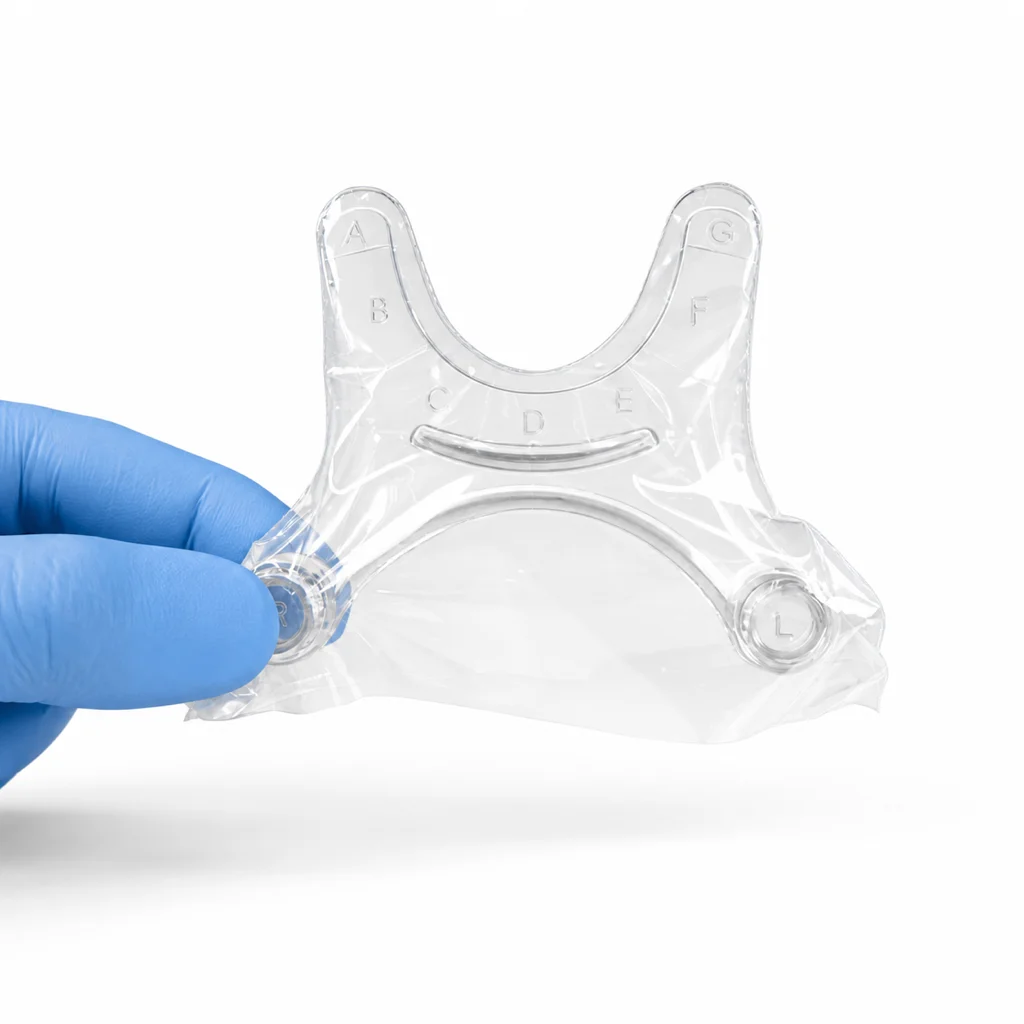
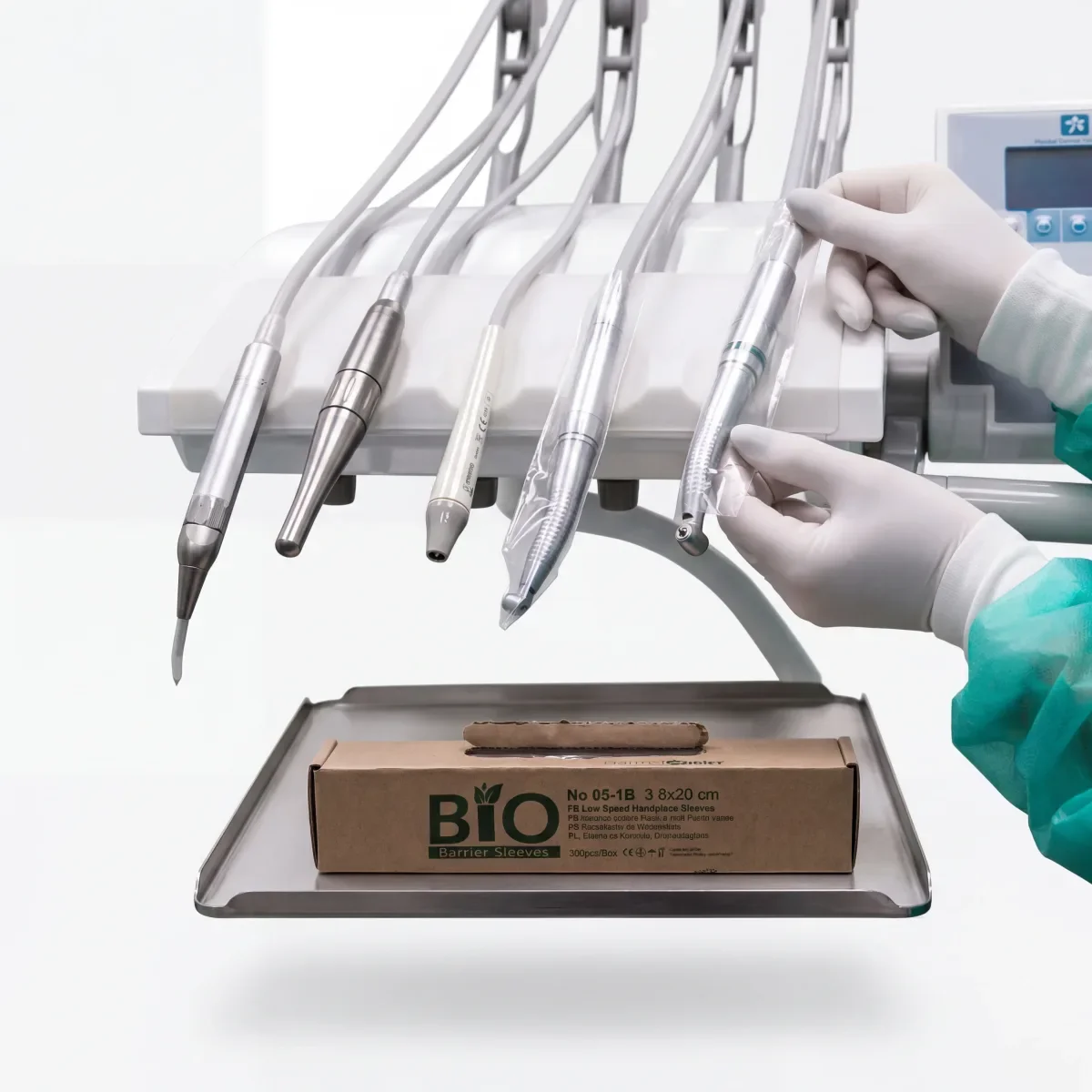
It does not extend to barriers that exist specifically because the equipment underneath cannot be reprocessed the same way between patients. A sensor sleeve, a handpiece sleeve, a bite block sleeve or a keyboard cover is single-use by design: the point is to remove and discard the whole barrier before the next patient rather than clean the surface it protected. There is no reusable version of that decision to make - the reusable-vs-disposable comparison the life-cycle studies ran simply doesn't apply to this product category, because reuse was never an infection-control option here in the first place.
For that second category, the sustainability question that is actually live is narrower: what the sleeve is made of, and what happens to the box it ships in. Some barrier products are already made from oxy-biodegradable plastic and shipped in recyclable paper packaging - a genuine lever for a category where the item itself has to be discarded after one patient regardless of what any research on reusables says.
What to check
- For PPE you launder and reissue - gowns, protective eyewear - check whether a reusable option is validated for your infection-control protocol before assuming disposable is the only route.
- For equipment barriers that must stay single-use, check the material (is "biodegradable" a claim the manufacturer substantiates, and how) and whether the shipping packaging is recyclable.
- Keep the two categories separate when a supplier or a marketing claim uses "sustainable" as a blanket word for everything in a catalogue. FDI's four Rs are a reasonable way to sort a purchase into "reduce or rethink the item" versus "recycle or reuse what's left of it."
Frequently asked questions
Does this research mean we should stop using disposable sensor or handpiece sleeves?
No. The published life-cycle data compares reusable and disposable PPE such as gowns and face shields. Sensor, handpiece and bite block sleeves exist to protect equipment that isn't reprocessed the same way between patients, so a reusable-vs-disposable comparison doesn't apply to them the same way.
What does WHO's March 2026 guideline actually require of a dental practice?
It's a set of recommendations addressed to national health systems and policymakers, not a binding rule for individual practices. It calls for sustainable procurement and improved waste management to be built into oral health policy.
Which PPE items showed the biggest environmental difference between disposable and reusable versions?
A 2022 British Dental Journal life-cycle assessment found a disposable face shield and visor produced about five times the CO2-equivalent emissions of a reusable visor, and a disposable gown had roughly double the climate-change impact of a reusable one.
What should we ask suppliers about barrier products that have to stay single-use?
Ask what the plastic is made from (for example, whether it's genuinely oxy-biodegradable) and whether the shipping packaging is recyclable. Those are the levers left once the item itself has to be disposable.
Is there one standard that defines a 'sustainable' dental product?
No single standard covers all of it. FDI World Dental Federation's consensus statement offers a four-part framework - Reduce, Recycle, Reuse, Rethink - for evaluating purchases, but it is not a certification scheme.
Sources
- WHO calls for a global shift to environmentally friendly, less invasive and affordable oral health care — World Health Organization, 2026-09-24
- The planetary health effects of COVID-19 in dental care: a life cycle assessment approach — British Dental Journal, 2026-09-24
- FDI World Dental Federation launches consensus statement on sustainable oral healthcare — FDI World Dental Federation, 2026-09-24