New Handpiece Coating, Same Old Hose: What W&H's Announcement Doesn't Change
W&H published a press release on 3 March 2026 introducing an upgrade to its Synea Fusion turbine line: a factory-applied ScratchBlocker coating, described as "a special silicon oxide coating" that resists mechanical wear and keeps the handpiece surface looking new for longer. W&H's own line about the benefit is worth reading closely: "smooth, undamaged surfaces facilitate cleaning and simplify the reprocessing workflow."
If your practice is due for a turbine order, or you're just reading the spec sheet on the box that arrived, it's worth being precise about what that sentence covers — and what it doesn't.
What the coating actually is
According to W&H, the Synea Fusion upgrade bundles three things starting from the March 2026 production run: the ScratchBlocker coating itself, a 24-month warranty (up from the previous cover), and up to 29 watts of power measured to ISO 14457 through what W&H calls an optimised Power Blade rotor. The turbines also keep W&H's existing hygienic head system, four-fold spray cooling, and LED+ illumination.
The coating sits on the outer shell of the turbine head — the part that unclips from the hose and goes into the autoclave between patients. W&H's framing is about that reprocessing step specifically: a scratch-free surface has fewer micro-grooves for debris to lodge in, so cleaning it before sterilisation takes less scrubbing and less risk of missing a spot. That is a real, useful claim about the head. It is not a claim about anything downstream of the head.
The hose was never going in the autoclave
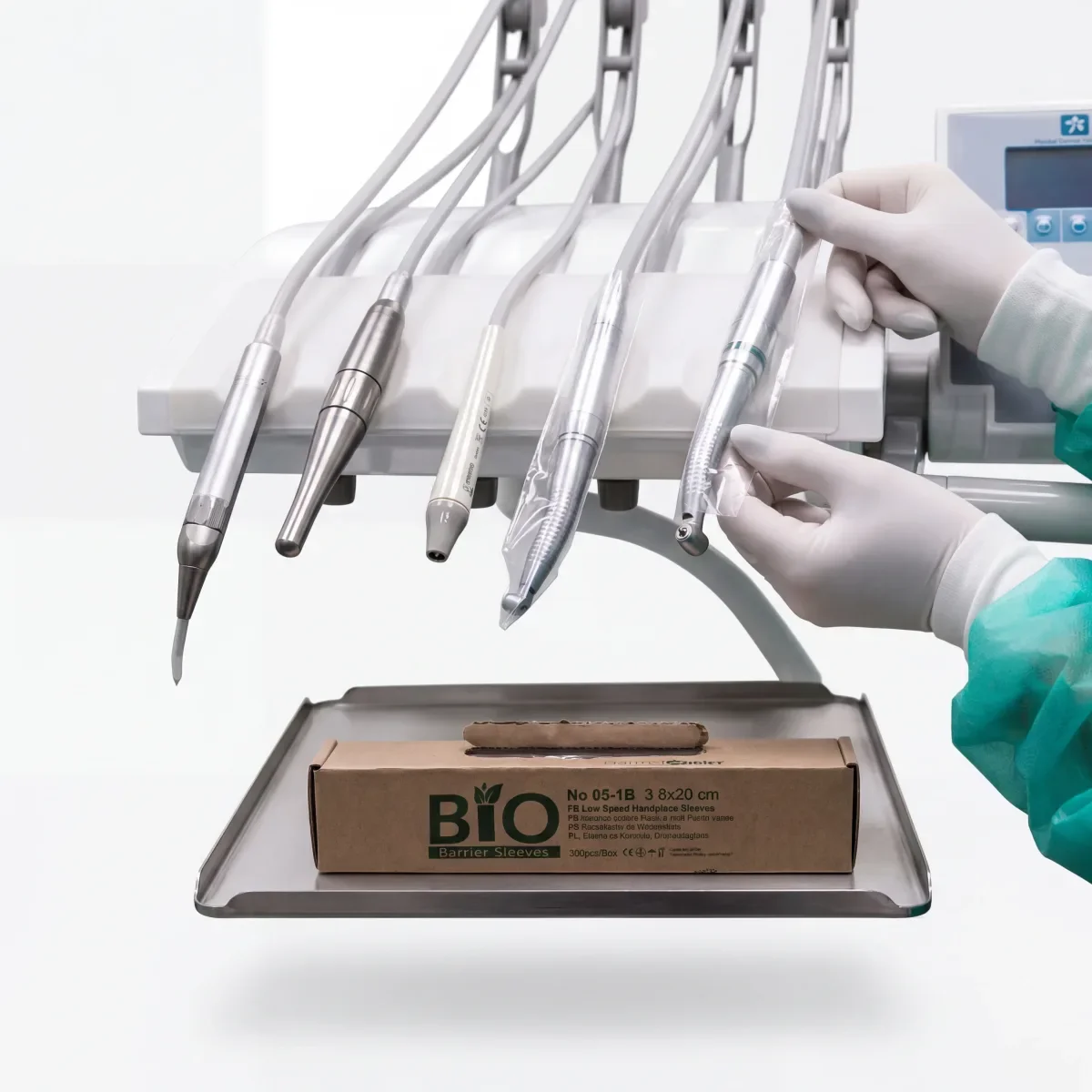
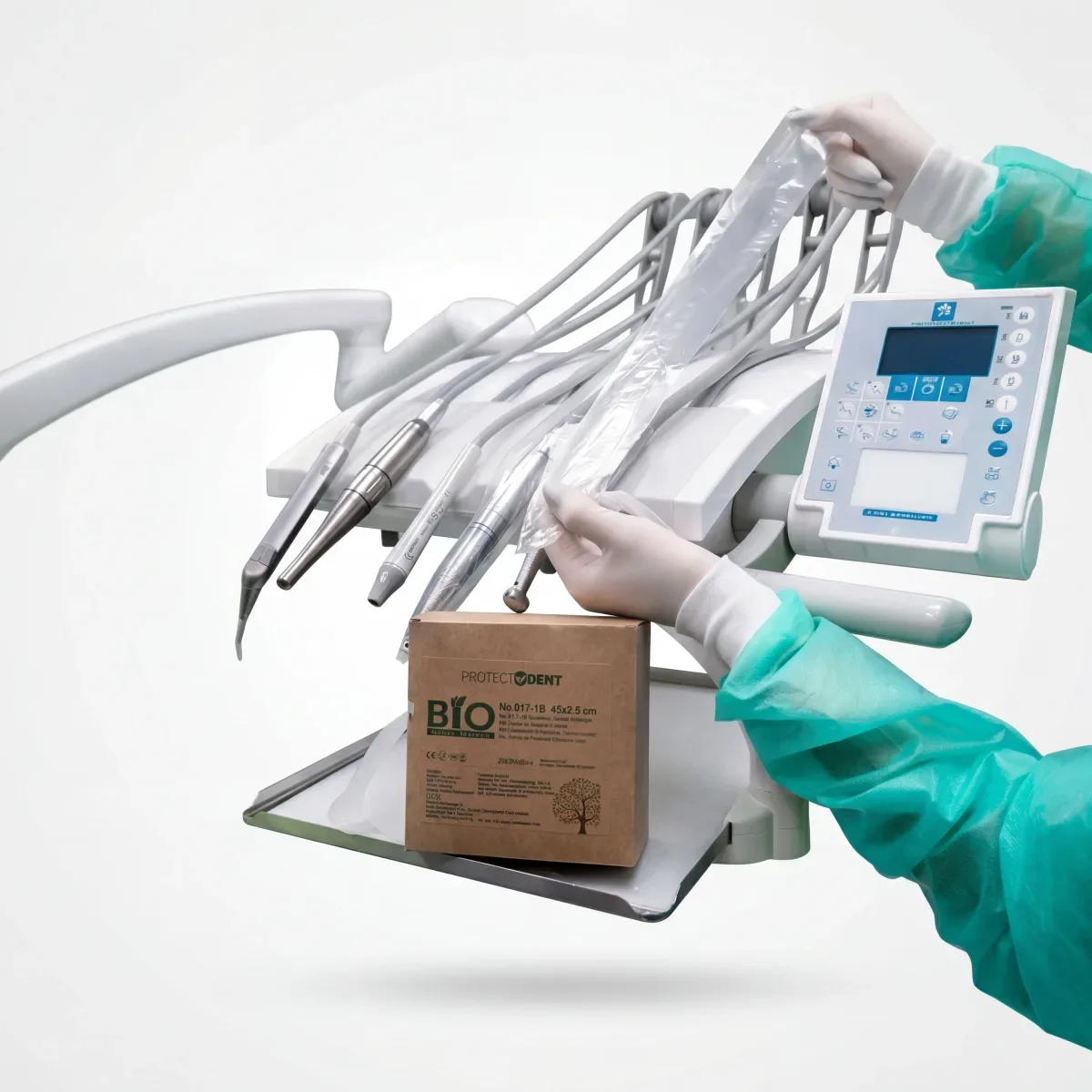
The turbine head separates from the motor and hose specifically because the head can tolerate 134°C steam and the hose assembly cannot be run through the same cycle on every patient. That split is the whole reason surface barriers exist for handpiece systems in the first place. As Dental Economics puts it in its overview of operatory surface barriers, "hoses and connectors are easily covered with plastic tubing secured with tape or a rubber band at the connector" — because, unlike a handpiece head with a removable, sterilisable shell, a hose and its coupling stay in place through the appointment and are impractical to strip down and sterilise between every patient.
A new coating on the head changes nothing about that split. The hose, the motor coupling, and the point where the cable plugs into the delivery unit are exactly as much a barrier job on the day the new turbines arrive as they were the day before.
What to check Monday morning
- Confirm your team still knows the head/hose boundary: head goes to the autoclave every patient regardless of coating; hose and coupling get a fresh barrier every patient regardless of coating.
- If new turbines are on order, don't let "easier to clean" language get generalised into "needs less barrier coverage" during staff handover — it's a claim about pre-sterilisation cleaning time on the head, not about the hose.
- W&H also maintains an online reprocessing walkthrough, AIMS, that steps through instrument handling from removal to storage — a reasonable reference to re-check when a new handpiece model changes your workflow, precisely because it treats hose handling and head sterilisation as separate stages rather than one step.
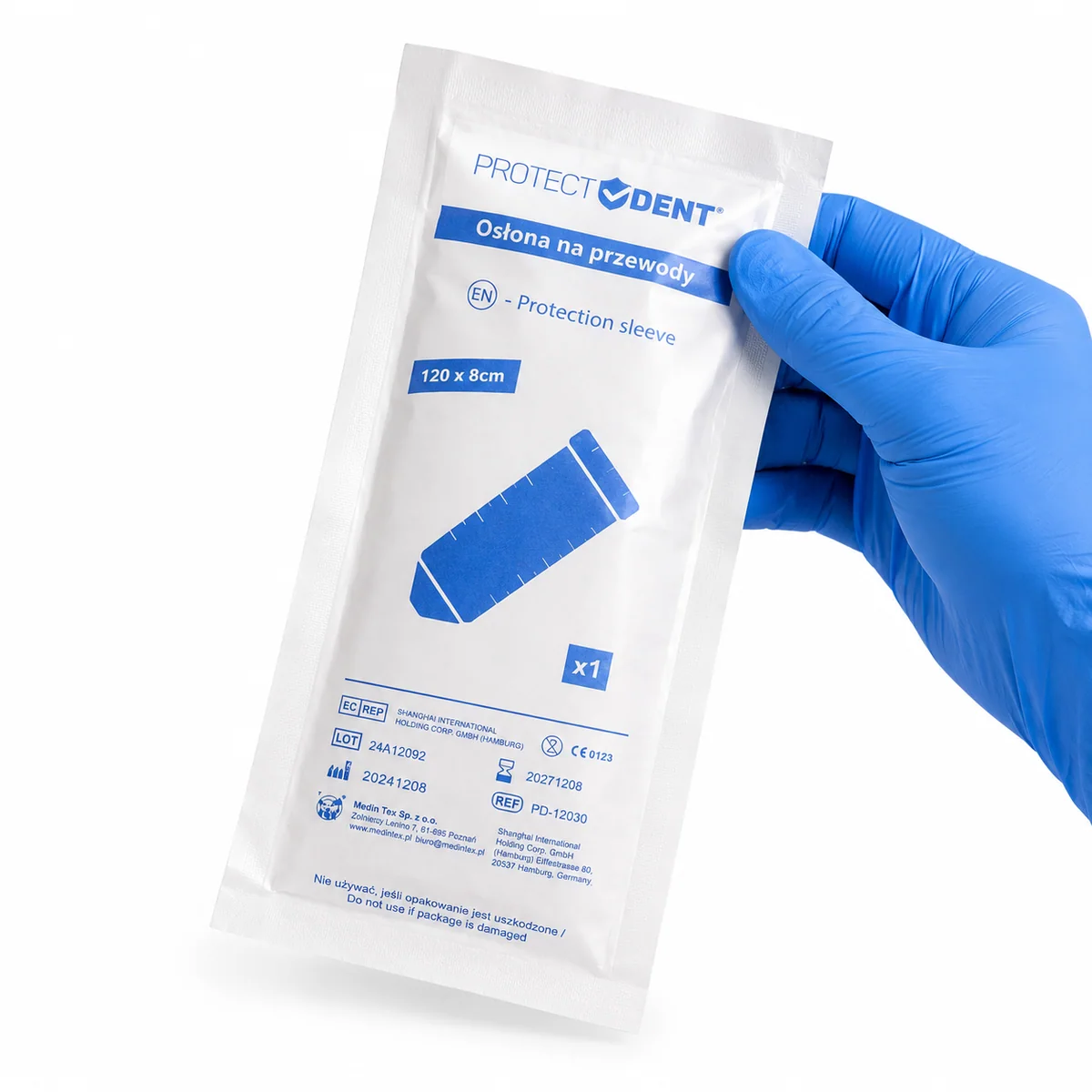
- Re-stock hose and coupling sleeves alongside the turbine order, not as an afterthought once the new equipment is already on the tray.
None of this is a criticism of the coating — a turbine head that's genuinely easier to get clean before it goes into the chamber is a small, real win for the person doing the scrubbing. It just answers a different question than the one a barrier sleeve answers.
Sources
- Premium Features for Synea Fusion — W&H, 2026-09-01
- Surface barriers — Dental Economics, 2026-09-01
- Reprocessing made easy: With the W&H AIMS workflow 2.0 — W&H, 2026-09-01