The Keyboard Next to Your Chair Is a Contamination Reservoir Nobody Audits
Why this matters now
Digital charting, imaging software and intraoral scanner interfaces have put a keyboard, a mouse and often a personal phone within arm's reach of the chair in most modern practices. Between patients, staff change gloves, wipe the chair, and swap the barrier on the sensor — and then reach for the same keyboard they touched with the last patient's gloves still on. Two studies that actually tested these surfaces found roughly what you'd expect: they are contaminated, and barrier protocols rarely cover them the way sensor and handpiece protocols do.
What the research found
A 2021 study in Bioinformation sampled laptops and mobile phones used by clinical staff at a dental college and tested them for pathogenic organisms. The results: 88% of laptops and 98% of mobile phones carried detectable pathogens, most commonly Staphylococcus aureus, along with coagulase-negative staphylococci, Bacillus species, enterococci, micrococci, Pseudomonas and Acinetobacter. The authors' response was straightforward — disinfect hands before touching the device, and wipe the device itself with alcohol between uses.
A separate review in Dimensions of Dental Hygiene looked at how dental technology fits into existing infection-control routines. It cites research finding 91% of office mice and keyboards contaminated, and — worth noting even though it is a different device category — digital sensor contamination rates as high as 51% even under an intact plastic barrier. The conclusion that matters for a barrier-sleeve protocol is the one about barriers themselves: a barrier alone is not the whole answer. Perforation and micro-tear rates on some barrier materials ran 44–51% in the research the review cites, so a barrier needs to be paired with disinfection, not treated as a substitute for it.
What this means in the operatory
None of this is a reason to add another disinfectant wipe to every surface in the room. It is a reason to look at where the keyboard, mouse and any shared tablet or phone actually sit in your between-patient sequence.
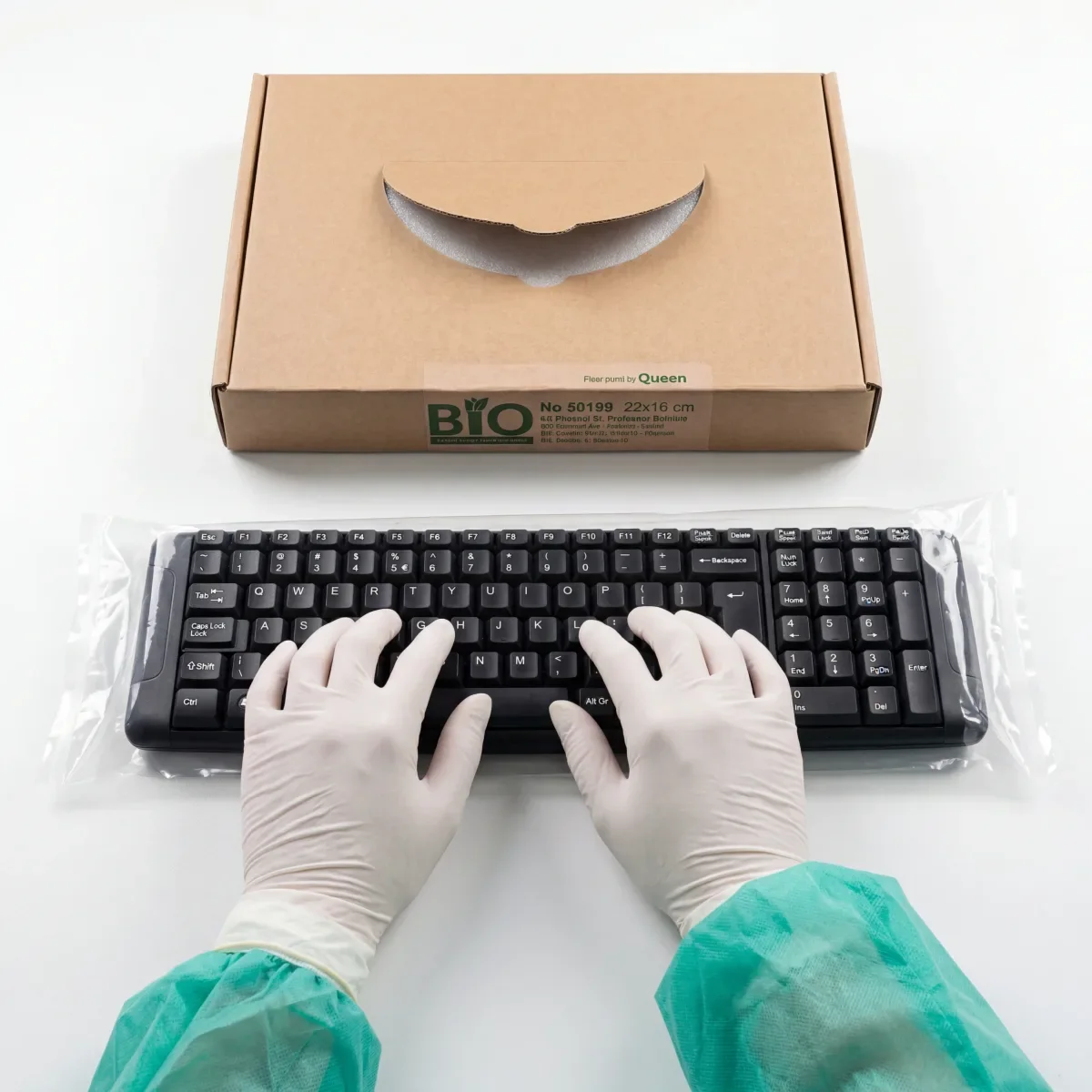
- The order matters. If the keyboard gets touched to close one patient's chart before gloves come off, and touched again to open the next patient's chart before gloves go back on, it has been touched with contaminated gloves and with clean hands in the same cycle. A barrier sleeve on the keyboard and mouse removes that ambiguity — staff are not relying on memory to know which touch was which.
- Barriers still tear. The research above puts barrier perforation in double digits. A sleeve that looks intact is not proof it did its job — check it on removal, not just before use.
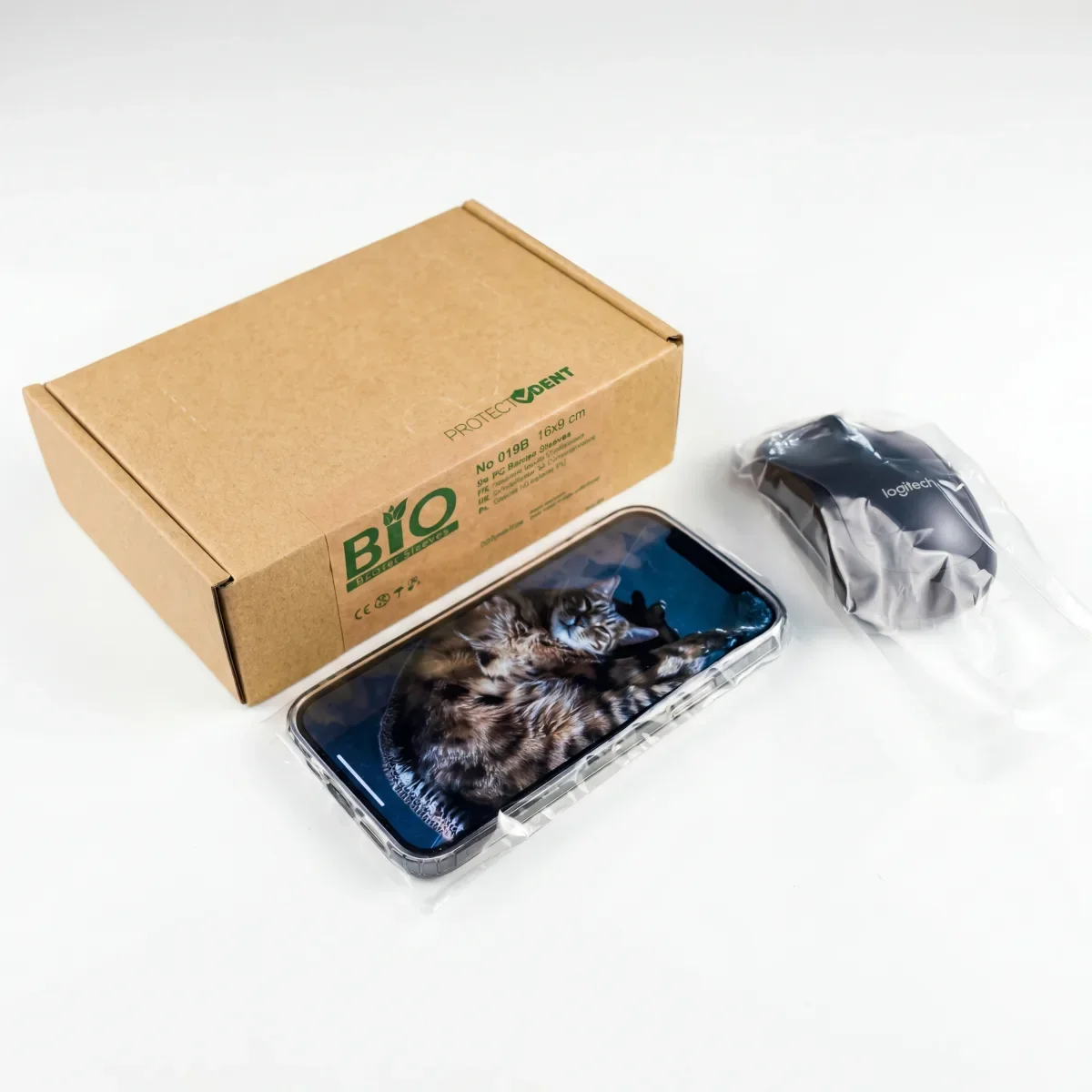
- Phones count as clinical contact surfaces if they stay in the operatory. A phone used to photograph a chart, check a message, or reference a shade guide mid-appointment picks up the same contamination the laptops carried in the cited study. If it does not leave the room, it needs the same barrier logic as anything else at chairside.
- Shared workstations are the highest-risk point. A keyboard used by whoever charts next — hygienist, assistant, associate — accumulates contact from more hands per day than almost anything else in the room.
What to check
- Does your between-patient checklist name the keyboard, mouse and any chairside phone or tablet by item, or does it just say "wipe down surfaces"?
- Are barrier sleeves sized correctly for the actual hardware — a loose sleeve on a mouse shifts and exposes the underside within a few clicks.
- Is there a fallback disinfection step for the device itself, for the days a sleeve tears or nobody put one on?
- Who restocks keyboard and mouse sleeves — is it on the same order as sensor sleeves, or does it get forgotten because it sits in a different part of the supply cupboard?
This is not clinical advice about infection risk to patients. It is a description of where contamination has been measured on office technology, and what a barrier protocol can and cannot do about it on its own.
Sources
- Hidden reservoirs of pathogens in dental settings — Bioinformation (PMC / NIH), 2026-08-29
- Technology-Related Infection Control Challenges — Dimensions of Dental Hygiene, 2026-08-29