ISO Rewrote the Standard for Portable Dental Equipment. Barriers Cover What It Doesn't.
Why this matters now
ISO published a revised edition of its general requirements standard for portable dental equipment, ISO 23402-1:2026, in July 2026. It replaces the 2020 edition and covers portable units, chairs, stools, operating lights, suction sources and compressors built to be disassembled and carried between sites. None of it is about infection control. It is about construction, transport and general safety.
That is worth saying plainly, because the standard lands on a category of practice whose infection-control picture already has a known gap. CDC's dental infection-control guidance explicitly covers "nontraditional settings that often use portable dental equipment, such as clinics held in schools for sealant and fluoride placement and in other sites for humanitarian dental missions." But the recommendations behind that guidance were written for fixed, plumbed offices. The professional body that maintains the field checklist for these settings, the Association for Dental Safety (the organisation formerly known as OSAP), says as much on its own portable-and-mobile resource page.
What actually changed
ISO 23402-1:2026 (second edition, from ISO/TC 106/SC 6) sets general requirements and test methods for:
- portable dental units
- patient chairs and operator stools
- operating lights
- suction source equipment
- air compressors
- other portable equipment designed and built to be transported for use in non-permanent healthcare environments
It explicitly excludes stationary equipment, wearable items such as loupes and headlamps, portable gear not intended for this use, and, notably, stationary equipment installed inside a vehicle- or container-based mobile clinic. Device-specific requirements for each equipment type are reserved for later parts of the series, so this edition is general requirements only.
What this means for a portable day
None of that revision touches reprocessing or barrier use. But it is a useful prompt to look at the gap CDC and the ADS both point at directly. CDC's own guidance was built around dental settings that use traditional, fixed equipment. A school gymnasium or a hallway table set up for a sealant day does not have the sink, the autoclave or the dedicated instrument-processing area that guidance assumes. The ADS's site-assessment checklist exists specifically because program directors asked for guidance tailored to settings using portable equipment, and the fixed-office version did not map cleanly onto that work.
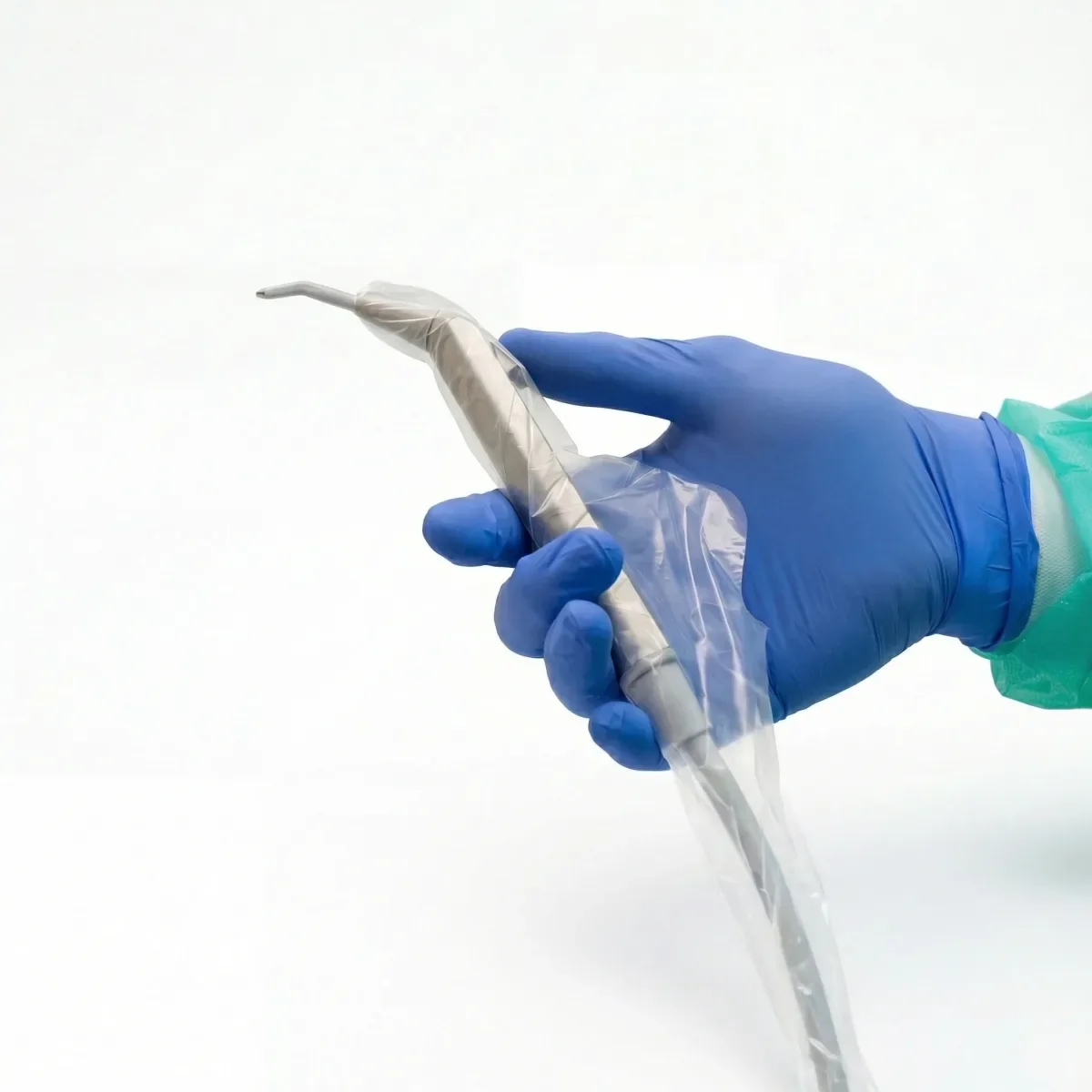
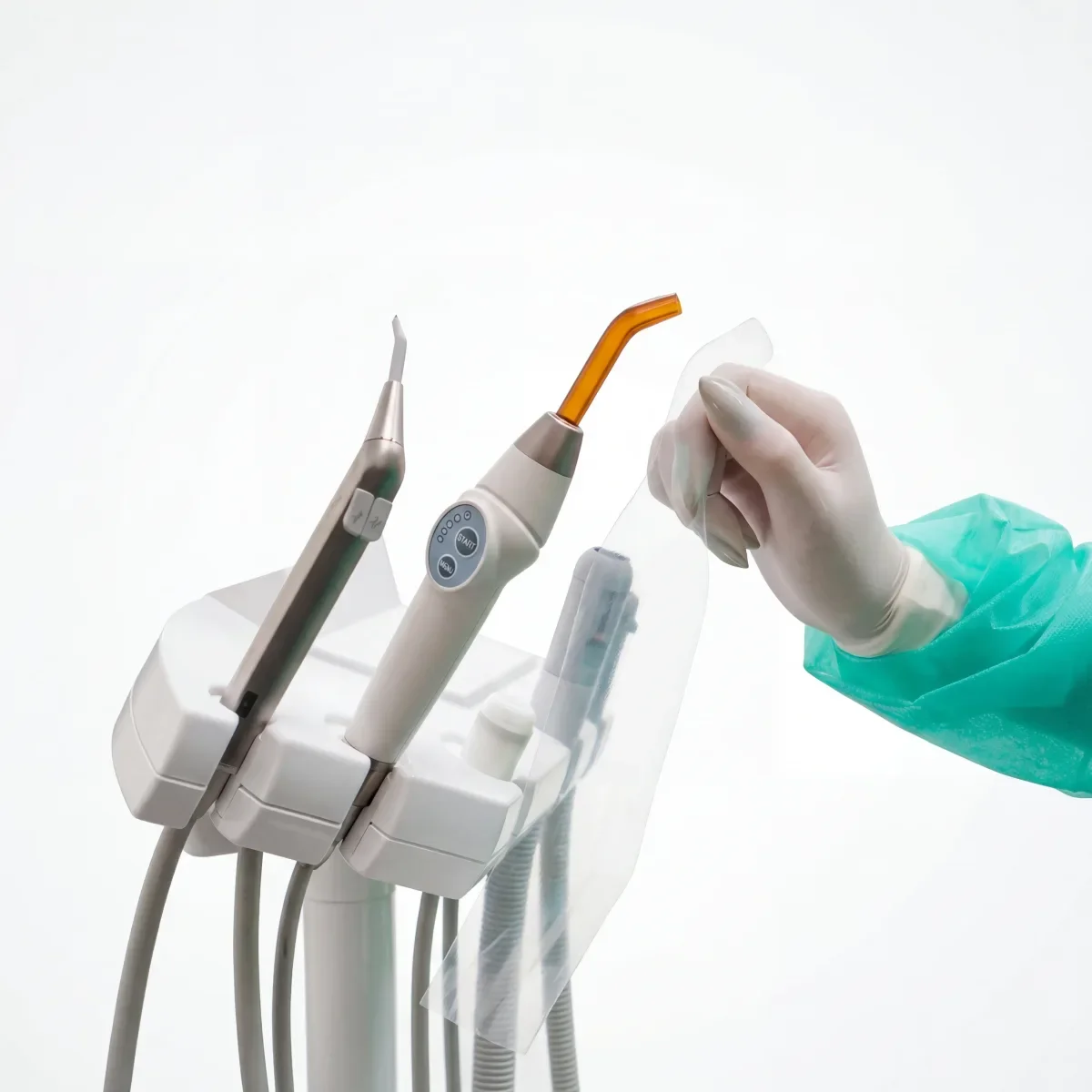
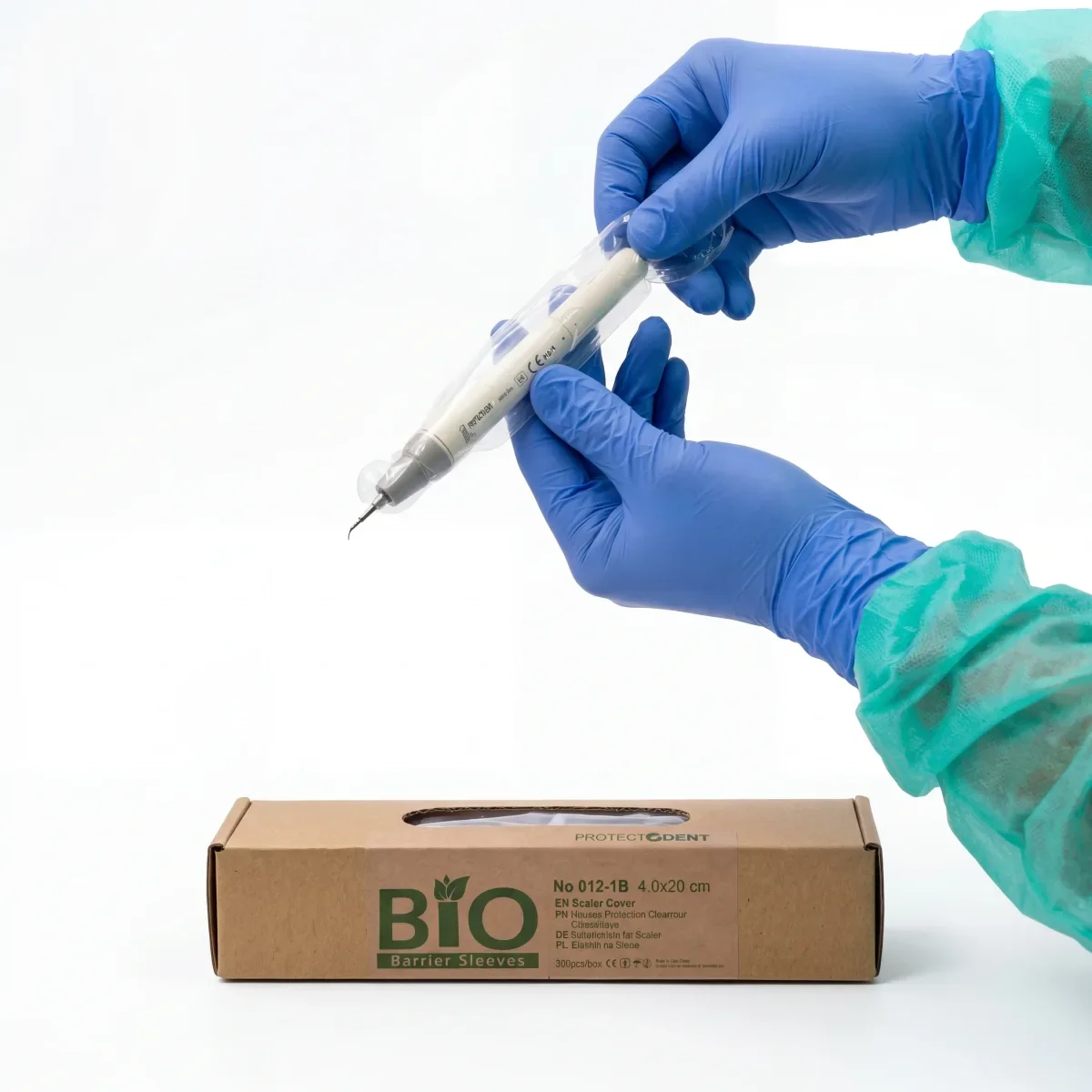
The practical consequence is not abstract. At a fixed chair, a handpiece, a scaler or a curing light goes into the autoclave between patients. On a portable day — a school visit, a care-home round, an outreach clinic running out of one van and a folding chair — that reprocessing step depends on equipment you may not have brought along, or time you do not have between patients. A touchpoint that cannot go through an autoclave on site still has to be dealt with somehow, and a single-use barrier on that touchpoint is what stands in for the step the setting cannot support.
What to check
- Which touchpoints travel with your portable kit — handpiece or scaler body, curing light wand, light handle, air/water syringe — and whether each one can actually be reprocessed between patients at the site you are working.
- Where reprocessing on site is not realistic, whether a barrier is already on that touchpoint before the day starts, not improvised once you get there.
- If you are buying new portable equipment, whether it is built and labelled for this use under ISO 23402-1:2026, rather than adapted fixed-office gear.
- Whether your outreach team has looked at the ADS's own site-assessment checklist before the next placement. It is written for exactly this setting.
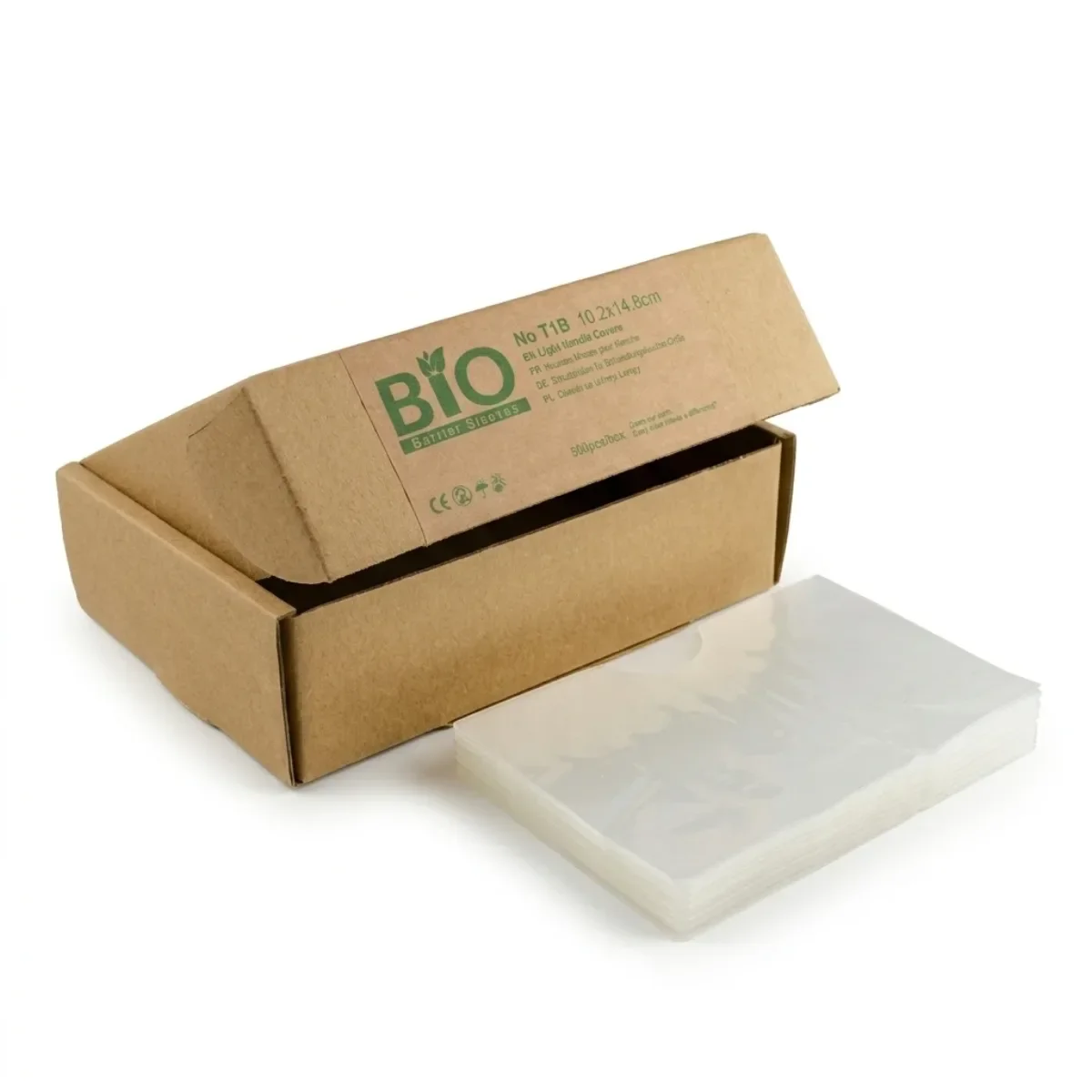
We make barrier sleeves for several of these touchpoints. What we cannot do is reprocess a handpiece in a school gymnasium. The barrier is the part that travels with you.
Frequently asked questions
Does ISO 23402-1:2026 cover infection control for mobile dental equipment?
No. It covers general build, transport and safety requirements for portable dental units, chairs, lights, suction and compressors — reprocessing and infection control aren't part of its scope.
Does CDC's dental infection-control guidance apply to school sealant programs and mobile clinics?
Yes. CDC names nontraditional settings using portable equipment, including school sealant and fluoride clinics and humanitarian dental missions, as within scope — but its recommendations were written with fixed, plumbed offices in mind.
Why is infection control harder to standardise for portable dental settings?
A fixed office has an on-site autoclave, sink and dedicated processing area that the main CDC guidance assumes. A gymnasium or hallway set up for a single day often has none of that, which is why the Association for Dental Safety built a separate checklist for these settings.
Which equipment in a portable kit needs the most attention?
Touchpoints that would normally go into the autoclave between patients at a fixed chair — handpiece or scaler bodies, curing light wands, light handles and air/water syringes — need a plan for when on-site reprocessing isn't realistic.
Sources
- ISO 23402-1:2026 — Dentistry — Portable dental equipment for use in non-permanent healthcare environments — Part 1: General requirements — ISO, 2026-10-22
- Summary of Infection Prevention Practices in Dental Settings: Basic Expectations for Safe Care — CDC, 2026-10-22
- Portable & Mobile Dentistry — Association for Dental Safety (OSAP), 2026-10-22