Plates and Sensors: What a New Review Says About Contamination Under the Barrier
A narrative review published on 2 November 2026 in Frontiers in Oral Health looks at one question: how do reusable digital imaging parts get contaminated, and how well do barriers and disinfectants deal with it? It is a review of existing studies, and its authors say its recommendations are evidence-informed, not validated requirements. Still, it gives a practice a good reason to check one routine: wrapping, exposing, unwrapping and processing.
What the review found
The authors pooled laboratory and clinical studies on phosphor plates (PSP) and solid-state sensors. The numbers worth knowing:
- Across clinical studies of barrier-protected phosphor plates, contamination was reported on roughly 17% to 73% of plates. The authors link this mainly to handling (perforation, incomplete sealing, non-aseptic removal) rather than to the barrier material alone.
- In one controlled clinical study, the outside of an intact envelope became heavily contaminated after one minute in the mouth. Taking the plate out of the envelope is therefore a separate contamination route.
- For solid-state sensors, the evidence is mostly barrier testing. Sheath leakage after a single use was 44% to 51%, and no more than 6% when a finger cot was added. Perforation ranged from 22% to 58% depending on barrier thickness, and double barriers reduced it.
- Disinfectants differ in both efficacy and compatibility. An ethanol-based wipe killed the test organisms but degraded one plate brand after as few as five wipes. 2-propanol left survivors at high inoculum. Peracetic acid at 0.2% eliminated the organisms but reduced image quality after repeated wiping.
The review also says that no study it identified links imaging equipment to a documented patient infection. In the authors' words, that gap should be read "neither as reassurance nor as alarm". Contamination is a plausible pathway, not demonstrated transmission.
What older guidance says
This is not new advice. A 2018 article in Decisions in Dentistry cites a study of up to 51% contamination under barriers on digital sensors, and a 0.04 mm single plastic barrier with 44% to 51% perforation. It concludes that barriers plus intermediate-level disinfection is the best practice, and that a barrier alone may give a false sense of protection.
The Faculty of Dental Surgery of the Royal College of Surgeons of England made similar points in its June 2020 imaging recommendations. It says barrier envelopes on sensors and plates should follow the manufacturers' recommendations and local policy, and that double wrapping may be considered. It notes that saliva sometimes passes inside a poorly sealed envelope, so the envelope needs cleaning with a disinfectant that both manufacturers allow. For plates, it asks for a no-touch technique or a second operator handling a disinfected surface. It also recommends barrier-wrapping the patient-contact areas of panoramic and CBCT units and the control panel.
What to change on Monday
- Inspect every envelope before it goes in the mouth. Look for a tear or a poor seal. The review recommends visual inspection of each sealed envelope.
- Decide who touches what. Write down who unwraps the plate or sensor, and where the contaminated envelope is dropped. The unwrapping step is where the review sees a lot of the risk.
- Check your disinfectant against the device. Read both the sensor or plate maker's instructions and the disinfectant's label. Wipe rather than spray, as the review prefers for enveloped plates.
- Consider a second layer where the manufacturer allows it. Double barriers and finger cots reduced perforation and leakage in the studies reviewed.
- Don't forget the peripherals. Keyboards, mice and control panels were routinely contaminated in the limited data the review found. A barrier on the control panel is a quick fix.
Where barriers fit
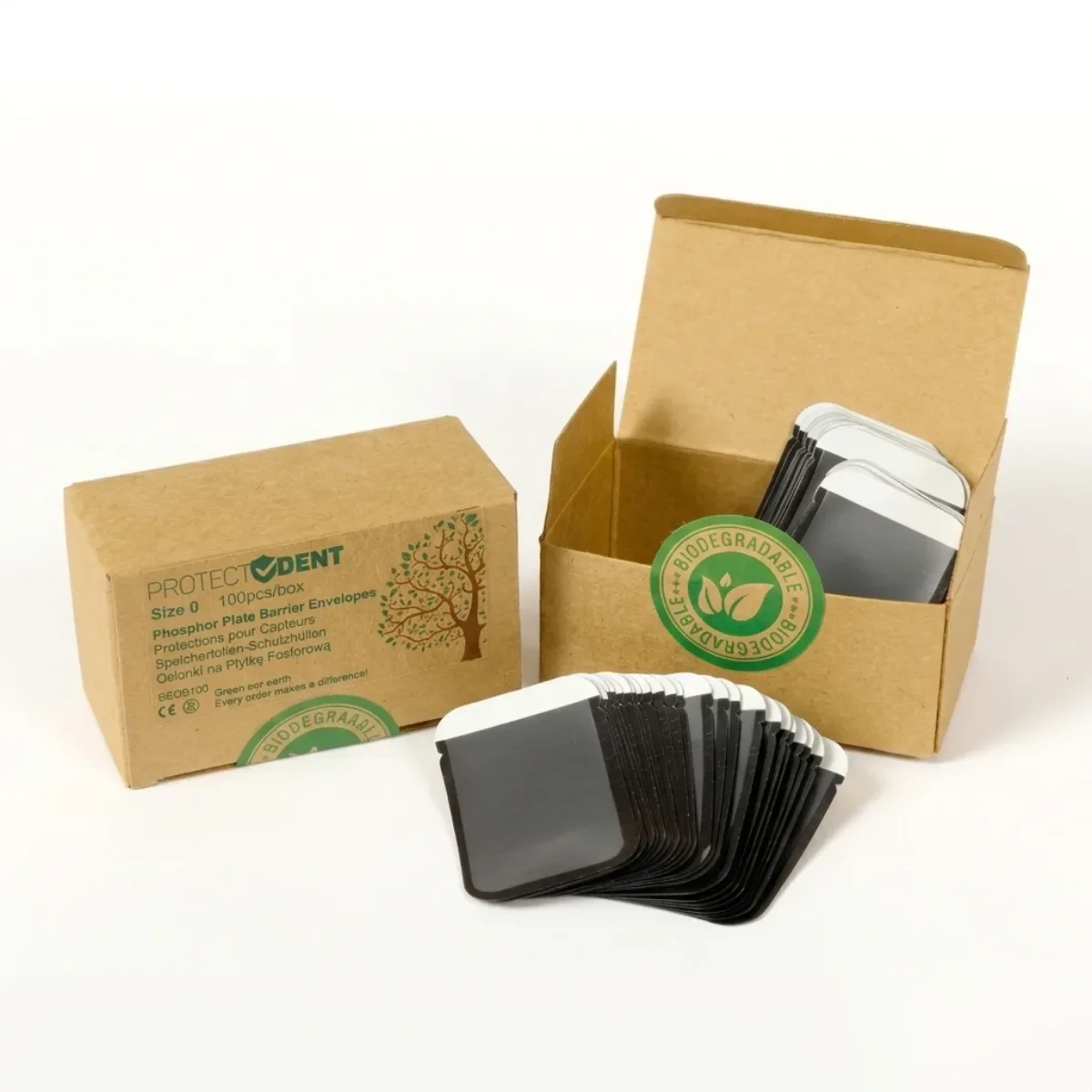
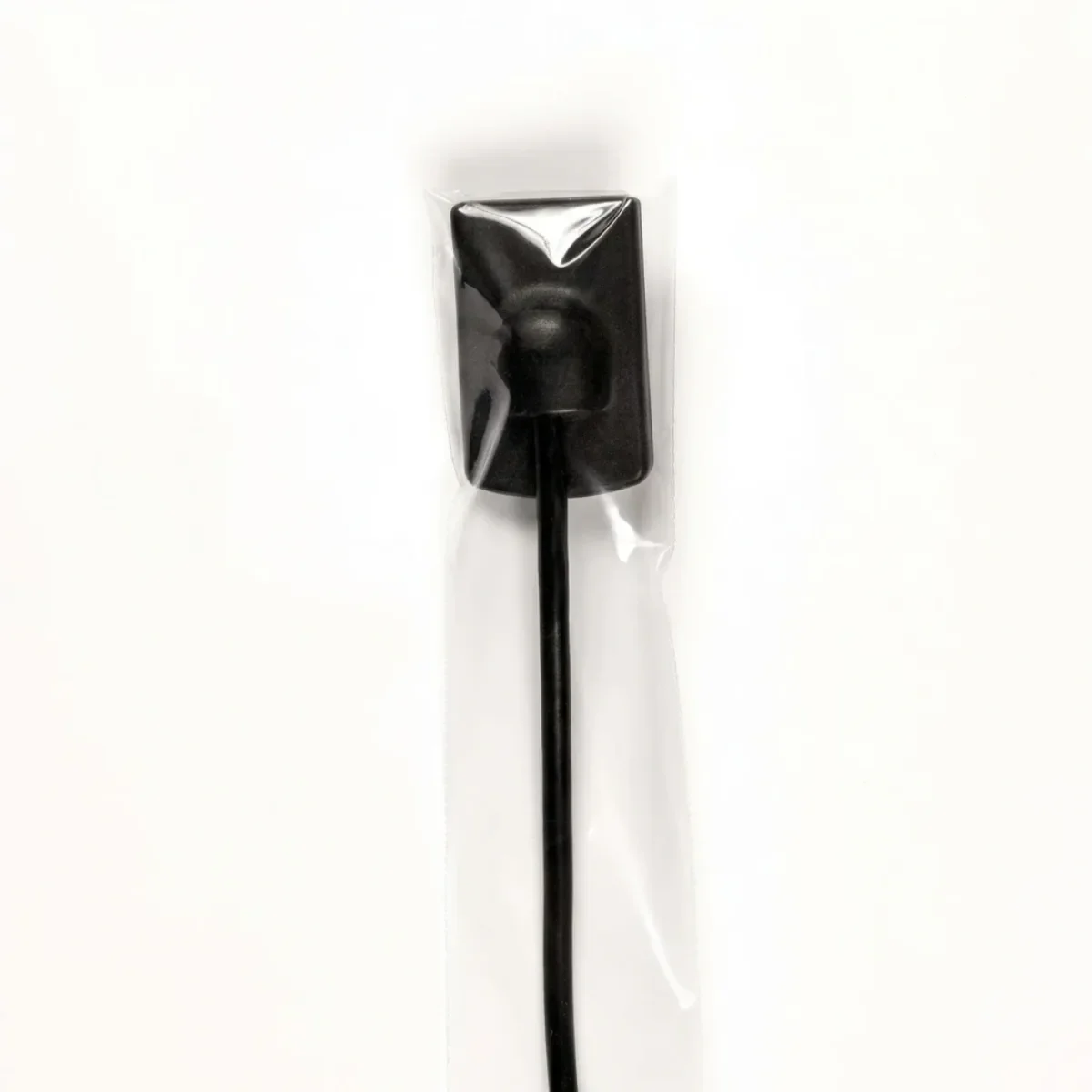
We make barriers, so be clear on what they can and can't do. They are one layer. The studies above show that handling and removal matter as much as the film itself, and none of this replaces disinfection and training. What a barrier does is keep the sensor, the cable and the plate surface from taking the first contact, so that the cleaning step has less to deal with.
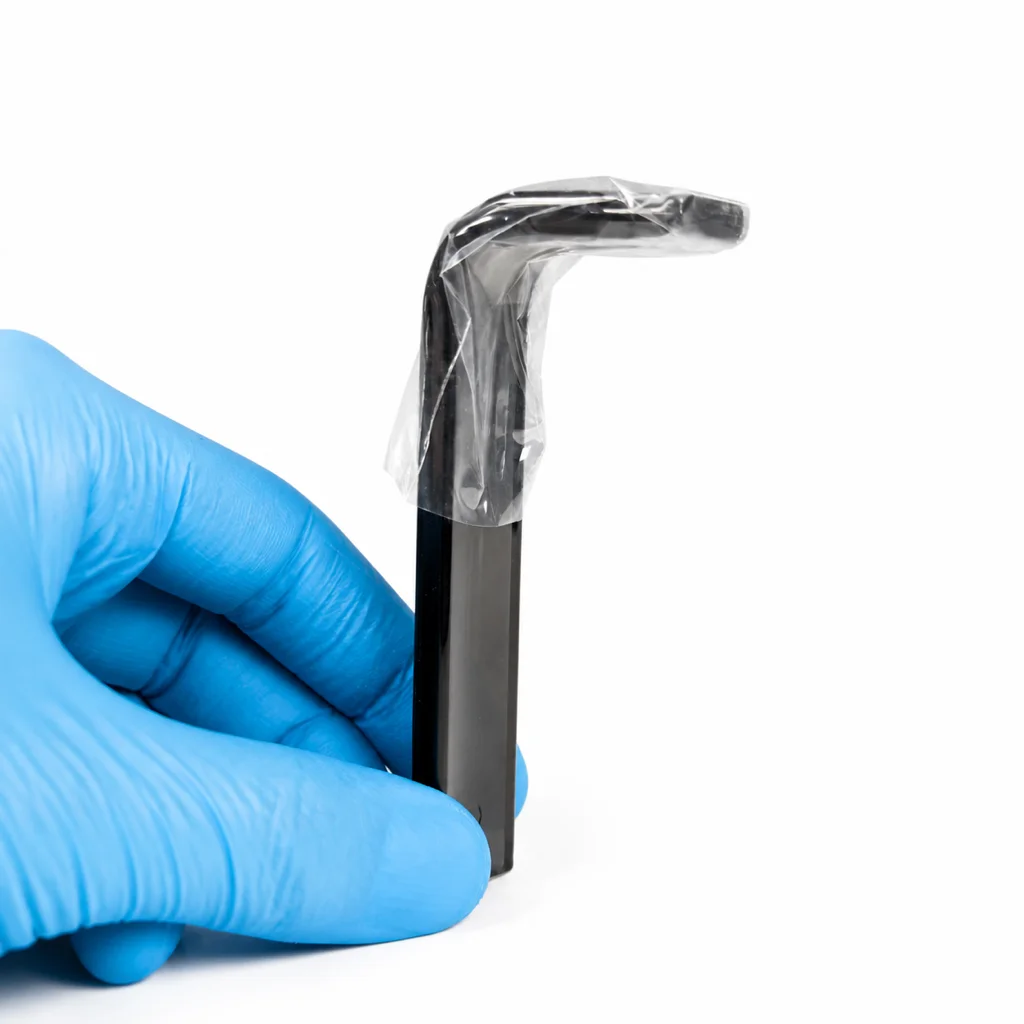
Whichever barrier you use, check that it matches the item: a sleeve for the sensor and cable, a cover for the phosphor plate, and a sleeve for the bite block. Then check that your team handles it the same way every time.
Frequently asked questions
Do barriers on phosphor plates prevent contamination?
They reduce it, but the review reports contamination on roughly 17% to 73% of barrier-protected plates, linked mainly to perforation, incomplete sealing and non-aseptic removal.
Is there proof that contaminated sensors cause infections?
The review found no study linking imaging equipment to a documented patient infection. Its authors say that gap should be read neither as reassurance nor as alarm.
Sources
- Microbial contamination and decontamination of reusable digital intraoral imaging equipment: a narrative review — Frontiers in Oral Health, 2026-11-18
- Infection Control Policy for Dental Technologies — Decisions in Dentistry, 2026-11-18
- Recommendations for Dental Diagnostic Imaging during the recovery phase of the COVID-19 pandemic — Faculty of Dental Surgery, Royal College of Surgeons of England, 2026-11-18