What EN 556's 2024 Edition Means for Your Sterile Drapes and Gowns
Why this matters now
The European Commission has harmonised new editions of the standard that defines what "STERILE" is allowed to mean on a medical device label. Commission Implementing Decision (EU) 2025/681, adopted on 8 April 2025, added EN 556-1:2024 and EN 556-2:2024 to the list of standards that give presumption of conformity with the MDR. If your sterile drapes, gowns, suction tips or adhesive strips are ethylene-oxide sterilised single-use items, this is the standard behind the claim on the box, and it just moved to a new edition. The practical question for a buyer is simple: does your supplier's paperwork reference the current edition, and do you know which of the two parts applies to what you're buying?
What actually changed
- The same decision updated harmonised references for six standards at once: EN 455-1:2020+A2:2024 and EN 455-2:2024 for single-use medical gloves, EN 556-1:2024 and EN 556-2:2024 for devices designated sterile, and EN 1865-2:2024 and EN 1865-6:2024 for ambulance patient-handling equipment.
- EN 556-1 covers terminally sterilised devices — sterilisation applied after the product is sealed in its final pack, which is how EO-sterilised drapes, gowns and suction tips are typically processed.
- EN 556-2 covers aseptically processed devices, where sterility is built in during manufacture rather than added afterward. It is a different route with different supporting evidence, and the two parts are not interchangeable references.
- Under both parts, the figure a manufacturer has to defend is a sterility assurance level (SAL) of 10⁻⁶: the probability of a single viable microorganism surviving on the device is one in a million. Designation as STERILE is only permitted once the sterilisation process behind that figure has been validated and stays under routine control and monitoring — it is an ongoing process claim, not a one-off test result.
What this means in the operatory
Most days, nothing changes at the chairside. Sterile drapes, gowns, suction tips and adhesive strips that are already EO-sterilised to a validated process do not change because the reference standard moved to a new edition. What changes is what you should expect to see on paper the next time you reorder or renew a supplier agreement:
- A current declaration of conformity for a terminally sterilised item should cite EN 556-1:2024, not an older edition of the same standard.
- If a product is aseptically processed rather than terminally sterilised, the relevant reference is EN 556-2:2024, and the supporting evidence behind the STERILE claim looks different — ask which route applies if it is not stated.
- If your practice also buys single-use examination or surgical gloves, the same April 2025 decision updated EN 455-1 and EN 455-2 for those too, so the same paperwork check is worth doing at your next glove order.
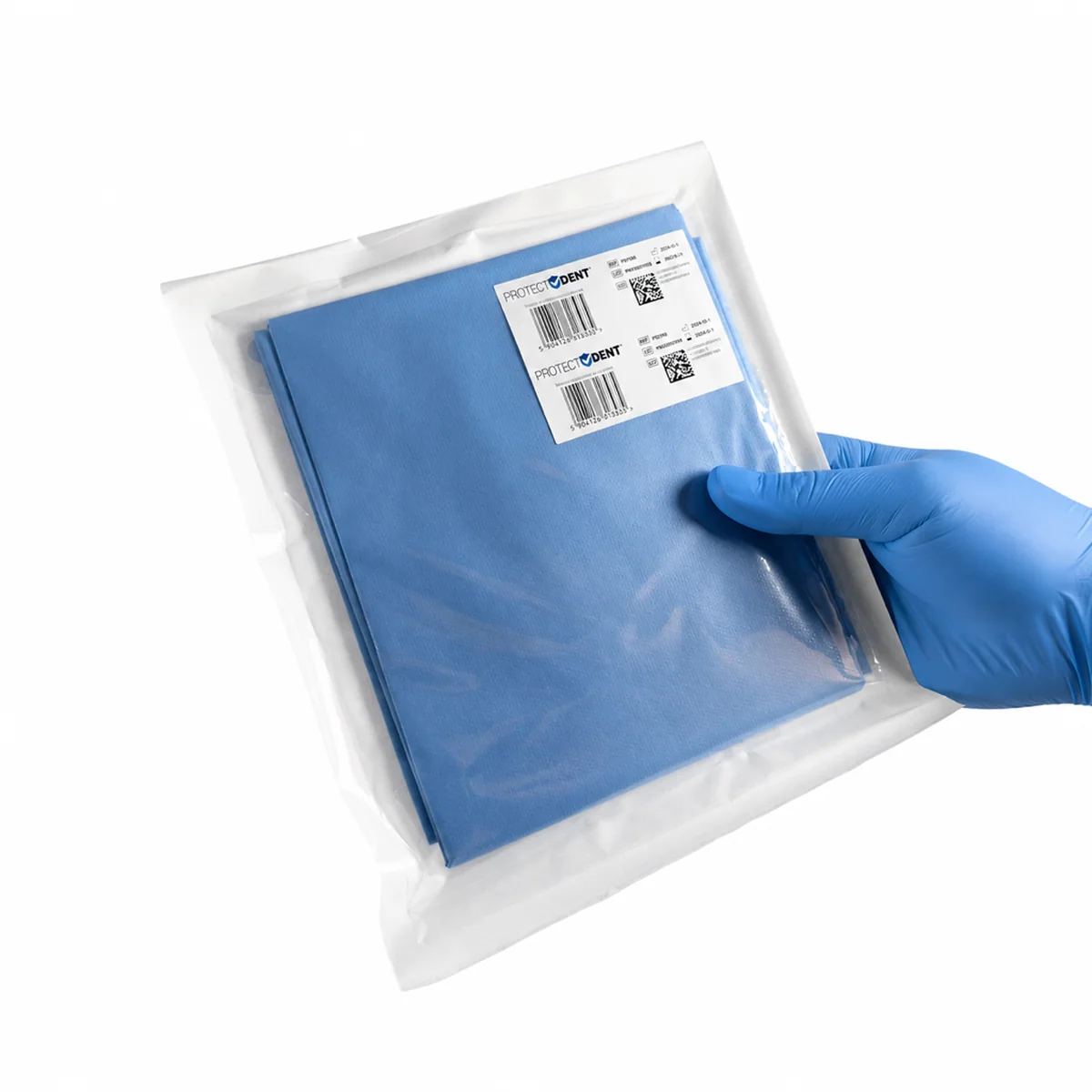
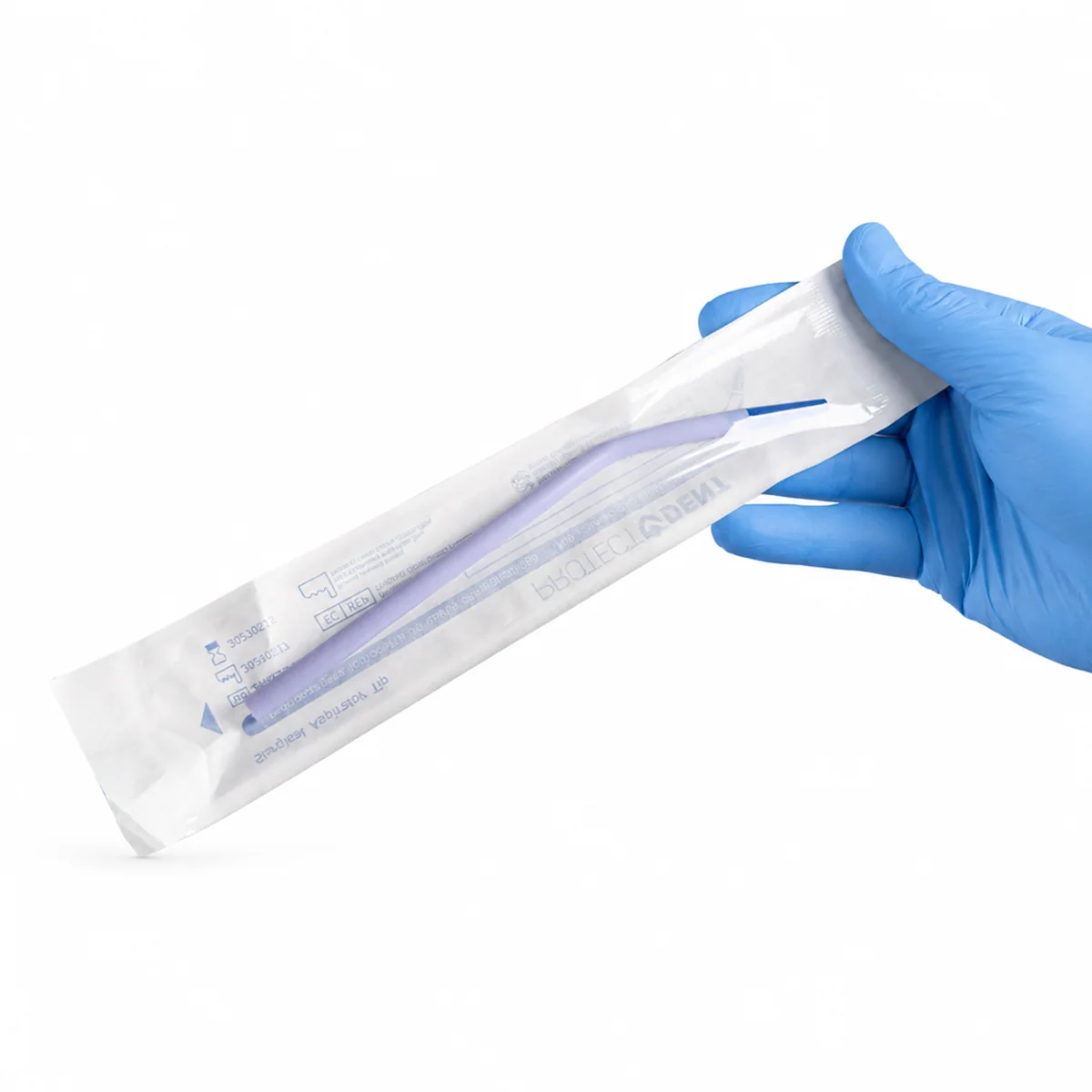
None of this changes how a sterile pack should be handled on receipt. A sterility assurance level describes a validated process, and that process is inseparable from the pack the product ships in. Guidance on aseptic technique for dental and community-based surgical settings is consistent on this point: an aseptic field depends on protective barriers that are actually intact, not just correctly labelled. A torn, punctured or wet peel pouch is a reason to set the item aside, whatever edition of whatever standard backs the label.
What to check
- Ask your supplier for the current declaration of conformity for each sterile item you buy, and confirm it cites EN 556-1:2024 for terminally sterilised products or EN 556-2:2024 for aseptically processed ones, as appropriate.
- If you also order single-use gloves, check that the same paperwork references EN 455-1:2020+A2:2024 and EN 455-2:2024.
- On receipt, inspect peel pouches for tears, punctures or moisture before they go anywhere near a tray setup.
- File the updated declaration of conformity with your practice's compliance records, not just the delivery note.
Frequently asked questions
What is EN 556, and why does it matter for dental supplies?
EN 556 is the European standard that sets out what a manufacturer must do before a medical device can be labelled STERILE. Part 1 covers devices sterilised after packaging (terminal sterilisation); Part 2 covers devices processed aseptically. New 2024 editions of both were formally harmonised under the MDR in April 2025.
Does this change how sterile drapes or gowns are made?
No. Products that are already EO-sterilised to a validated process do not change because a standard edition moved on. It is a documentation reference, not a change to the product itself.
What is a sterility assurance level (SAL) of 10⁻⁶?
It is the maximum probability allowed that a single viable microorganism remains on or in the device after sterilisation — one in a million. It is the benchmark EN 556-1 sets for terminally sterilised devices to be labelled STERILE.
Does this update affect gloves too?
Yes. The same Commission decision that updated EN 556 also harmonised new 2024 editions of EN 455-1 and EN 455-2, the standards for single-use medical gloves.
What should I actually check before my next order?
Ask your supplier for the current declaration of conformity for each sterile item and confirm it cites the 2024 edition of EN 556-1 or EN 556-2, as applicable, and inspect every pouch on receipt for damage before use.
Sources
- Publication of references of Harmonised Standards for the MDR for medical gloves for single use, sterilization of medical devices and patient handling equipment — GENORMA (Beuth/DIN standards information service), 2026-09-25
- Sterility Assurance Level (SAL) — i3C Global, 2026-09-25
- APSIC dental infection prevention and control (IPC) guidelines — Asia Pacific Society of Infection Control (APSIC), via PMC, 2026-09-25