Dental Unit Waterlines: What the Flush Protocol Means for Your Barrier Sleeves
Why this matters now
The handpiece, the air/water syringe and the ultrasonic scaler all draw water from the same source: the dental unit's internal tubing. That tubing grows biofilm, and the standard response to it is a timed flush before every patient. The flush is a wet, splashing few seconds that happens right at the point where a barrier sleeve goes on or comes off. Most infection-control conversations focus on the sleeve. Fewer focus on what is running through the equipment underneath it, and when.
What the guidance actually requires
CDC's dental infection control guidance sets a water-quality standard for routine procedures: dental treatment water should be treated to meet drinking water standards, defined as no more than 500 CFU/mL of heterotrophic water bacteria. An independent water-bottle system alone does not guarantee that standard is met — it still requires active treatment and monitoring.
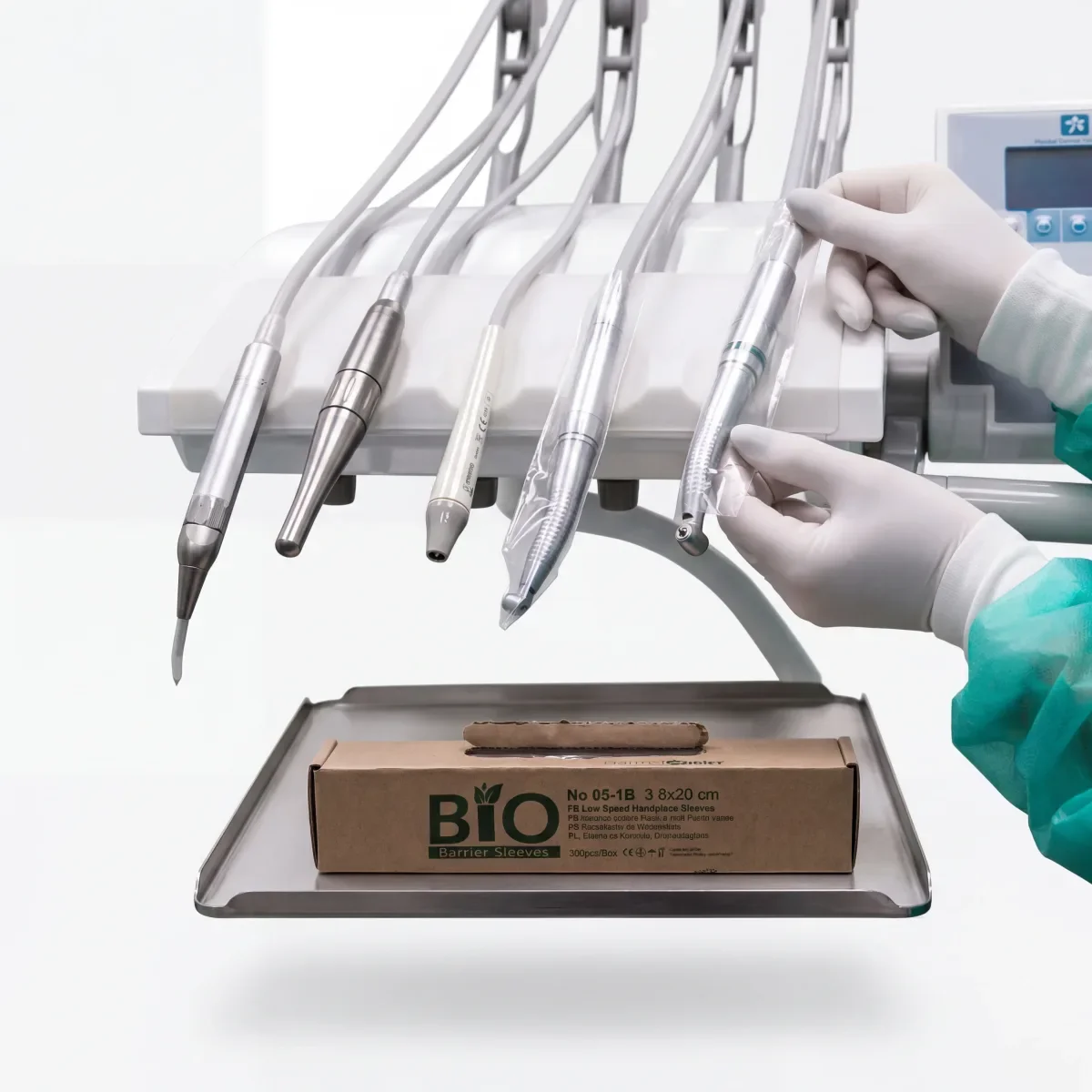
The ADA's guidance on dental unit waterlines names the three devices connected to that tubing directly: handpieces, ultrasonic scalers and air/water syringes. Citing CDC, it states these should be flushed for at least 20 seconds between patients. Long, narrow-bore tubing and inconsistent flow rates make these lines prone to biofilm, which the ADA is explicit acts as a reservoir that keeps re-seeding the water with free-floating organisms.
A point both agencies make plainly: biofilm cannot be removed for good. Filtration, chemical treatment and anti-retraction valves reduce it, but none of them eliminate it. That is why the ADA frames ongoing monitoring — not a one-time fix — as the actual requirement. Treating a line and never checking the result is not the same as maintaining it.
For surgical procedures, the standard changes entirely. CDC's guidance states that surgical sites require sterile irrigant delivered through a device that bypasses the dental unit waterline altogether — a sterile bulb syringe, sterile tubing routed around the unit, or a sterile single-use device. The unit's own waterline, however well maintained, is not an option there.
What this means in the operatory
None of this is about the sleeve itself. A barrier sleeve protects the exterior of the handpiece, syringe or scaler from what the patient and the flush spray onto it. It does nothing for the water quality inside the line — that is a separate system, addressed separately, and no amount of exterior barrier substitutes for it.
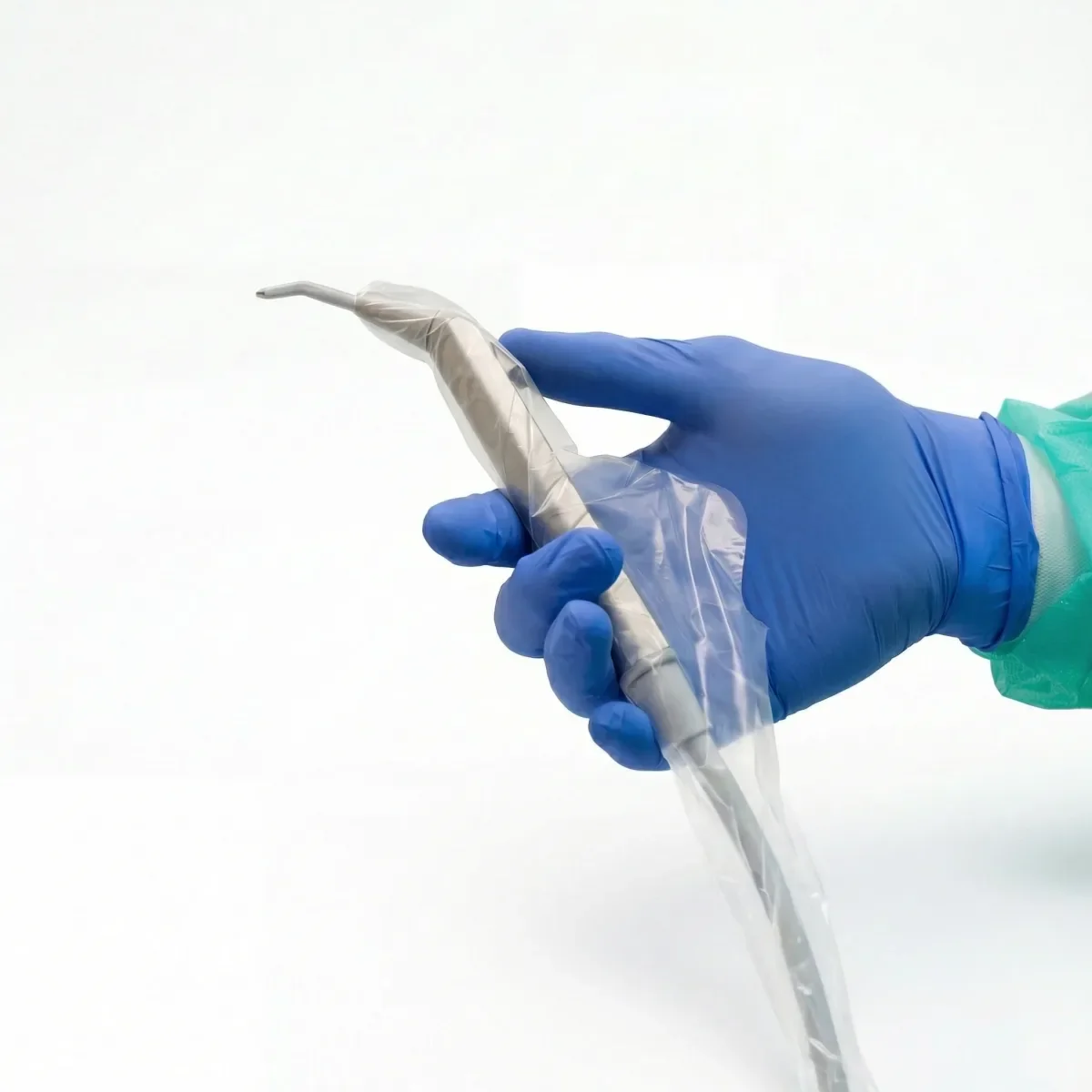
What it does change is timing and habit. The flush happens between patients, at exactly the moment staff are removing one sleeve and reaching for the next. Flushing through an already-sleeved instrument wets the barrier for no reason — the water needs to run to clear the line, not to pass through a sleeve that is about to be discarded anyway. The practical order is flush first, sleeve second, for each of the three devices the ADA names.
For the surgical column specifically, do not let a well-fitted handpiece sleeve create a false sense that the water source is covered. If the procedure calls for sterile irrigant per CDC's surgical guidance, that means a sterile delivery device bypassing the unit line — the exterior sleeve on the handpiece is still worth having, but it is not what that requirement is about.
What to check
- Does the written protocol name a flush duration for handpieces, syringes and scalers between patients, and a separate start-of-day flush?
- Is there a record of water-quality monitoring results, not just a note that a treatment product is in use?
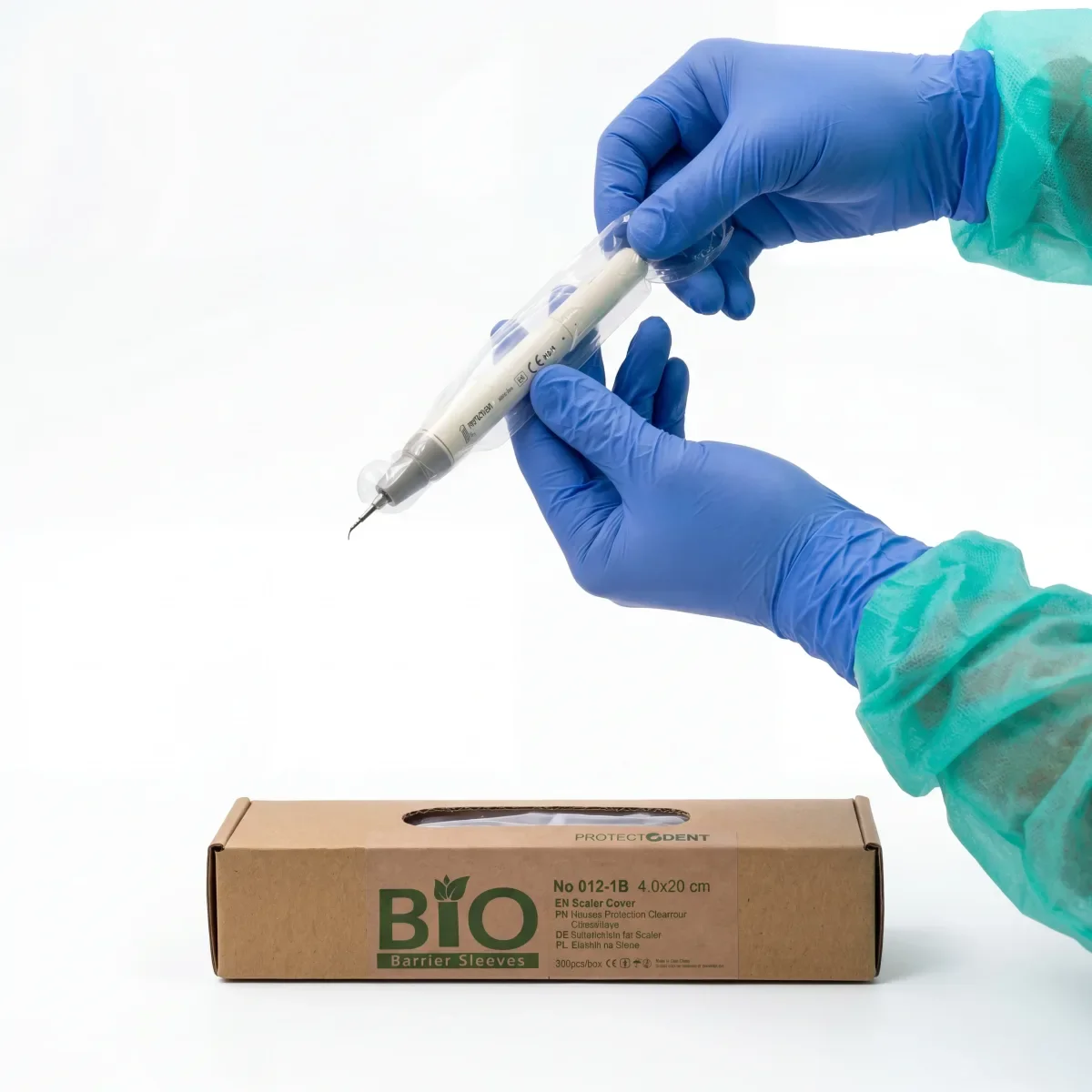
- Are the three waterline-connected devices — handpiece, air/water syringe, ultrasonic scaler — each fitted with their own barrier sleeve, sized and rated for that specific instrument?
- For surgical procedures, is the sterile-irrigant delivery method documented separately from the standard waterline, per the manufacturer's and CDC's instructions?
- Is sleeve placement happening after the flush, not before it?
Sources
- Dental Unit Water Quality — CDC, 2026-08-19
- Dental Unit Waterlines — American Dental Association, 2026-08-19