CDC's Own Checklist Names the Barrier Surfaces Most Practices Never Audit
A campaign built on consistency, not novelty
September 2026 is Dental Infection Control Awareness Month (DICAM), organized by the Association for Dental Safety (ADS, formerly OSAP). This year's theme is "Safety Starts With Every Step — small, consistent behaviors that add up to the safest dental visit." Unlike a lot of infection-control news, DICAM isn't announcing a new product or a new rule. It's pointing at something practices already have: the habits and checklists sitting in a drawer, and whether anyone actually walks through them.
For barrier protocol, the checklist in question already exists. It's the CDC's Infection Prevention Checklist for Dental Settings, the companion document to CDC's Summary of Infection Prevention Practices and the basis for the CDC DentalCheck mobile app. Practices that use it (or the app) go through it, mostly, once a year. Three lines in it are worth rereading slowly, because they're easy to tick "yes" on without the practice actually being consistent.
The line about "periodically monitored and evaluated"
Section I.11.D of the checklist asks whether:
"Cleaning, disinfection, and use of surface barriers are periodically monitored and evaluated to ensure that they are consistently and correctly performed."
That's not "do you use barriers." It's "does someone check that barriers are used the same way every time." Most practices can answer yes to the first question and have never actually done the second — there's no defined observer, no defined interval, and no record of what was found.
The line that names the surfaces
Section II.7.B is more specific than most people remember:
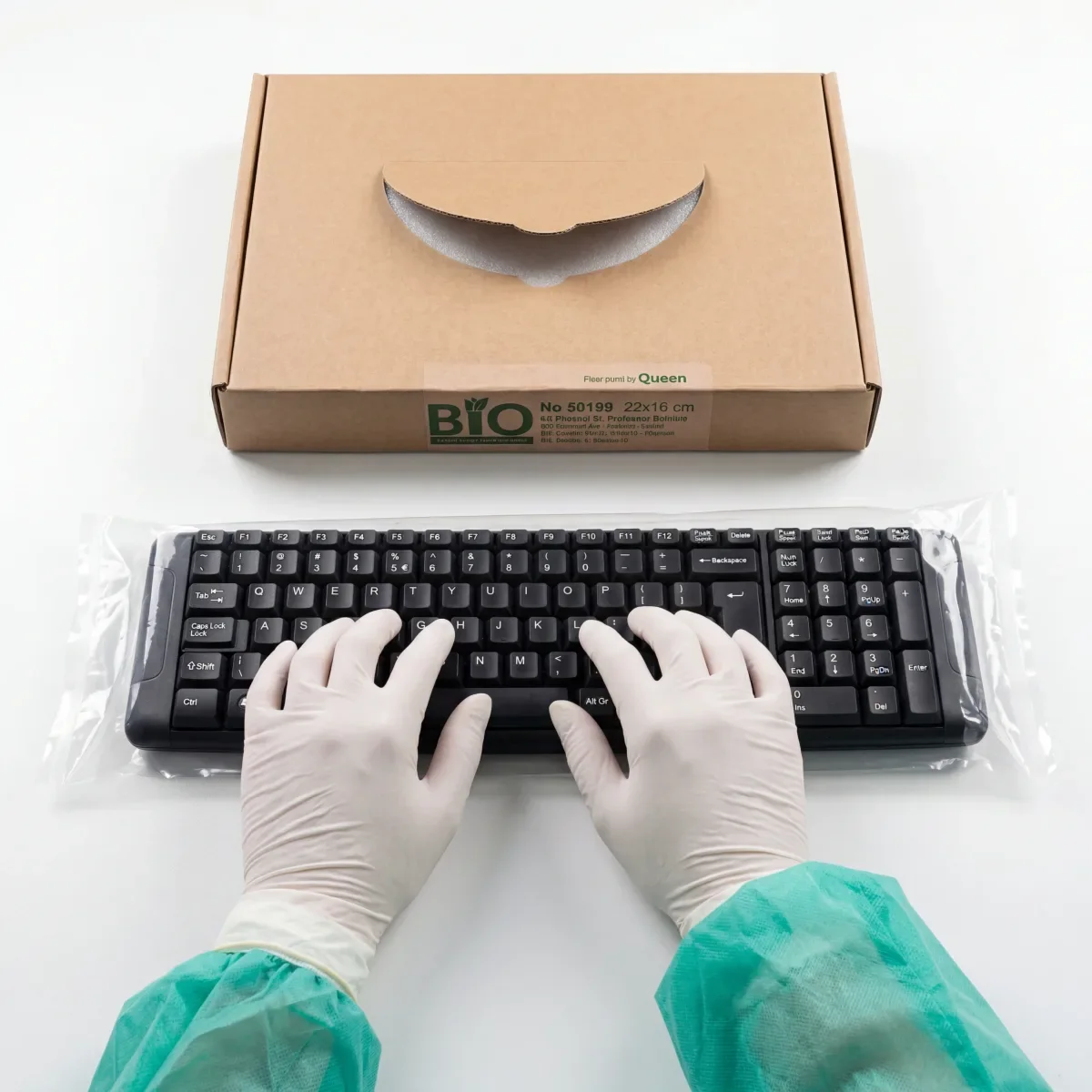
"Surface barriers are used to protect clinical contact surfaces that are difficult to clean (e.g., switches on dental chairs, computer equipment, connections to hoses) and are changed between patients."
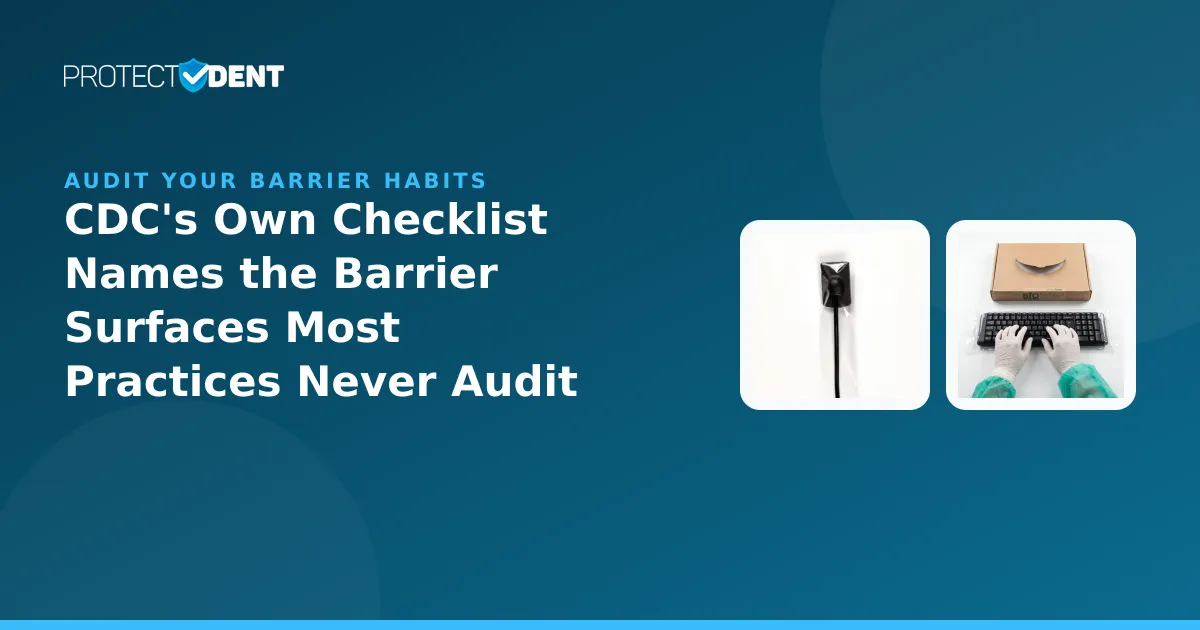
Three examples are named outright: switches, computer equipment, and hose connections. None of them are the obvious ones a new hire pictures when they hear "barrier protocol" — most people picture the sensor or the light handle. Keyboards and the fittings where a handpiece hose connects to the delivery unit get touched constantly with gloved hands and cleaned rarely, because they're awkward to wipe without breaking their function.
The line that has two steps, not one
Section II.6.S covers digital sensors specifically, and it has a part most protocols quietly drop:
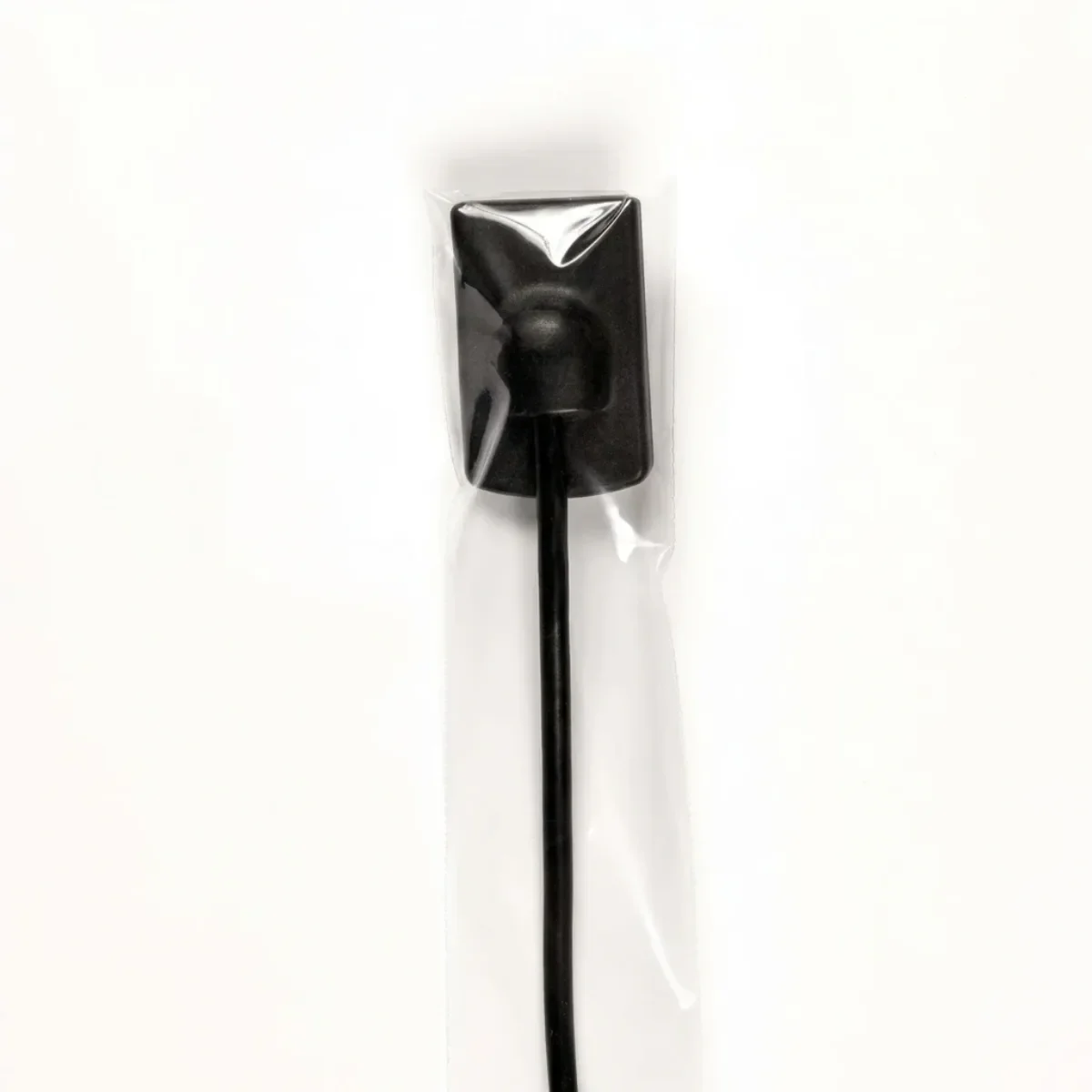
"FDA-cleared barriers are used to cover the sensor and barriers are changed between patients... after the surface barrier is removed, the sensor is ideally cleaned and heat sterilized or high-level disinfected... If the item cannot tolerate these procedures, then at a minimum, the sensor is cleaned and disinfected with an intermediate-level, EPA-registered hospital disinfectant."
Changing the sleeve between patients satisfies half the checklist. The other half — wiping the sensor itself once the sleeve comes off — is the part that gets skipped when a barrier is treated as if it makes disinfection unnecessary, rather than as a first layer in front of it.
What a Monday-morning audit looks like
None of this needs new equipment to fix. It needs someone assigned to look, which Section I.1.C already requires ("at least one individual trained in infection prevention is assigned responsibility for coordinating the program"). A short walk-through:
- Watch one full patient turnover, not a description of one. Note whether the sensor sleeve is changed and whether the sensor gets wiped down after.
- Check the keyboard, mouse, and any touchscreen at the operatory computer — not just at the front desk.
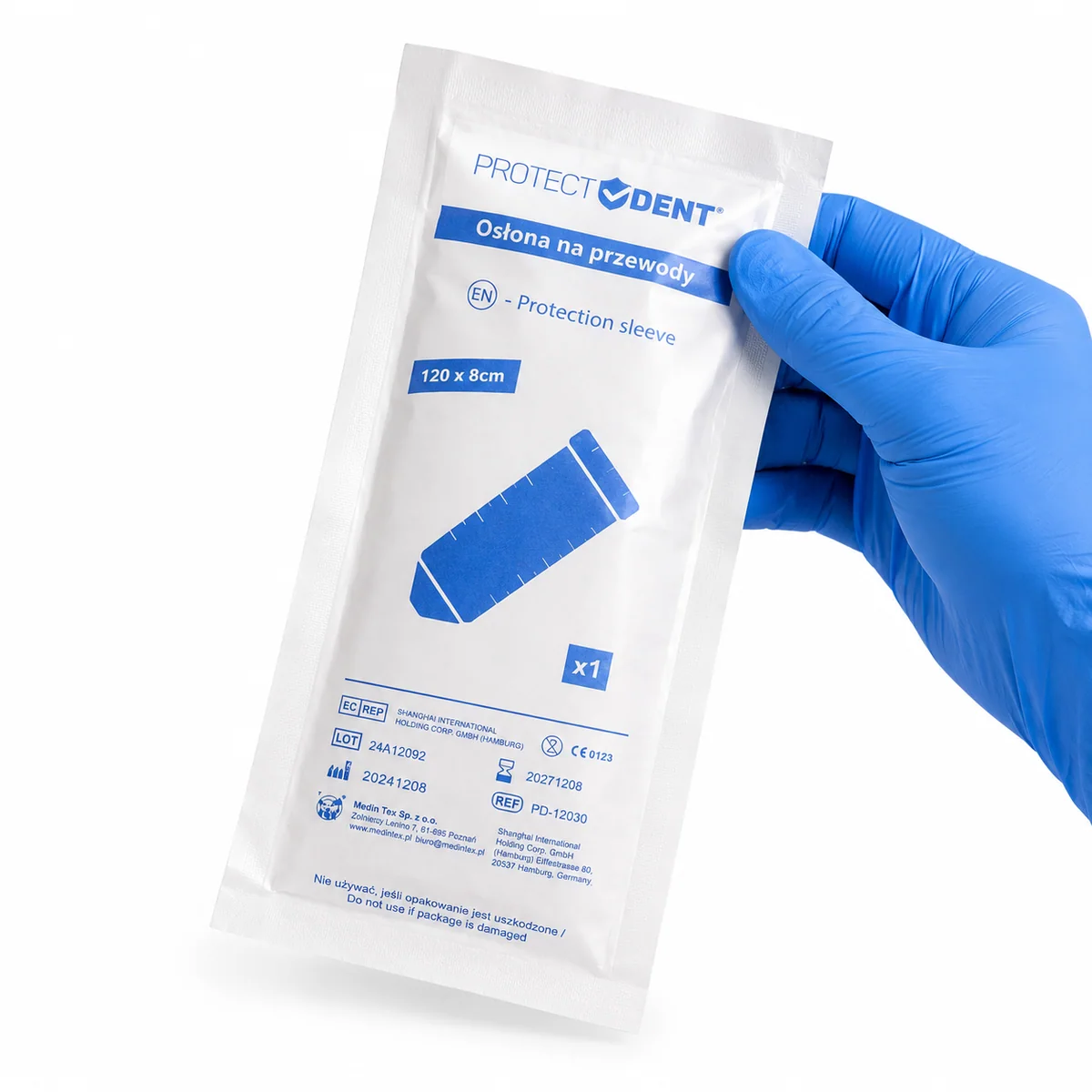
- Look at the point where a handpiece or air/water hose connects to the delivery unit. That fitting is named in the checklist and is one of the least visible.
- Confirm the light handle is covered, not just the arm or headrest.
- Write down what you found, even briefly. That note is what turns "periodically monitored" from a box you tick into something you can actually show if asked.
Why the supply side matters
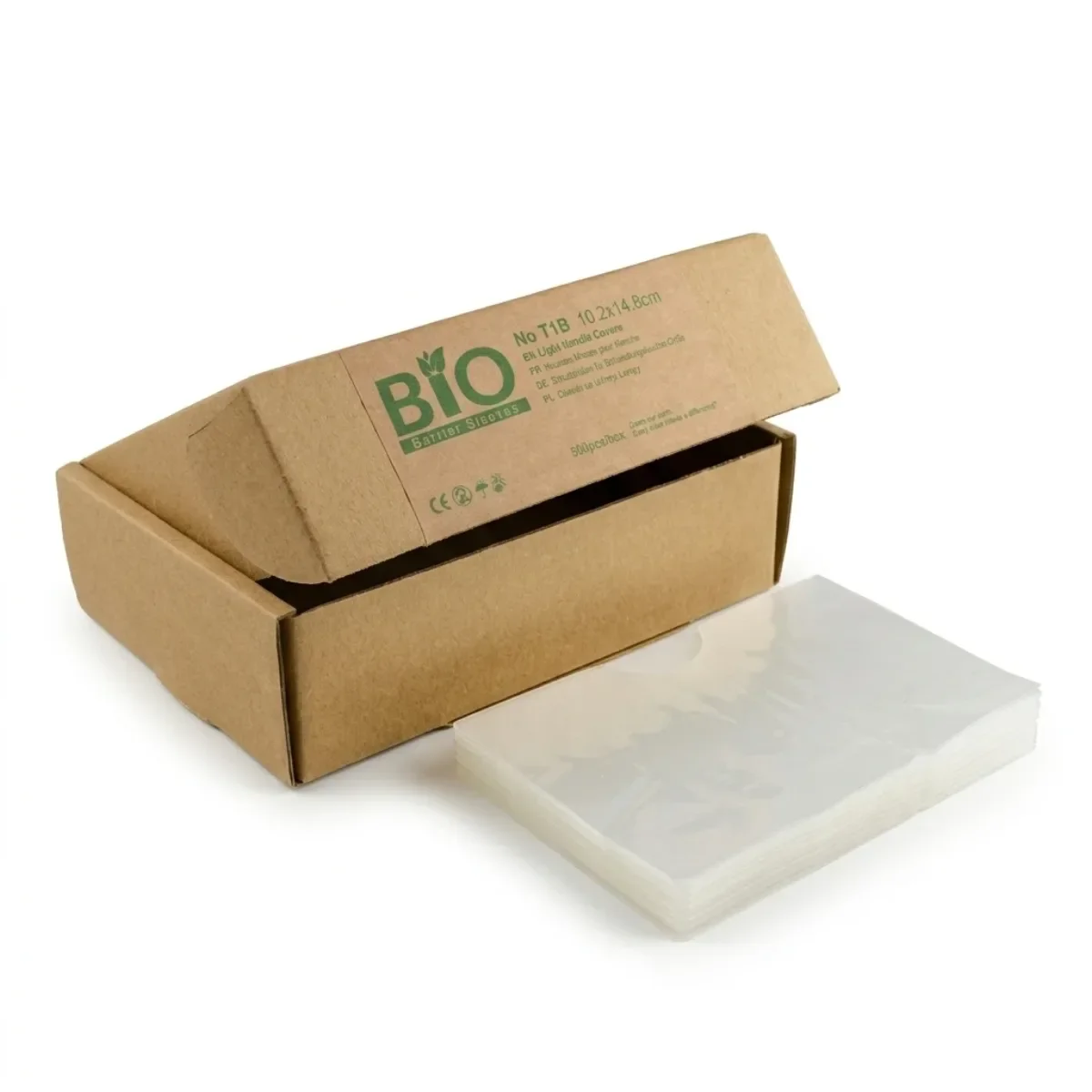
An audit finds gaps fastest where the sleeve wasn't available when it was needed — the box ran out mid-morning, or nobody re-ordered the size that fits a particular sensor. Keeping the checklist's named touchpoints (sensor, keyboard, light handle, hose connection) stocked as a matter of course removes the most common excuse an audit turns up: "we meant to."
Frequently asked questions
What is Dental Infection Control Awareness Month?
An annual September campaign run by the Association for Dental Safety (formerly OSAP) to focus attention on infection-prevention habits in dental settings. The 2026 theme is "Safety Starts With Every Step."
Where does the CDC checklist come from?
It's CDC's Infection Prevention Checklist for Dental Settings, the companion document to CDC's Summary of Infection Prevention Practices in Dental Settings, also built into the free CDC DentalCheck app.
How often should a practice audit its barrier use?
CDC's own DentalCheck guidance recommends the infection prevention coordinator use the checklist at least annually, combined with direct observation of staff during normal patient care.
Does covering a sensor with a barrier replace disinfecting it?
No — per the checklist, after the barrier is removed the sensor itself should still be cleaned and, per the manufacturer's instructions, disinfected or sterilized.
What counts as a "difficult to clean" surface under the checklist?
CDC's checklist names switches on dental chairs, computer equipment, and connections to hoses as examples — surfaces that get touched often but are awkward to wipe without barriers.
Sources
- Infection Prevention Checklist for Dental Settings: Basic Expectations for Safe Care — Centers for Disease Control and Prevention (CDC), 2026-09-18
- DICAM26 — Dental Infection Control Awareness Month 2026 — Association for Dental Safety (ADS), 2026-09-18
- Dental Bytes September 2026 — OSHA Review, 2026-09-18