Barrier Sleeves Tear More Than You Think: What That Means for Sensor Protocol
"One sleeve, one patient" is only half the protocol
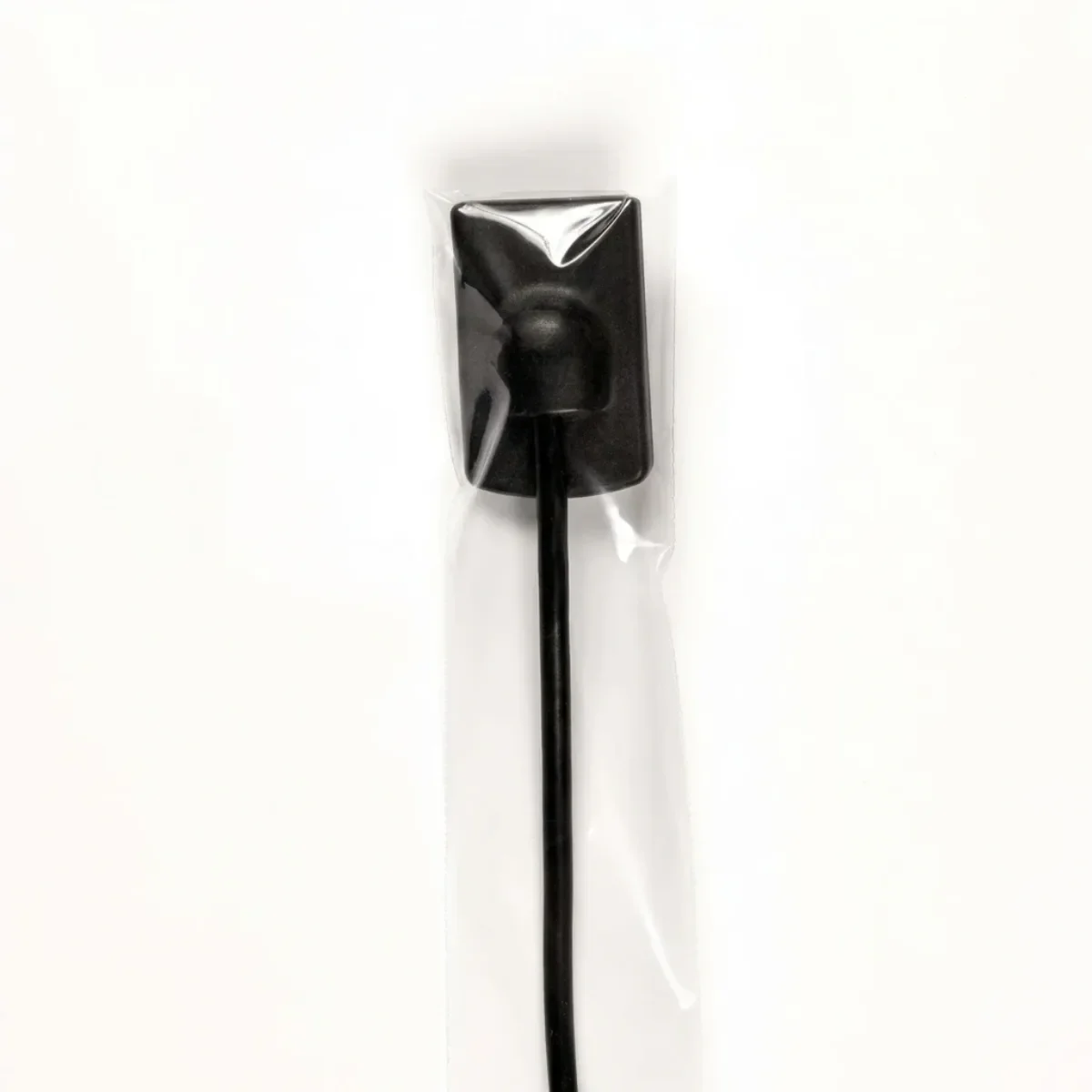
Most practices already do the easy part right: a fresh barrier sleeve goes on the digital sensor, phosphor plate, or intraoral camera before every patient, and it comes off and gets thrown away afterward. That habit is well established and it matters. What is less well understood is how often the barrier itself fails during normal use — and what a practice should do about it once the sleeve is no longer the only thing standing between one patient's mouth and the next.
What the research actually found
A study published in Dentomaxillofacial Radiology tested four plastic barrier types of different thicknesses, from 0.04 mm to 0.08 mm, plus double-barrier combinations, by fitting them over digital sensors and checking for leaks with a water pressure test. Perforation rates ranged from 22% for the thickest single barrier up to 58% for the thinnest single barrier, and the differences between groups were statistically significant. The authors' conclusion was direct: using two layers instead of one measurably reduced how often the barrier failed (Choi, Dentomaxillofacial Radiology, Vol. 44, Issue 3).
A separate clinical infection-control article covering digital radiography reported a similar pattern from other testing: perforations were found in 44% to 51% of plastic sheaths after just a single exposure, with tears most often traced back to the moment the sensor was placed in or removed from the patient's mouth. The same article notes that contamination risk does not end when the barrier comes off — it also flagged sensor preparation and the moment a clinician's gloved hand contacts the sensor while removing the sheath as points where cross-contamination can occur (Dimensions of Dental Hygiene, "Ensure the Safe Use of Digital Radiography").
Taken together, the message from this research is not "barriers don't work." It is that a single thin plastic sleeve, on its own, fails often enough that it cannot be the entire infection-control plan for a device that goes into a patient's mouth.
Why this fits a broader pattern, not just sensors
This lines up with how dental and medical infection-control guidance generally treats items that contact mucous membranes: barrier protection is one layer, and cleaning or disinfection is the layer behind it, not an optional extra. The American Dental Association's own summary of CDC guidance states that items presenting a higher infection risk should be heat-sterilized "whenever possible, or high-level disinfected," and that barrier-protected items should still be wiped down with an intermediate-level disinfectant between patients (ADA, "Infection Control and Sterilization"). A digital sensor cannot go through a heat autoclave, which is exactly why the barrier-plus-wipe-down combination exists in the first place — and exactly why a barrier that tears roughly half the time is a bigger deal than it might sound.
Turning that into a Monday-morning protocol
A few practical changes follow directly from the research above, without requiring new equipment or extra chair time:
- Treat the wipe-down as mandatory, not conditional. Because a torn barrier is common rather than rare, disinfecting the sensor body and cable after every patient should happen regardless of whether the sleeve looked intact on removal — a visual check is not a reliable filter.
- Consider a second layer for higher-risk exposures. The double-barrier data above points to a straightforward option: an extra layer of protection where practical, particularly for longer series or patients where saliva contact is heavier.
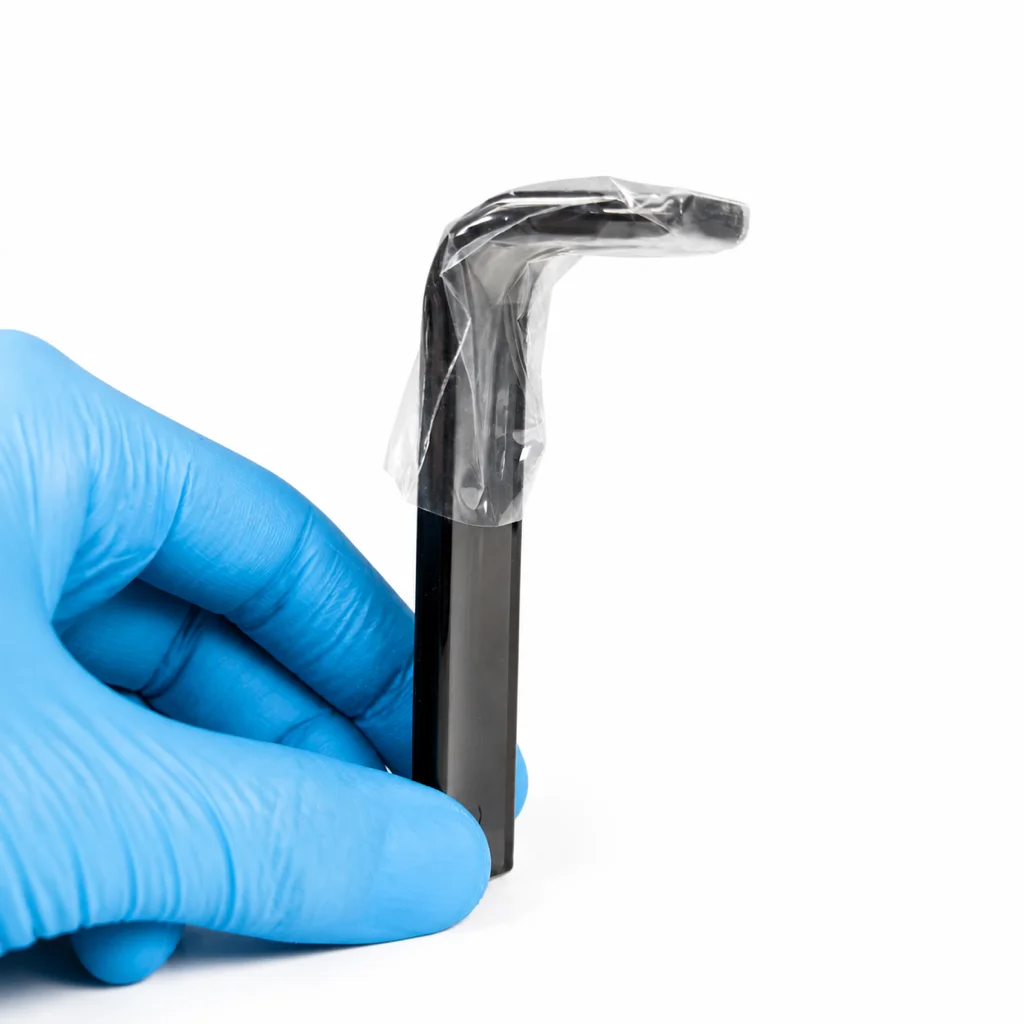
- Get the removal order right. Take the barrier off before removing gloves, and avoid letting a bare or freshly-degloved hand touch the sensor surface — several of the contamination points identified in the research happen at exactly this handoff.
- Do not stretch a sleeve's use beyond one patient. A barrier that already has a documented one-in-two-to-one-in-five chance of a pinhole tear should never be reused, even briefly, between two exposures on the same patient.
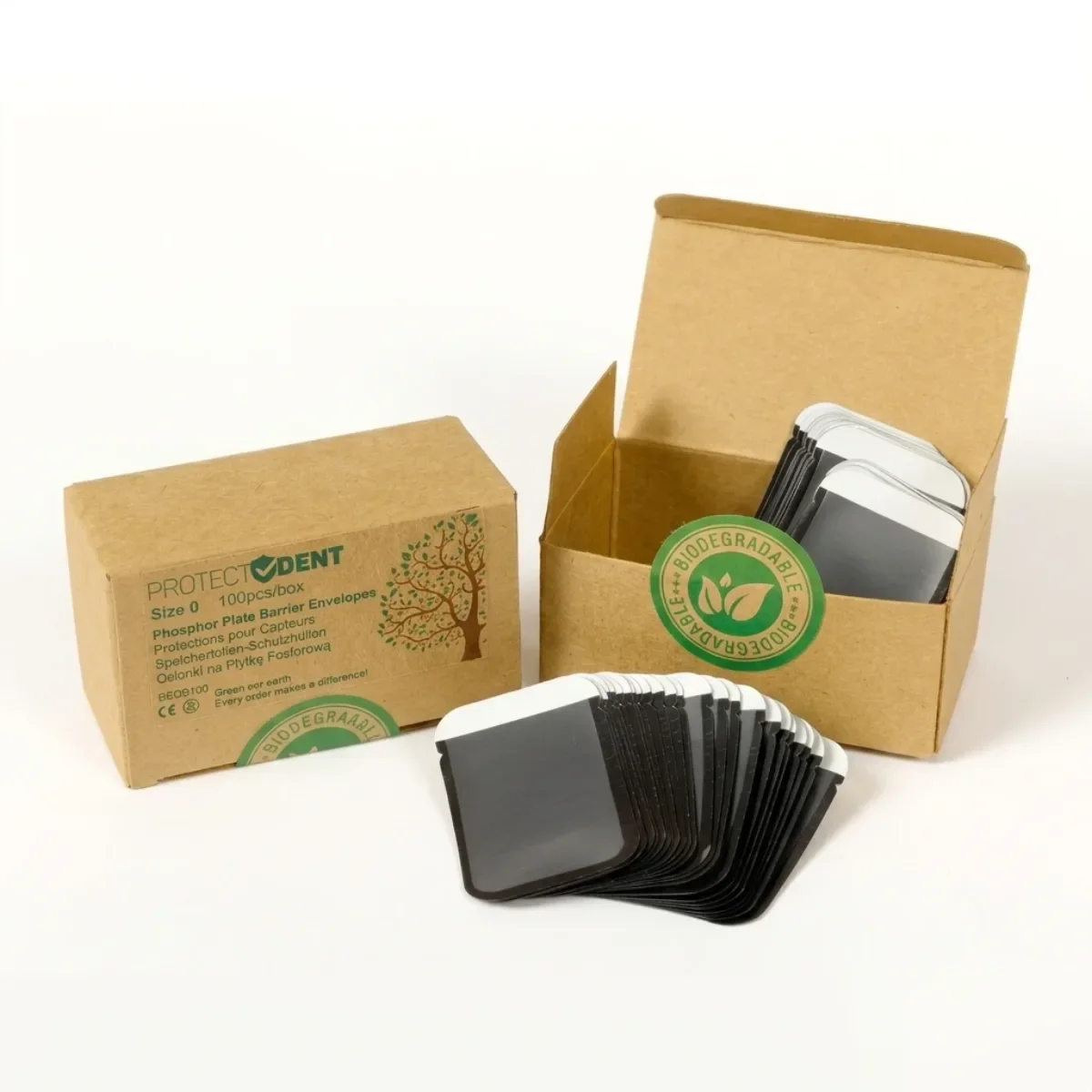
- Apply the same logic to phosphor plates and bite blocks. The physics is the same thin-plastic-under-mechanical-stress problem, so the same wipe-down-regardless-of-appearance habit is worth extending to every barrier-protected imaging accessory in the operatory, not just the sensor.
None of this requires a new system — it is a small adjustment to timing and assumptions in a protocol most practices already run. The digital X-ray sensor sleeves already on your tray, combined with a disinfectant wipe used consistently rather than conditionally, cover the gap the research describes.
The takeaway
Barrier sleeves are not a weak link because they are poorly made — they are thin by design, because thickness affects sensor sensitivity and patient comfort. The research simply confirms that thin plastic tears under normal clinical use often enough that disinfection has to be routine, not a backup plan for when a barrier "looks" compromised. Building that assumption into the protocol, rather than treating the sleeve as sufficient on its own, is the practical takeaway for any team using digital sensors, phosphor plates, or intraoral cameras.
Sources
- Perforation rate of intraoral barriers for direct digital radiography — Dentomaxillofacial Radiology (Oxford Academic), 2026-08-05
- Ensure the Safe Use of Digital Radiography — Dimensions of Dental Hygiene, 2026-08-05
- Infection Control and Sterilization — American Dental Association, 2026-08-05