Your Syringe Sleeve Covers the Handle. The Tip Needs Its Own Protocol.
Why this matters now
CDC's dental infection-prevention team keeps a plain answer to a question practices keep getting wrong: is a barrier sleeve enough, or does the item under it still need its own reprocessing? The air/water syringe is one of the clearest examples where the two get mixed up. A sleeve over the syringe body protects a handle that gets touched between patients. It says nothing about the tip that just delivered water or air onto a patient's oral tissue. CDC treats those as two separate jobs, and current guidance still calls this out by name.
What actually changed
Nothing in the regulation shifted this month. What is worth reading is that CDC keeps this exact point live on its dental infection-prevention FAQ page, because the mix-up keeps happening:
- Air and water syringe tips are named specifically, alongside prophylaxis angles, high-volume evacuator tips, dental burs and impression trays, as items that come in single-use disposable form and also as reusable, heat-tolerant alternatives.
- If a device carries no reprocessing instructions on its label, CDC's guidance is to treat it as single-use, regardless of what your team has always done with it.
- Surface disinfection or immersion in a chemical germicide is explicitly described as not an acceptable way to process a removable air/water syringe tip.
- Separately, CDC's general framework for reusable patient-care items (the Spaulding classification) places anything that contacts mucous membranes in the "semicritical" category, which minimally requires high-level disinfection — cleaning and a wipe-down is not on that list. A syringe tip contacts oral mucosa on every use.
What this means in the operatory
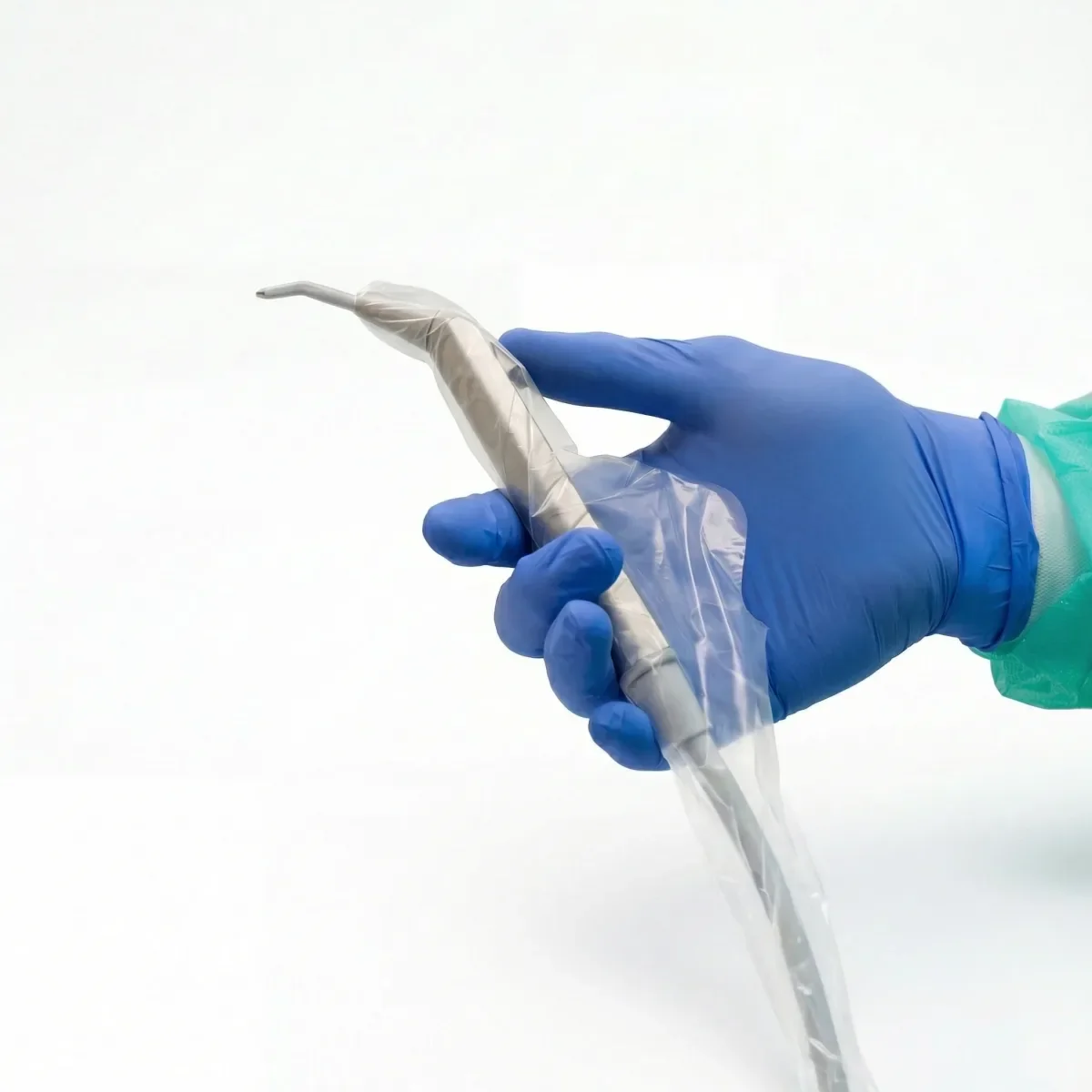
The barrier sleeve on the syringe body is doing real work. It stops the handle, the buttons and the connection point — surfaces that are awkward to disinfect properly between patients — from becoming a contact point for the next patient. That is a legitimate job on its own, and it is the job our sleeve is built for.
It was never meant to answer the second question: what happens to the tip. That question depends on what kind of tip is on your unit, and the answer has to be decided and written down, not assumed.
- If your tip is single-use and disposable: is it actually discarded every time, or does it sometimes get reused because a fresh sleeve on the body made the whole assembly look "clean"? The sleeve and the tip are two different barriers, not one.
- If your tip is a reusable, autoclavable design: is it going into the sterilizer between every patient, or is a disinfectant wipe standing in for that step on a busy day?
- If nobody on the team can say with certainty which of the above describes your current syringe tips: that gap is the finding. It is worth closing before an inspection or an insurer's audit closes it for you.
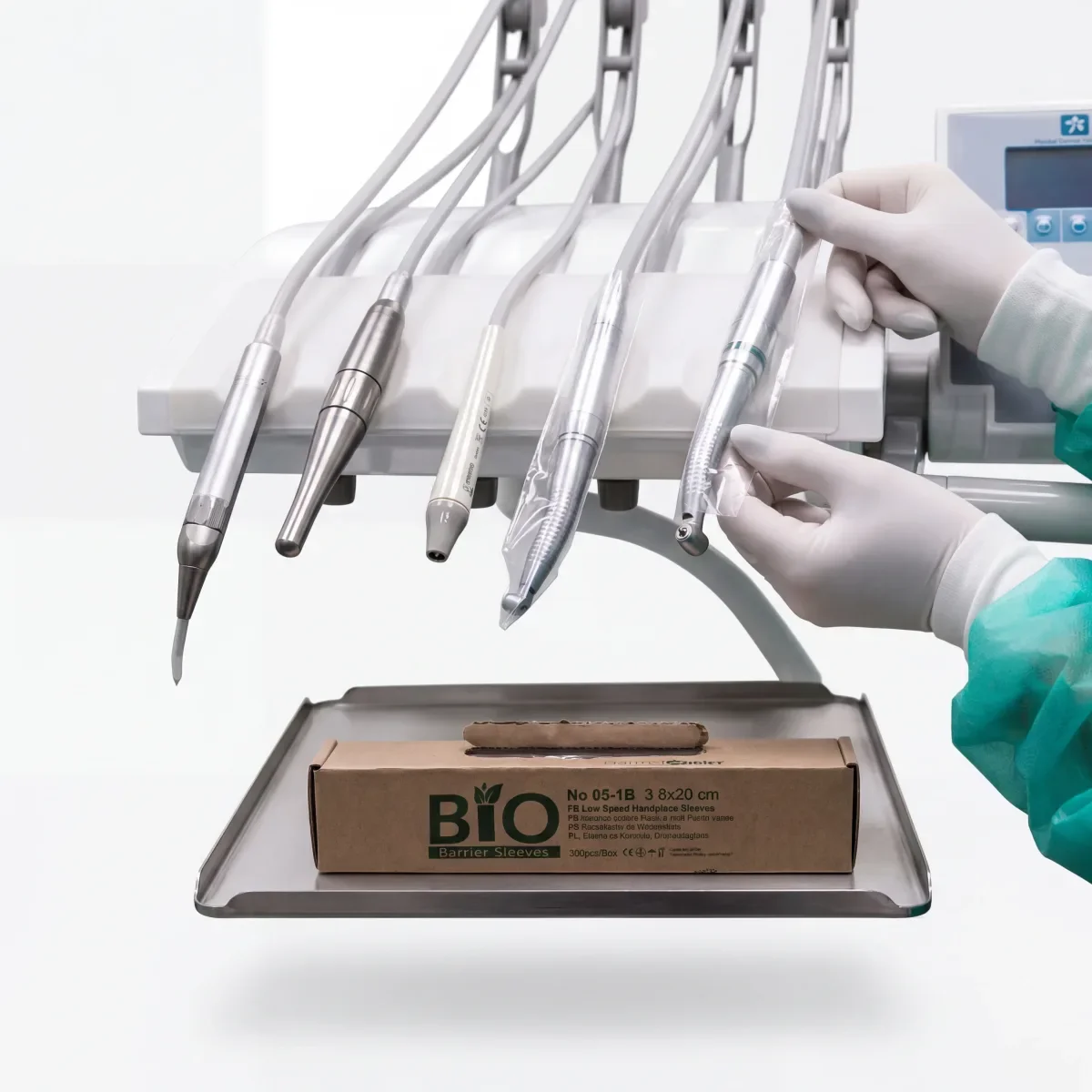
The same logic applies beyond the syringe. A handpiece sleeve protects the body and cable of the handpiece — it does not answer what happens to the bur, which contacts tissue directly and has its own heat-sterilization requirement regardless of the sleeve. A light-handle cover, by contrast, protects a surface that never touches a patient at all; there, the sleeve genuinely is the whole answer. Three barrier products, three different relationships to what CDC's classification requires — the point is knowing which one you are dealing with at each touchpoint, not assuming one sleeve logic covers all of them.
What to check
- Confirm, item by item, whether your air/water syringe tips are labeled single-use or reprocessable — check the label, not habit.
- If reprocessable, verify tips are going through heat sterilization between patients, not a surface wipe.
- Keep the syringe body sleeved as a separate, additional step. It protects the handle, not the tip, and neither one substitutes for the other.
- Write the tip protocol into your infection-control manual explicitly, so it does not rely on one person's memory during a full schedule.
- Walk new assistants through this distinction during onboarding. A habit carried over from a previous practice is the most common way this gap appears.
We supply the sleeve for the syringe body. What happens to the tip is a separate decision your practice makes, based on the device's label and your sterilization capacity — and it is worth having that decision written down where anyone on the team can check it.