The Saliva Ejector Instruction CDC Says to Stop Giving
Why this matters now
A survey published in JADA in 2024 found that most dentists, dental assistants and hygienists still tell patients to close their lips around the tip of a saliva ejector during a procedure. CDC's infection-control guidance for dental settings has said not to do that since 2003. The instruction feels harmless — it keeps fluid from dribbling — but it is the specific action that causes backflow.
What actually changed
Nothing regulatory. What changed is that the gap between guidance and practice has now been measured directly, and it's wider than most clinics would guess.
Backflow happens when pressure in the patient's mouth drops below the pressure in the evacuation line, which pulls suctioned fluid back toward the tip instead of away from it. According to reporting on the underlying research, this happens when:
- a patient's lips seal around the ejector tip, dropping intraoral pressure
- the suction tubing sits above the level of the mouth rather than below it
- the tongue, cheek or another oral structure blocks the tip
- a low-volume saliva ejector and a high-volume evacuator run on the same patient at the same time
The 2024 survey found that roughly seven in ten clinicians still ask patients to close their lips around the ejector, and about three-quarters of dentists reported running low- and high-volume suction simultaneously — both flagged as backflow contributors. On the cleaning side, the same survey found only 43% of practices clean evacuation lines daily; the rest reported cleaning between patients, weekly, monthly or on an unknown schedule. An earlier study found that about one in five patients experienced measurable backflow, and it occurred specifically in patients who had been told to close their lips around the tip.
None of this means backflow has been linked to a documented case of patient-to-patient transmission — it hasn't. What the research does show is that evacuation lines and low-volume ejector tips can carry contaminated fluid and biofilm from earlier use, and that the mechanism for keeping that from reaching the next patient is entirely procedural: how you instruct the patient, where you route the hose, and how often the line gets cleaned.
What this means in the operatory
Three habits, not equipment purchases, are what CDC guidance actually asks for:
- Change the instruction. Stop telling patients to seal their lips around the saliva ejector tip. If a patient does it out of habit, gently reposition rather than reinforcing it.
- Keep the tubing below the mouth. A hose that arcs above the patient's head increases the chance that fluid sitting in the line runs back down toward the tip when suction stops.
- Don't run both suction types on one patient at once. Pick high-volume evacuation for aerosol-heavy procedures or low-volume ejection for isolation, not both simultaneously on the same site.
- Clean evacuation lines on a real schedule, not an aspirational one. If your protocol says daily and actual practice is weekly, that's the gap the 2024 survey was measuring.
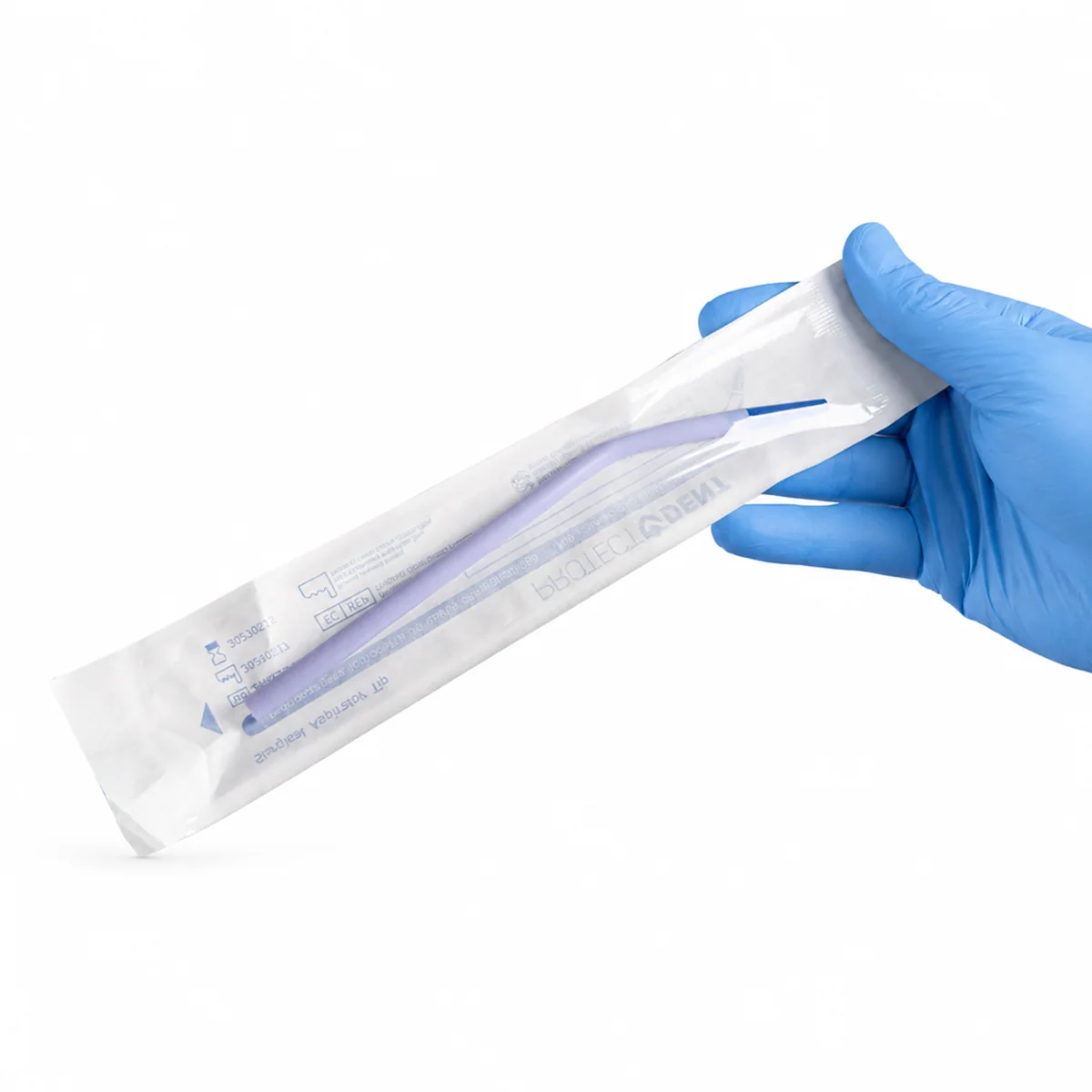
The saliva ejector tip itself is meant to be single-use — one patient, then discarded, not reprocessed between chairs. That's a separate question from what runs through the tubing behind it: the interior of the hose is a cleaning and disinfection matter, not a barrier one, and it doesn't get solved by anything wrapped around the outside of the hose.
What to check
- Do your assistants' scripts still tell patients to "close your lips around this"? Rewrite the script line, not just the policy document.
- Is any hose in the operatory routed above the patient's head at any point in the procedure?
- Are low-volume ejection and high-volume evacuation ever running together on the same patient?
- What's the actual (not intended) frequency of evacuation line cleaning, and who logs it?
- Are suction tips being treated as single-use, or is anyone reaching for the same tip twice?
We won't overstate this: no outbreak has been traced to saliva ejector backflow, and the guidance itself is more than twenty years old. What's new is the evidence that most practices aren't following it, in ways that are simple to fix without buying anything.
Frequently asked questions
Why does closing lips around a saliva ejector cause backflow?
It drops the pressure in the mouth below that of the evacuation line, which can pull previously suctioned fluid back out of the line.
How often should evacuation lines be cleaned?
CDC recommends regular cleaning and disinfection; a 2024 survey found only 43% of practices do so daily, so it's worth checking your own schedule against that.
Can I use a low-volume saliva ejector and high-volume suction at the same time?
CDC guidance and the underlying research flag simultaneous use as a backflow contributor, so it's best avoided on the same patient.
Are saliva ejector tips reusable?
No, they are intended as single-use devices, discarded after each patient.
Sources
- Guidelines for Infection Control in Dental Health-Care Settings — 2003 (MMWR Recommendations and Reports) — CDC / MMWR, 2026-09-15
- Saliva ejectors and risk — RDH Magazine (Registered Dental Hygienists), 2026-09-15
- Preventing Evacuation Line Backflow — Inside Dentistry, 2026-09-15