Your Handheld X-Ray's Backscatter Shield Isn't an Infection-Control Barrier
Why this matters now
DEXIS announced the NOMAD Pro 3 in late September, the newest version of a handheld X-ray line that a lot of practices already run alongside a wall-mounted unit. Handheld systems move between rooms and get held by whoever is lining up the shot, which puts the body of the device, not just the sensor, under gloved hands between patients. The one safety feature most people can actually name on these units is the backscatter shield. It has nothing to do with infection control, and treating it as if it does leaves a gap nobody is covering.
What actually changed
DEXIS describes the NOMAD Pro 3 as a successor to the handheld system that "defined the category," with improved image quality, durability and what the company calls safety-first engineering. The announcement also included a slimmer tip for its Imprevo intraoral scanner and a subscription-style hardware model — a broader refresh, not a single-product launch.
None of that touches the distinction that actually matters at the chair. Writing in Dimensions of Dental Hygiene, Audra Haynes RDH explains that approved handheld units carry a backscatter shield of at least 0.25 mm lead or lead-equivalent, fixed near the patient end of the positioning device and not removable. Its only job is blocking radiation scattered back off the patient and surrounding structures from reaching the operator. A second, separate point from the same article: the housing is wiped with a nonacetone disinfectant and never sprayed, and "can also be covered with a plastic barrier for added infection control protection." Two different protections, built for two different hazards, sitting on the same handgrip.
What this means in the operatory
A cracked or missing backscatter shield is a servicing problem — it needs the manufacturer or a biomedical technician, not a barrier sleeve, and a sleeve over the housing does nothing to stop leakage radiation if the shield itself has failed. Going the other way, meeting the radiation standard tells you nothing about what the unit picked up from the last patient's gloves. Those are separate checks, and a device data sheet that talks about IEC or NCRP compliance isn't answering the infection-control one.
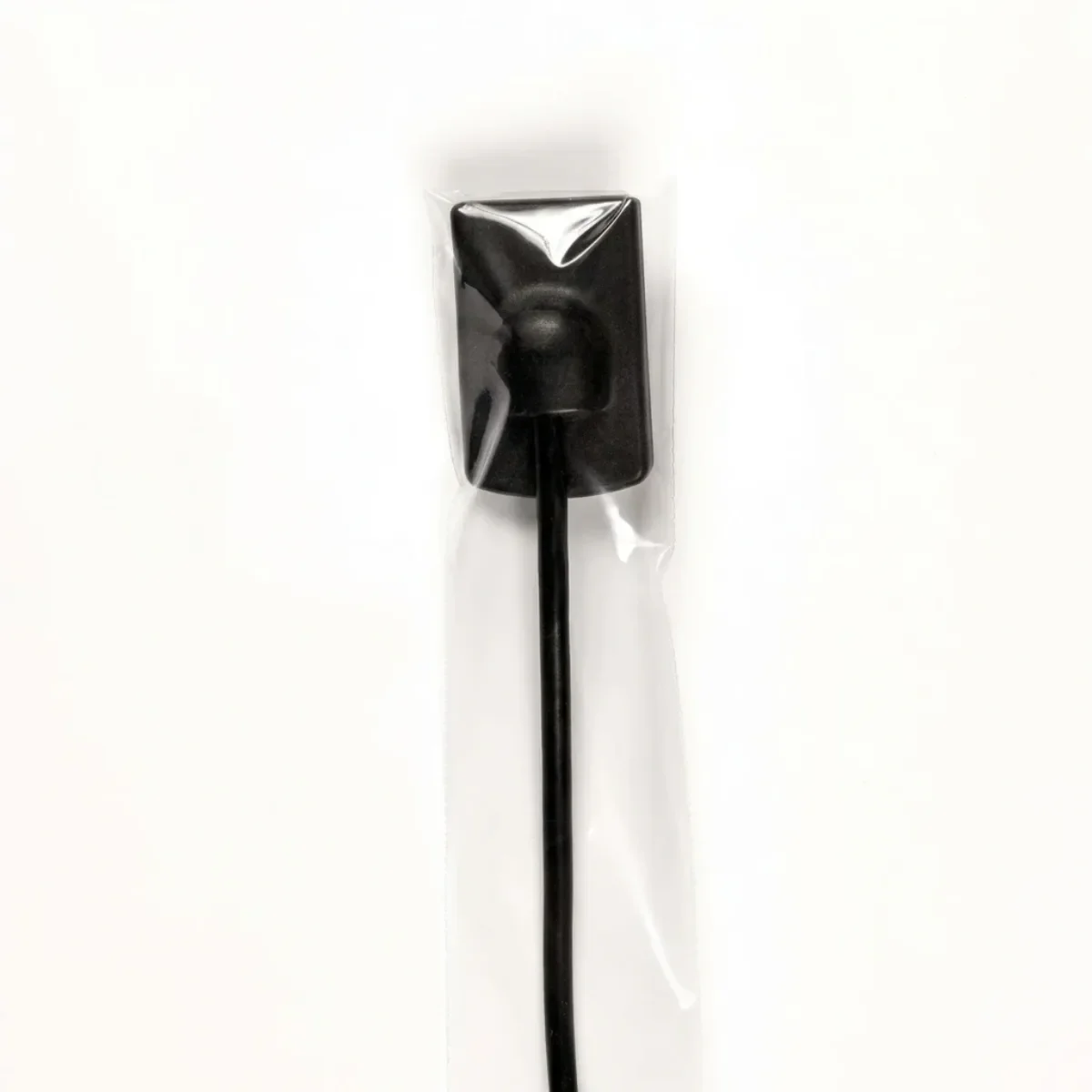
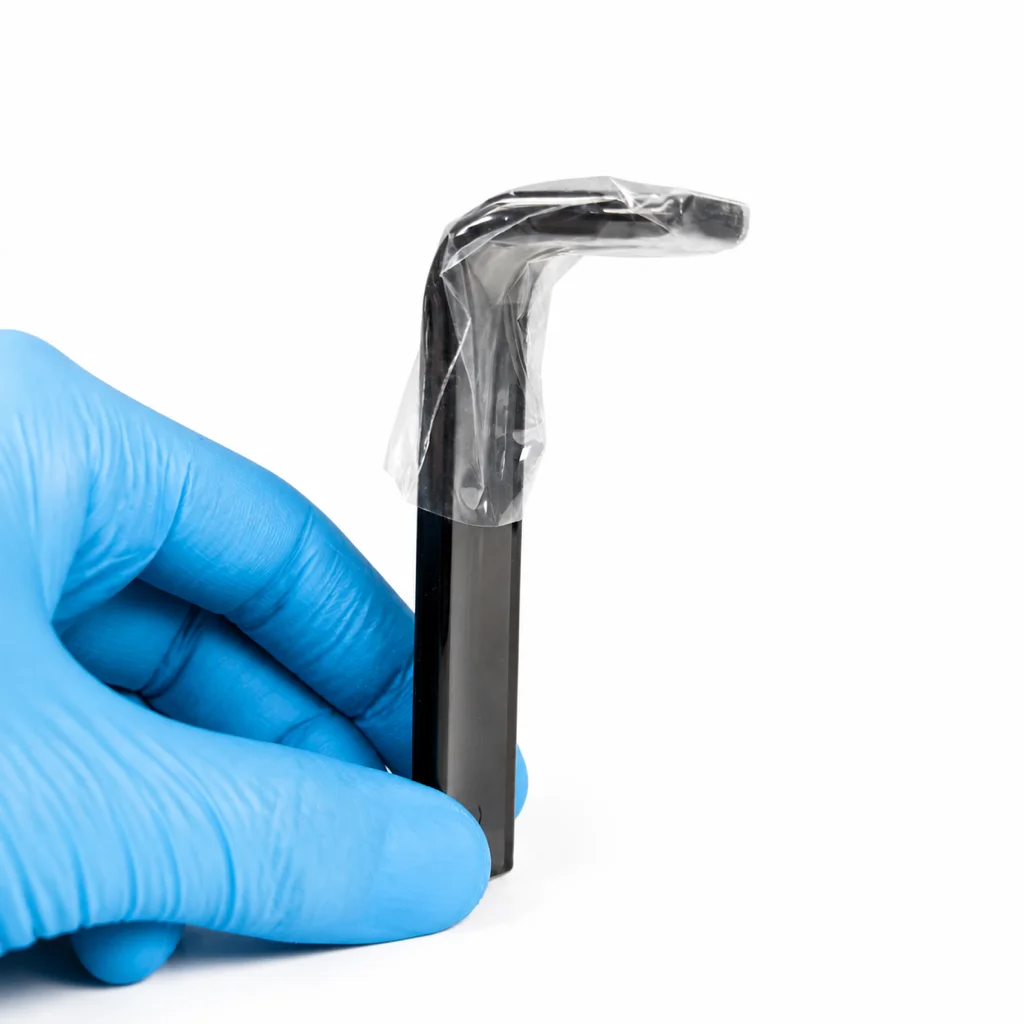
The part that actually enters the mouth on every exposure is the sensor, whichever handheld emitter is firing it, and the cable behind it gets handled just as often during repositioning. That is where a barrier sleeve is doing real work, independent of which brand of handheld unit sits in the operator's hand. The emitter's grip and trigger are the second touchpoint: not intraoral, but handled repeatedly between patients, which is the case the article's "plastic barrier for added protection" line is describing.
This isn't only a product question. The Council of European Dentists has a standing resolution pushing national dental chambers to issue practical infection-control guidance and asking for clearer EU rules on reprocessing single-use devices, specifically because dentists are left to work out protocols that the device's own clearance paperwork doesn't cover. A handheld X-ray unit's radiation rating is exactly that kind of paperwork — it tells you the device is safe to operate, not what to do with it between patients.
What to check
- Confirm the backscatter shield is present, clear and undamaged — this is a servicing check, not something a consumable fixes.
- Sleeve the sensor and its cable at every patient, regardless of which handheld unit is firing it.
- Wipe the unit's housing with a nonacetone disinfectant; don't spray it directly, and add a plastic barrier over parts that get handled between patients.
- Don't read a radiation-safety claim on a spec sheet as an infection-control claim. They're tested and regulated separately, and only one of them is yours to manage day to day.
Frequently asked questions
Does the backscatter shield on a handheld X-ray unit protect against cross-contamination?
No. It is a radiation shield required to limit leakage exposure to the operator. Infection control still needs a separate barrier over parts that get touched or that enter the mouth.
Can I spray disinfectant directly onto a handheld X-ray unit?
No. Per Dimensions of Dental Hygiene, the housing should be wiped with a nonacetone disinfectant; the device should never be sprayed directly.
Does the sensor used with a handheld X-ray unit need its own barrier?
Yes. The sensor and its cable are handled at every repositioning and contact the mouth, so they need a barrier sleeve changed between patients, the same as with a wall-mounted sensor.
Is this distinction specific to the DEXIS NOMAD Pro 3?
No. The product is DEXIS's, but the underlying distinction between a built-in radiation shield and a practice-added infection-control barrier applies to any handheld X-ray system.
Sources
- DEXIS Expands Dental Imaging Platform Across Hardware, Cloud — MyChesCo, 2026-10-15
- Are Handheld Dental X-Ray Devices Convenient or a Hidden Safety Risk? — Dimensions of Dental Hygiene, 2026-10-15
- CED Resolution on Infection Control and Waste Management in Dentistry — Council of European Dentists (via Ordem dos Médicos Dentistas), 2026-10-15