What EN 13795 Actually Tests on a Dental Surgery Drape
The label tells you less than you think
A box of sterile surgical drapes for an implant case usually carries a handful of marks: a CE number, "sterile," "single use," maybe "EN 13795." Only the last one says anything about whether the sheet will actually stop bacteria-carrying fluid from reaching the wound during a procedure that runs long. Understanding what EN 13795 tests — and what it doesn't — changes what to look for on a supplier's data sheet.
EN 13795 is the European standard for surgical drapes, gowns and clean air suits used as medical devices. Its stated purpose is to minimise the spread of infective agents to and from a patient's operating wound during surgical and other invasive procedures. That includes dental and oral implant surgery, not only the operating theatre.
Two performance tiers, not one pass/fail line
The standard splits products into standard performance and high performance, and each tier sets a different bar depending on whether the area of the drape is "critical" (the zone directly over and around the wound) or "less critical" (the margins).
The numbers move a lot between tiers. In the critical area, standard-performance products need a wet microbial penetration result of at least 2.8 on the standard's barrier index, and liquid penetration resistance of at least 20 cm of water pressure for gowns or 30 cm for drapes. High-performance products have to hit a barrier index of 6.0 in the same critical zone, with liquid penetration resistance of at least 100 cm of water pressure for both gowns and drapes.
That barrier-index test is what most people mean when they say a drape "resists bacteria." It's run as a wet bacterial penetration test: a bacteria-laden donor material is placed against the specimen and mechanically rubbed, simulating a surgeon leaning on a drape while it's damp with irrigation fluid, and the result is read as colony counts that pass through to the other side.
One label, eight separate tests
"EN 13795 compliant" is shorthand for passing up to eight distinct tests, each borrowed from its own ISO or EN method: dry microbial penetration, wet microbial penetration, microbial cleanliness (bioburden), particle release, liquid penetration, bursting strength, tensile strength and seam strength. A product can pass some of these comfortably and only just clear others — which is why the standard reports results by test, not as one score.
This matters because "sterile" and "impermeable" answer different questions. Sterile, achieved here by ethylene oxide processing, is about the bioburden on the drape before it's used — how many viable microorganisms remain after sterilisation. It says nothing about whether the sheet will let fluid or bacteria through once irrigation starts. A drape can be perfectly sterile out of the pouch and still fail a liquid-penetration test if a seam is weak.
Why the fabric construction matters
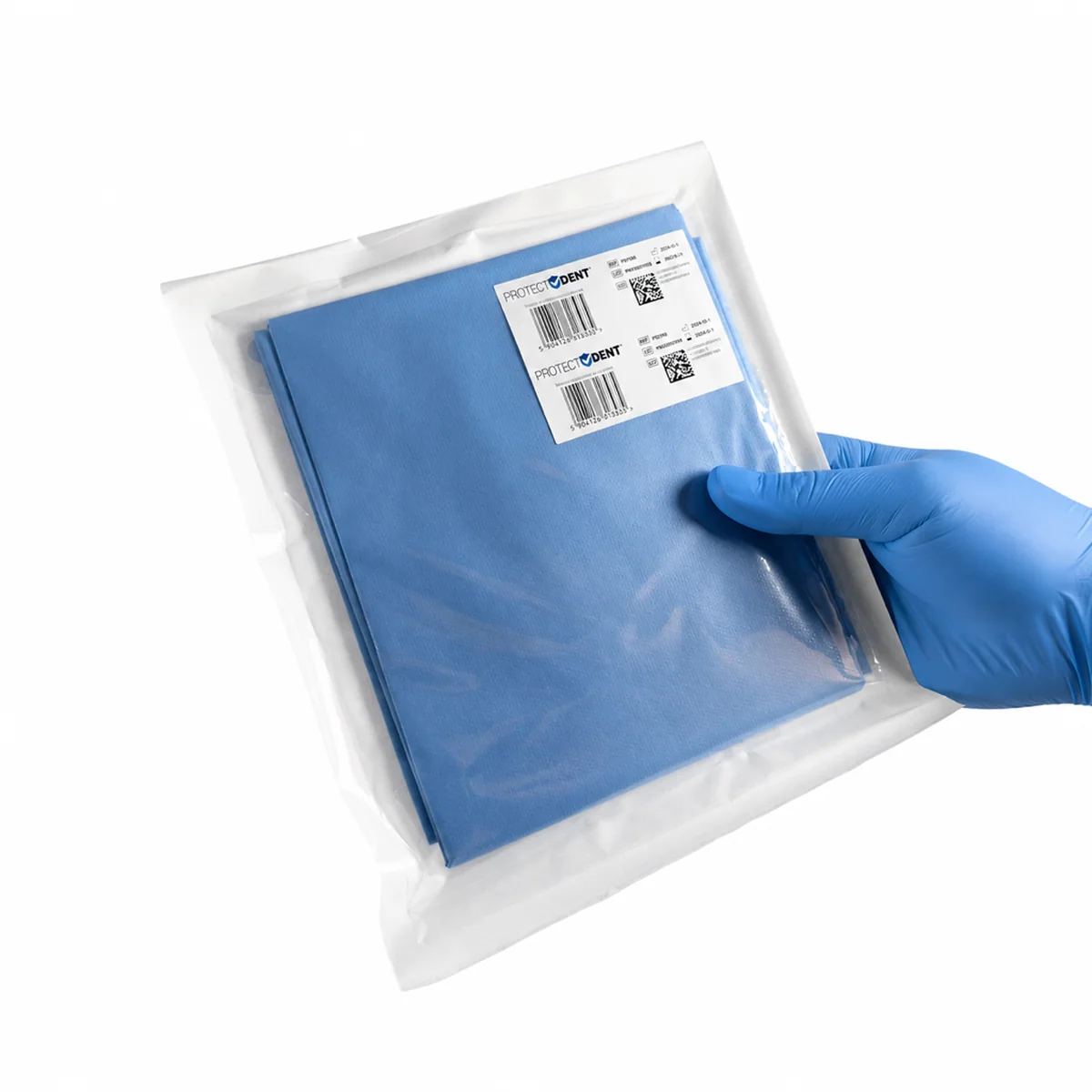
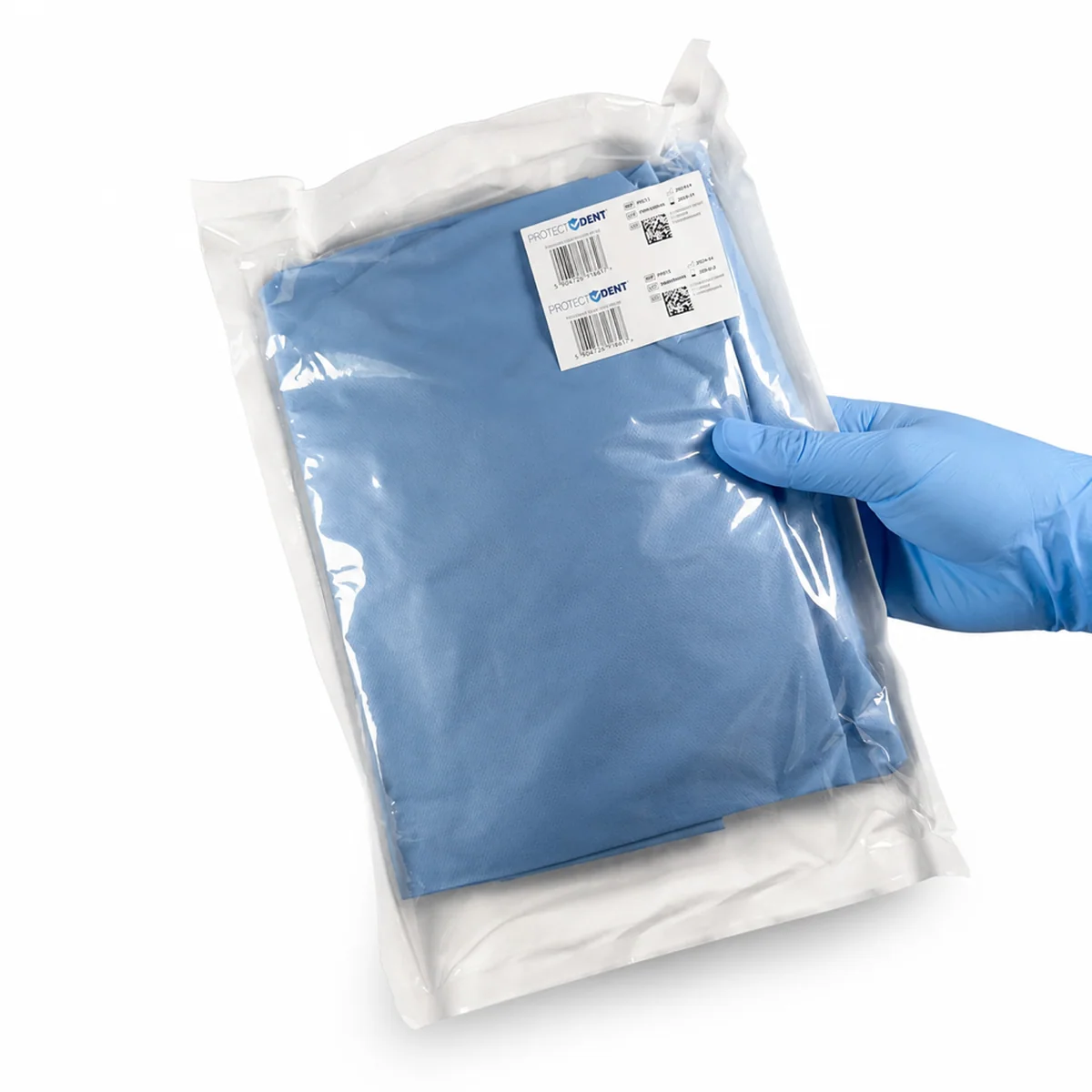
The materials science behind the barrier-index number is straightforward: a single layer of fabric struggles to be absorbent and impermeable at the same time, so barrier drapes are usually built from two bonded layers — a nonwoven layer that absorbs fluid on the surface and a film layer underneath that stops it going any further. That's the same two-layer logic behind a two-layer sterile surgical drape built from bonded polypropylene nonwoven and polyethylene film: the nonwoven side takes the fluid, the film side stays the barrier, so the sheet doesn't lose its barrier property the moment it gets wet during a longer case.
What changed in the most recent revision
The standard was restructured in 2019 into separate parts and moved to a statistical method for reading results: instead of every single test sample having to individually pass, manufacturers now apply quartile calculations across a batch — the top or bottom 25% of results, depending on whether the test has a minimum or maximum requirement. A batch with one outlying sample can still comply if the quartile statistic clears the threshold. That's a manufacturing quality-control detail, but it's also a reason to ask a supplier for the actual test report rather than a one-line compliance statement — the report shows which tests, at which performance tier, the specific product cleared.
What to check before your next order
- Ask whether the drape is rated standard or high performance, and whether that matches how long the procedure runs and how much irrigation fluid is involved
- For a fenestrated drape placed directly over the surgical site, confirm the test data covers the critical area specifically, not just an average across the sheet
- Treat "sterile" and "barrier-tested" as two separate claims — a sterilisation certificate doesn't substitute for liquid-penetration or microbial-penetration data
- Check that the drape's edge is sealed to the patient's skin; a barrier-rated sheet with a gap at the fenestration margin doesn't deliver the protection the test numbers describe
None of this changes how a drape is used chairside on Monday morning. It changes what a practice manager or clinician should be asking a supplier before the next box arrives.
Frequently asked questions
What's the difference between standard and high-performance EN 13795 drapes?
They're rated against different numeric thresholds in the critical area over the wound. Standard performance requires a wet microbial penetration barrier index of at least 2.8 and liquid penetration resistance of at least 20-30 cm of water pressure; high performance requires a barrier index of 6.0 and at least 100 cm of water pressure for both gowns and drapes.
Does "sterile" mean a drape is also tested for bacterial penetration?
No. Sterility, usually achieved by ethylene oxide processing, is a separate bioburden test measuring viable microorganisms on the product before use. EN 13795's wet and dry microbial penetration tests measure whether bacteria can pass through the material during use, which is a different property.
What is the "critical area" on a surgical drape?
It's the zone directly over and immediately around the surgical wound, where the standard sets its toughest thresholds. Margins and less-exposed areas of the same drape are classified as less critical and tested to a lower bar.
Why are barrier drapes usually two layers?
A single fabric layer struggles to be both absorbent and impermeable. Bonding an absorbent nonwoven layer to an impermeable film lets the drape soak up surface fluid on one side while the film underneath keeps blocking penetration, so the barrier property holds even once the drape is wet.
Did the EN 13795 testing method change recently?
Yes. The standard was split into separate parts and moved from evaluating every individual sample to a quartile-based statistical method, where a batch can still comply even if one sample is an outlier, as long as the relevant percentile clears the required threshold.
Sources
- Revised EN13795 for European Gowns and Drapes Simplifies Results Interpretation — Nelson Labs, 2026-09-21
- EN 13795 Standard in Surgical Gowns: What It Means, Tests Included, and Where It Applies — Vistalina, 2026-09-21
- Surgical clothing and drapes EN 13795 — MSF UniCat, 2026-09-21
- EN 13795 — DEREKDUCK, 2026-09-21