Curing Light Barriers: How Much Light Output Do You Actually Lose?
The one handheld device that skips the autoclave
A curing light gets picked up and set down dozens of times a day, its tip touching saliva, blood, and composite residue at every restoration. Unlike a handpiece - which CDC guidance says must be heat-sterilized between every patient, no exceptions - a curing light usually can't go through an autoclave cycle at all. The internal electronics and battery don't tolerate steam heat, and even tips advertised as autoclavable measurably lose performance after a few cycles.
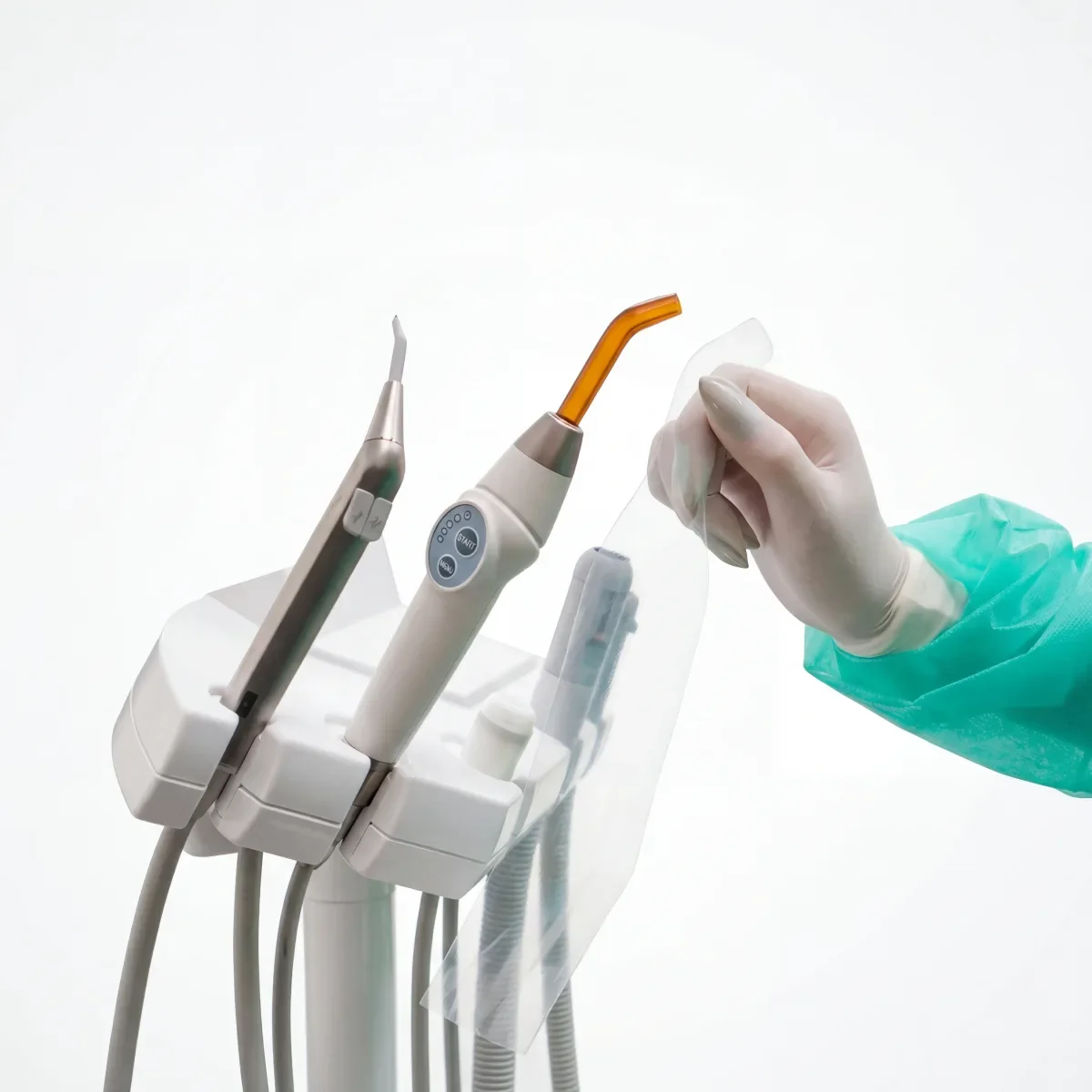
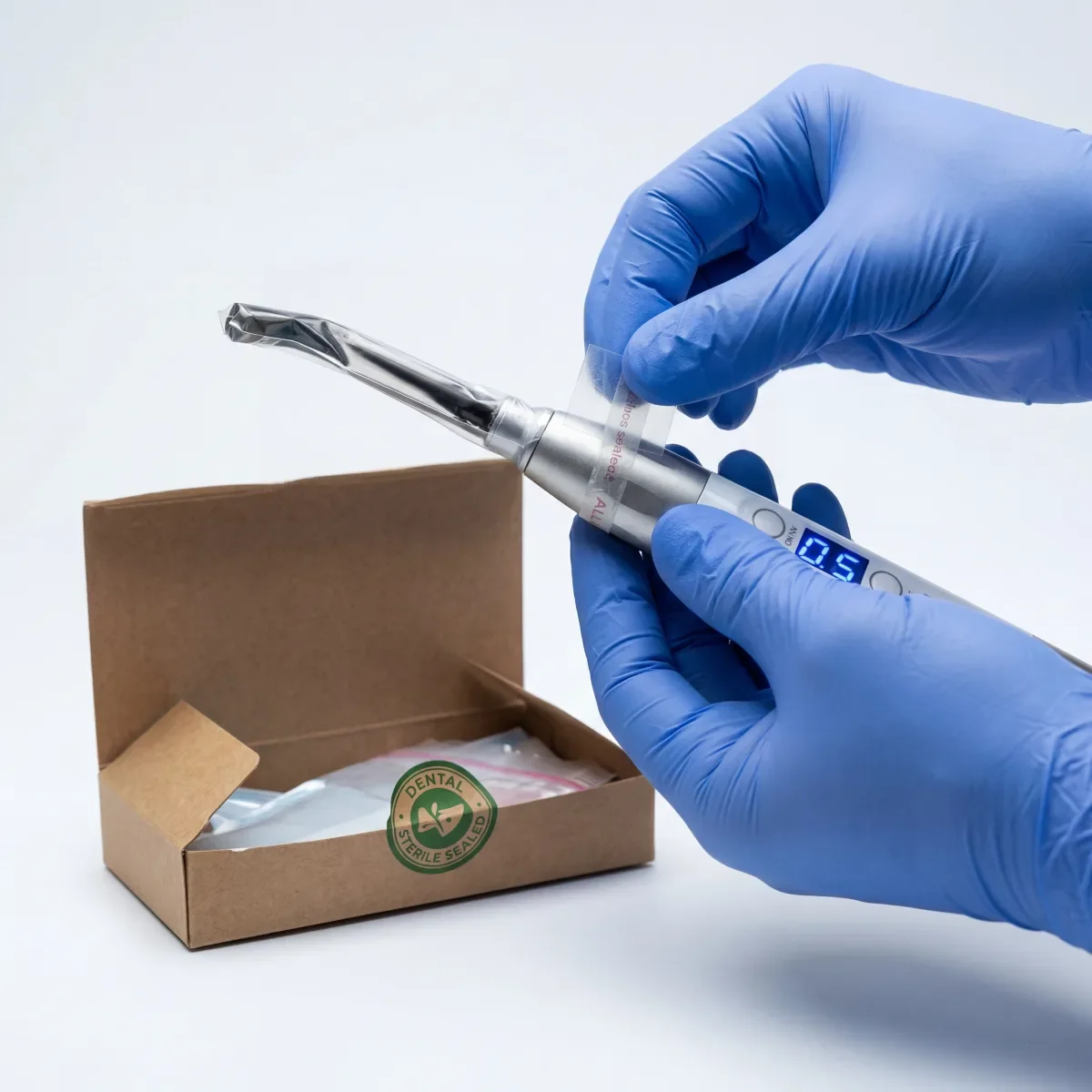
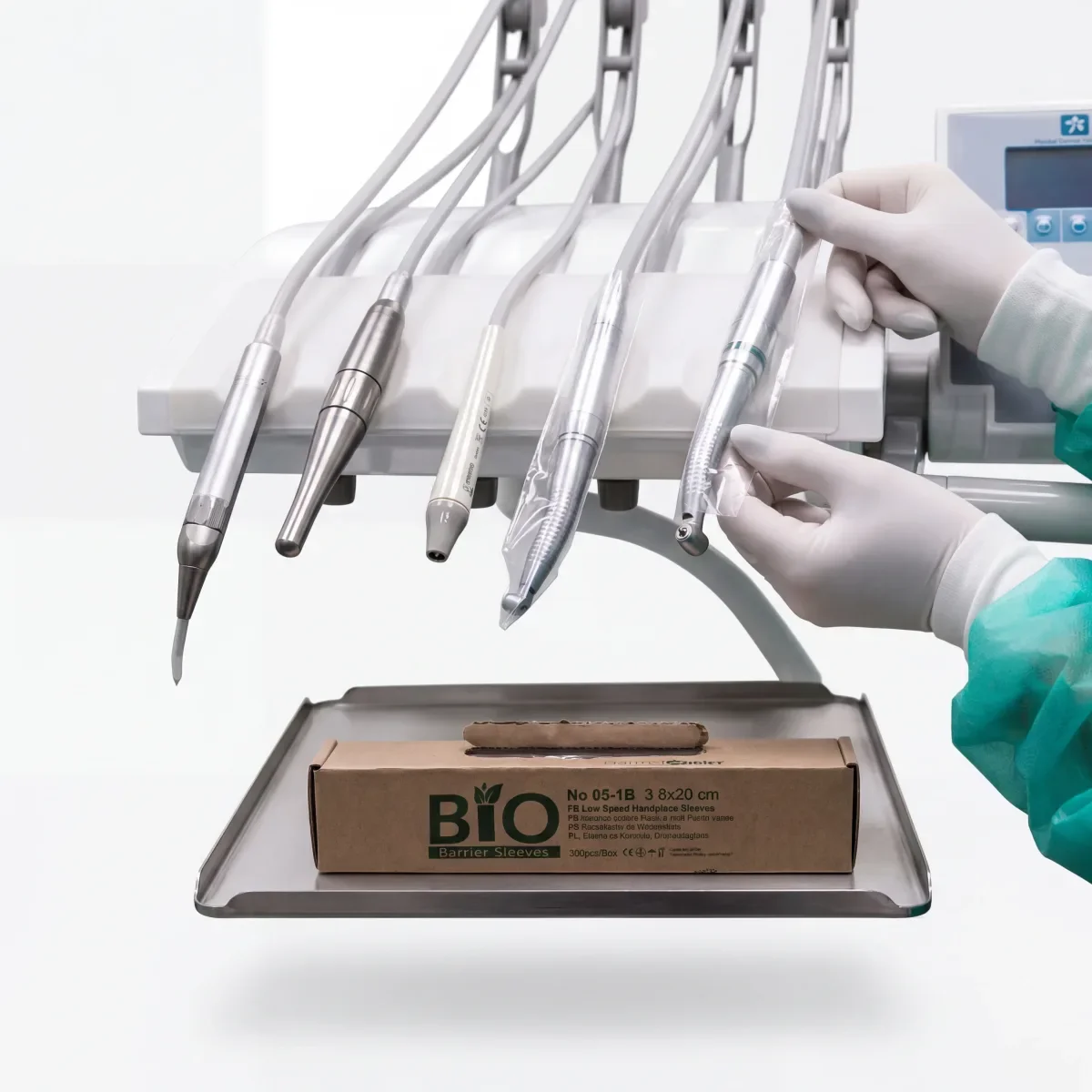
CDC's infection-control guidance for dental settings addresses exactly this gap. For a semicritical item that's heat-sensitive, the recommendation is to replace it with a heat-tolerant or disposable alternative; if none exists, the fallback is high-level disinfection. In practice, for curing lights, the "disposable alternative" is a single-use barrier sleeve or tip cover placed over the unit before each patient and discarded afterward - not a substitute for wiping the handle down, but the layer that actually contacts the patient's mouth.
What's actually on the tip between patients
A 2025 study in Brazilian Oral Research swabbed 29 curing light tips at three points: before use, immediately after clinical use, and after a standard 70% ethanol wipe-down. Contamination jumped sharply after use - the growth media went from turbid (indicating bacterial growth) in 60.7% of pre-use samples to 100% of post-use samples. A 70% ethanol wipe brought that back down in most cases, but not all of them: in 17.4% of tests, the post-wipe microbial load hadn't dropped from its post-use level at all. Wiping alone isn't a guaranteed reset.
The same study tested plastic barrier sleeves against three commercial curing light brands and found no statistically significant difference in the resin's flexural strength or modulus of elasticity with or without the barrier in place, regardless of cure time or shade. The barrier didn't compromise what the light was there to do.
The light-output question, answered with numbers
The question every hygienist asks eventually: does the sleeve weaken the cure? A 2020 Journal of Dentistry study measured light output through six different infection-control barriers on a multi-peak LED curing light. Applied correctly and smoothly, plastic barriers reduced measured output by 5-8%. That's a real number, and the authors' response to it was practical rather than dismissive - they recommended adding roughly 10% to exposure time when a barrier is in place, which comfortably offsets the loss.
The bigger risk wasn't the barrier itself but poor application. A seam or an opaque fold positioned over the light window pushed the reduction to 8-11%. A visibly wrinkled plastic sleeve knocked output down 14-26%. A latex-based barrier performed worse across the board - 16% under correct application, up to 28% wrinkled. The takeaway from the research isn't "barriers weaken cure," it's "a wrinkled or misapplied barrier weakens cure, and material matters."
Applying it Monday morning
None of this changes what the light physically does - it changes how the sleeve goes on. A few things the research points to directly:
- Smooth the sleeve flat over the tip before curing; a wrinkle or fold in the material is what drives the double-digit light losses, not the barrier material on its own.
- Use a clear plastic sleeve rather than a latex barrier if output matters for your protocol - the studies consistently show plastic performing better.
- If your practice runs longer or layered composite builds, factor in a small increase in exposure time rather than skipping the barrier to "save" output.
- Treat the sleeve as the primary barrier and the wipe-down as backup, not the other way around - the ethanol-wipe data shows disinfection alone isn't reliably resetting contamination to baseline.
- Check the tip size against your unit before ordering - curing light barriers aren't one-size-fits-all across brands.
The curing light sits in the same category as a handpiece cable or an ultrasonic scaler handle: a reusable, expensive, heat-sensitive device that has to be protected some other way between patients. A correctly applied sleeve is the part of the protocol that does that, and the data on light output says the compromise is small and manageable, not something to design around.
Sources
- Evaluating microbial load on dental curing lights and the impact of protective barriers on resin composites — Brazilian Oral Research (via PMC/NCBI), 2026-08-12
- Effect of infection control barriers on the light output from a multi-peak light curing unit — Journal of Dentistry (via PMC/NCBI), 2026-08-12
- Sterilization and Disinfection | Dental Infection Prevention and Control — CDC, 2026-08-12