Your Curing Light Barrier Might Be Undercuring Your Composite
Why this matters now
A curing light sits centimetres from blood and saliva on every composite restoration, but the tip usually cannot go in the autoclave. Many units now build the LED emitter directly into the tip, with no removable, heat-tolerant light guide to sterilize. That leaves a disposable barrier as the practical infection-control step between patients. The problem is that barriers block some light, and the published figures on how much vary enormously — from a difference researchers call clinically insignificant to a drop the American Dental Association describes as "as much as 40%." That gap is wide enough to matter at the chair, and the research points to one consistent reason for it: not the brand of barrier, but how it sits on the tip.
What actually changed
Nothing regulatory changed here. This is accumulated research, not a new rule, but recent work has sharpened the picture considerably.
- A 2004 study published by the Canadian Dental Association found that two of three disposable barriers tested caused a measurable but small drop in power density — 2.4% to 6.1% — compared with no barrier, with no shift in wavelength. The authors concluded the drop would probably not affect how well a composite cures.
- A 2020 study, cited in a 2023 South African Dental Journal review, found a much wider spread depending on technique: correctly applied plastic barriers cut light output by 5–8%, while incorrectly applied barriers — wrinkled, stretched unevenly, or overlapping the emitting window — cut it by 14–26%.
- The ADA's own guidance on curing lights states that infection-control barriers can reduce output by as much as 40%, and recommends measuring output with a handheld radiometer, with and without the barrier in place, and adjusting cure time to compensate.
Put together, the range runs from "doesn't matter" to "matters a lot," and the variable every study keeps returning to is application technique, not whether a barrier is used at all.
What this means in the operatory
The South African Dental Journal study also tested something else: how aware clinicians actually are of this. Among the dental students surveyed, only 15% of fourth-years and 52% of fifth-years knew that barriers affect light intensity at all — despite nearly all of the same students understanding that curing lights need infection control between patients. Awareness that a barrier is needed did not line up with awareness that the barrier itself has to be applied correctly.
That gap is worth closing before it costs you a cure, not after. A barrier that bunches over the emitting window, or that doesn't sit flush because it's sized for a different tip, is the scenario the research keeps flagging as the one that actually matters. A barrier applied smoothly, sized to the tip, and seated flat against the window behaves close to the "doesn't matter" end of the range.
What to check
- Match the barrier to your tip diameter. A cover sized for a larger tip than you have will bunch, and the fold sits directly over the light path.
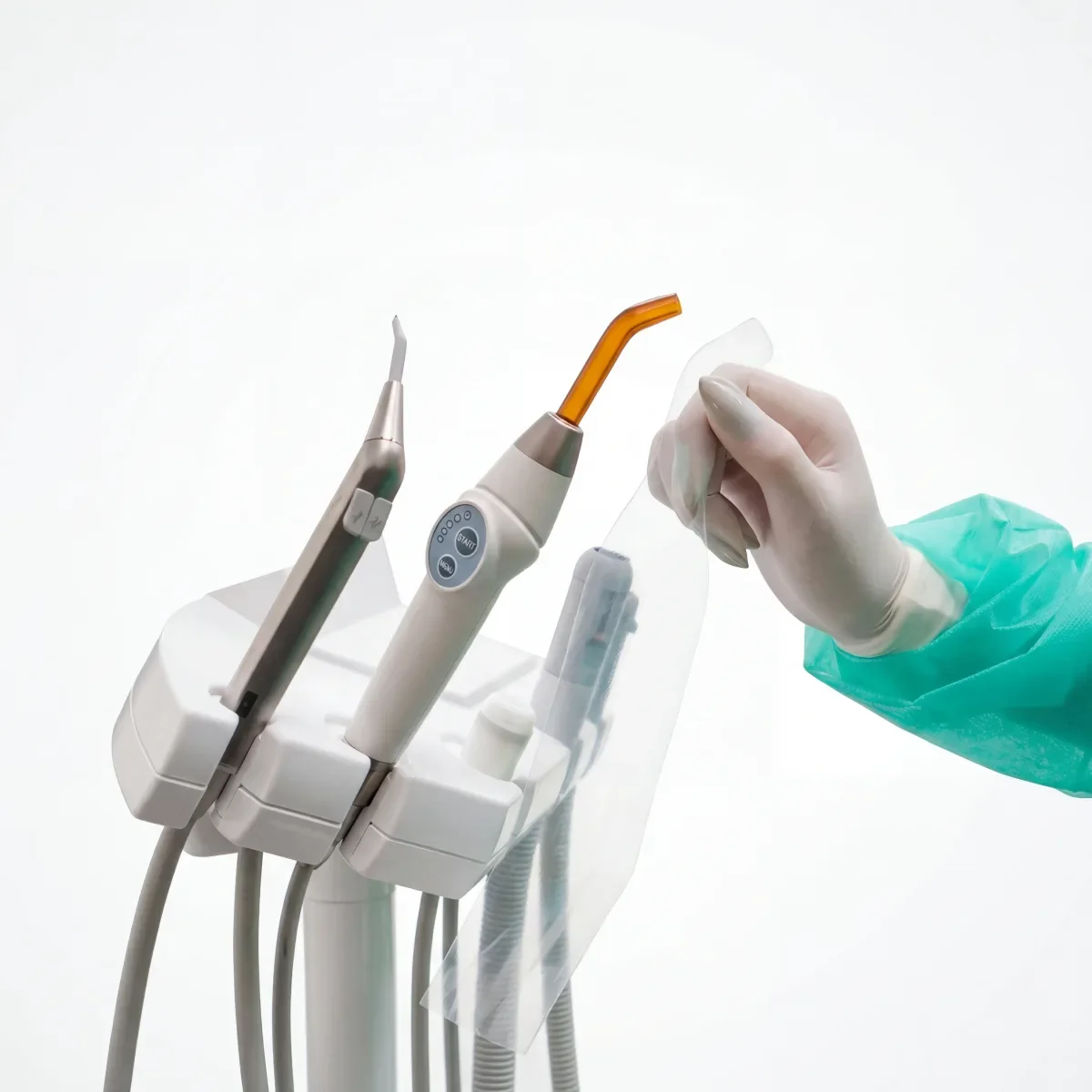
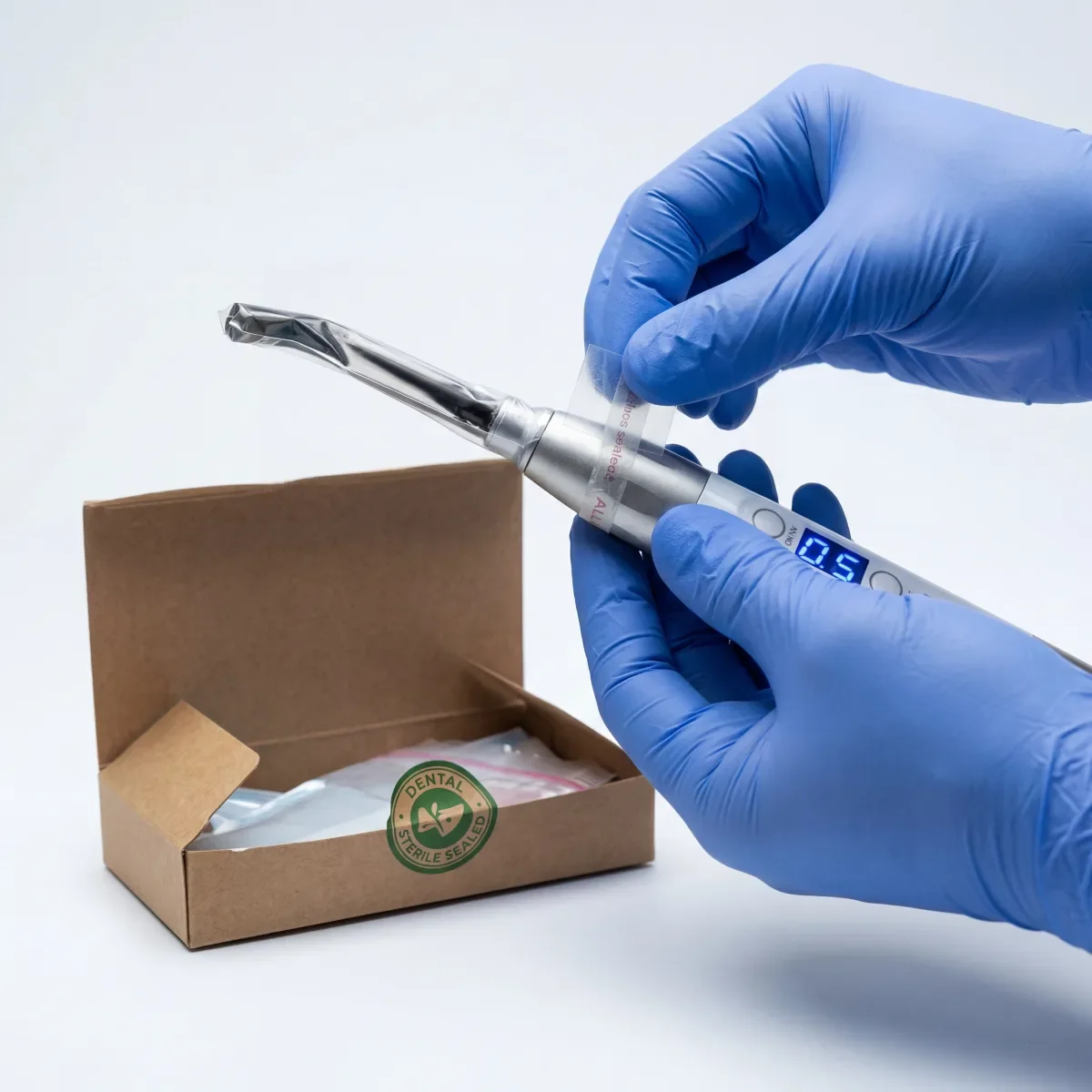
- Smooth the film flat against the tip before curing. A wrinkle or seam across the emitting window is the specific fault the studies connect to the worst figures.
- If you have a radiometer, measure output with the barrier on and compare it against bare-tip output occasionally, not just once when the light is new. The ADA recommends adjusting cure time to the percentage difference you actually measure, rather than assuming a published figure from a different light and film applies to yours.
- Replace a barrier that's stretched, torn, or reused. None of the published figures describe a barrier that has already failed.
The deciding factor in every study reviewed here was not whether a barrier was present, but whether it was applied without wrinkles, folds or seams over the light-emitting window.
Frequently asked questions
Does a curing light barrier actually reduce cure depth?
It can, but the published studies vary widely — from a few percent that researchers call clinically insignificant to as much as 40%, according to the ADA. The deciding factor across the studies is whether the barrier sits smoothly over the tip or is wrinkled and bunched.
Can I just autoclave the curing light tip instead of using a barrier?
Often not. Many curing lights now have the LED emitter built into the tip with no removable light guide to sterilize by heat, which is why a correctly fitted barrier is the practical option between patients.
How do I know if my barrier is cutting too much light?
Use a handheld radiometer to measure output with the barrier on and off occasionally. The ADA recommends adjusting your cure time by the percentage difference you actually measure, since radiometer readings vary by device but are consistent for a before-and-after comparison.
Does the type of barrier matter more than whether I use one at all?
The evidence suggests fit matters more than material. A 2004 Canadian Dental Association study found two of three disposable barriers reduced output by only 2.4–6.1%, with no spectral shift. A later study cited in a 2023 South African Dental Journal review found correctly applied barriers cut output 5–8%, against 14–26% for incorrectly applied ones.
Sources
- Dental Curing Lights — American Dental Association, 2026-10-13
- Bacterial contamination of curing light guides: prevalence and students' knowledge and awareness of measures to maintain sterility — South African Dental Journal (SADA), 2026-10-13
- Effect of Disposable Infection Control Barriers on Light Output from Dental Curing Lights — Journal of the Canadian Dental Association, 2026-10-13